
In 2022, Illinois passed a historic B20 incentive — the first policy in the nation specifically designed to encourage fuel retailers to blend diesel with 20% biodiesel. The legislation marked a significant step forward in the state’s efforts to support agriculture, reduce emissions and provide economic relief to fuel consumers. It also built upon Illinois’ earlier biodiesel policies, demonstrating a longterm commitment to expanding renewable fuel use.
The B20 incentive did not appear overnight. Illinois previously incentivized B11 blends. The legislation then increased the threshold to B14 in 2024 and B17 in 2025. As of April 1, B20 is now the minimum blend required to qualify for the tax incentive. The policy was structured to scale gradually, allowing fuel suppliers, retailers and end users time to adjust their infrastructure and operations. Lawmakers also included a winter carve-out that permits B11 blends access to the incentive from December through March, ensuring fuel reliability during months when biodiesel performance can be affected by low temperatures.
Importantly, the program was extended for an additional seven years. Originally scheduled to expire in 2023, the incentive will now remain in place until 2030. This extension provides long-term certainty for fuel retailers, biodiesel producers, farmers and major fuel purchasers — a critical factor when businesses are making future investments.
The B20 law achieves several policy objectives simultaneously. It lowers the effective tax burden on diesel fuel, creates stronger markets for soybean oil-based biofuels, promotes the adoption of lower-carbon energy sources and reduces harmful particulate matter emissions. Few policies manage to deliver economic, environmental and public health benefits in such a coordinated way. This incentive has attracted a broad coalition of support that includes fuel retailers, railroads, truckers, farm groups and environmental interest groups for this incentive.
“In fact, the policy is beginning to reshape fueling patterns. Because B20 supports corporate decarbonization goals, Illinois has emerged as a “stop state” — a destination where trucking companies and other commercial fleets intentionally refuel to access lower-carbon diesel.”
Illinois applies multiple taxes to diesel fuel. Among them is a $0.558 per gallon Motor Fuel Tax (MFT), which supports the state Road Fund and helps finance infrastructure improvements. The state also imposes a 6.25% sales tax that contributes to the General Revenue Fund (GRF), the Road Fund and local governments. On average, state sales taxes add roughly $0.25 per gallon, while municipal and county sales taxes can contribute as much as $0.16 per gallon.
Under the B20 incentive, retailers who blend diesel with at least 20% biodiesel are exempt from the state sales tax as well as any applicable local sales taxes. For companies purchasing fuel in bulk — including trucking fleets, railroads, construction firms and agricultural operations — these savings can accumulate quickly. According to the Illinois Department of Revenue, approximately $250 million in diesel taxes were exempted in 2025 alone. These savings ripple across the economy, lowering operating costs for industries that rely heavily on diesel and ultimately benefiting everyone from farmers to truckers to railroads to marine users.
Illinois’ fuel taxes are comparatively high relative to neighboring states, making price competitiveness a longstanding concern. The B20 incentive helps offset this disadvantage by keeping biodiesel blends priced competitively across state lines. As a result, Illinois is increasingly viewed as a practical place to purchase fuel rather than a state to bypass.
In fact, the policy is beginning to reshape fueling patterns. Because B20 supports corporate decarbonization goals, Illinois has emerged as a “stop state” — a destination where trucking companies and other commercial fleets intentionally refuel to access lower-carbon diesel. The combination of reduced taxes and measurable greenhouse gas reductions makes the state particularly attractive to companies with sustainability commitments.
Illinois consumes roughly 1.5 billion gallons of diesel fuel each year. With the B20 incentive fully implemented, the state’s farmers could help supply up to 255 million gallons of biodiesel, a substantial increase from the approximately 165 million gallons supported under the previous B11 incentive. This expansion represents a major opportunity for the agricultural economy.
Producing 255 million gallons of biodiesel requires feedstock equivalent of roughly 170 million bushels of soybeans. According to the United Soybean Board, approximately 10% of the total value of a soybean is tied to the biodiesel industry, highlighting how closely renewable fuel demand is linked to farm profitability.
Expanding the soy biodiesel market in Illinois over the past few years has insulated the state against soy biofuels policy uncertainty. The Inflation Reduction Act (IRA) rewrote biofuels incentives after the California model and was written to promote imports from China instead of soybean oil from Illinois farmers. Additionally, previous Renewable Fuel Standard (RFS) volume requirements were too low, leaving a smaller demand for biofuels. Those federal policies are on the mend, and we have already seen legislative and rulemaking changes to fix those.
In 2025, we saw U.S. consumption of biomass-based diesel decrease substantially because of federal policy. But at the same time, we saw the consumption of biodiesel increase in Illinois because of increased blend incentives to B17 in the sales tax exemption.
Soybean oil and corn oil remain the primary feedstocks used in Illinois biodiesel production. By strengthening demand for these products, the B20 law helps create stable markets for farmers while also contributing to more competitive input prices across the agricultural supply chain. In this way, the policy not only supports renewable energy goals but also reinforces one of Illinois’ most important economic sectors.
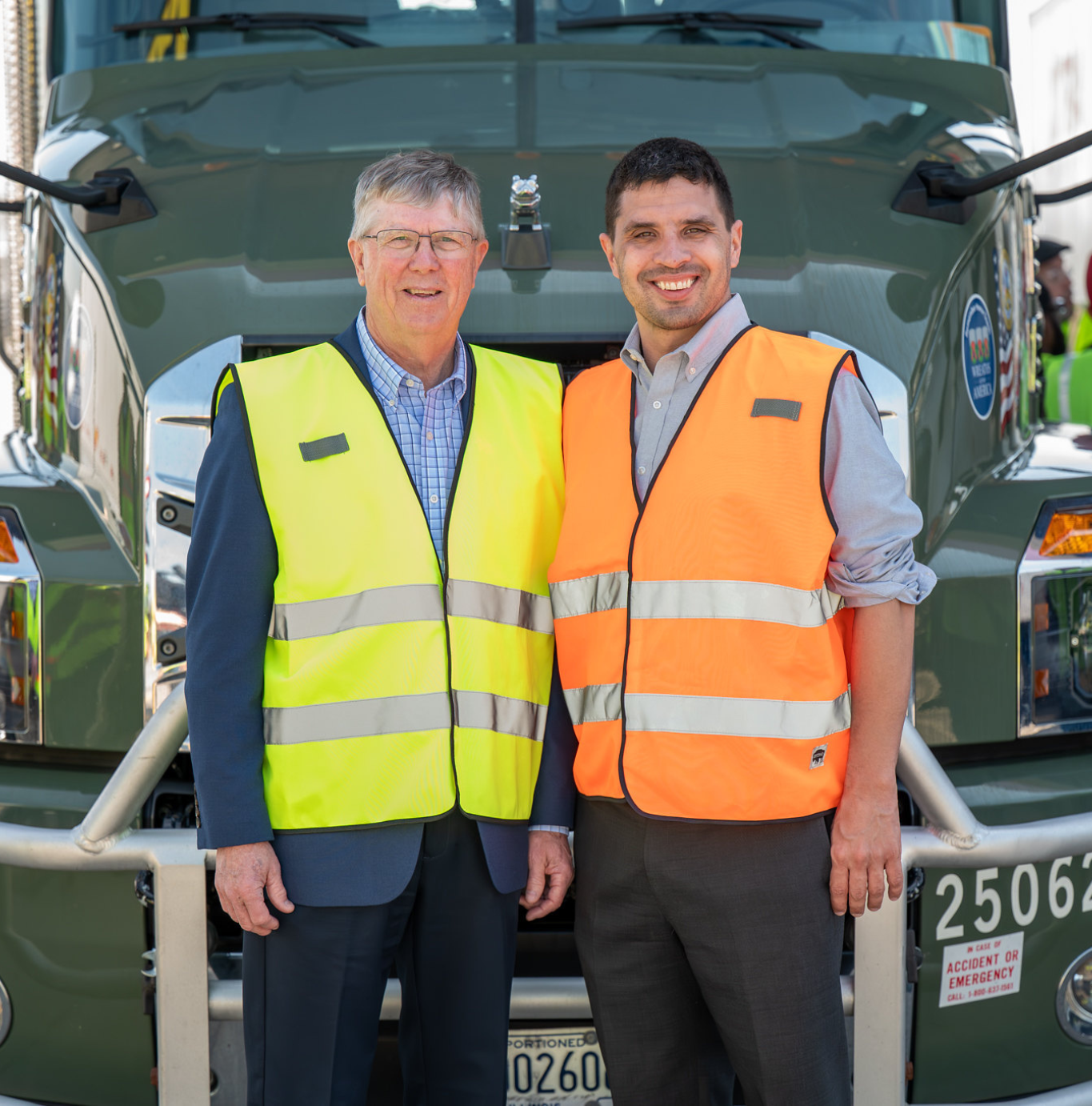
The legislation drew bipartisan support. Primary sponsors included Representative Eva Dina Delgado (D-Chicago) and Senator Patrick Joyce (D-Kankakee), with Representative Charlie Meier (R-Okawville) serving as the lead Republican sponsor. Governor JB Pritzker incorporated the measure into an end-of-session budget package and ultimately signed it into law. Support for the bill extended beyond Springfield, as municipalities and privatesector fleets worked together to build coalitions spanning urban, suburban and rural communities.
One notable aspect of the bill is its sponsorship by a Chicago legislator — a reminder that biodiesel policy is not solely an agricultural issue. Reductions in particulate matter were a major motivating factor. Biodiesel can reduce tailpipe particulate matter emissions by approximately 47%, helping improve air quality in heavily traveled corridors and densely populated areas.
Public health organizations have taken notice. The American Lung Association supports expanding biodiesel use because particulate matter from petroleum diesel has been linked to elevated rates of asthma, respiratory illness and lung cancer. Cleaner-burning fuels represent not just an environmental improvement but a meaningful investment in community health.
Ultimately, Illinois’ B20 incentive demonstrates how thoughtful policy design can align economic growth, environmental progress and public health outcomes. By lowering fuel costs, strengthening agricultural markets, attracting business activity and reducing emissions, the law positions Illinois as a national leader in biodiesel blending.
Policymakers in Illinois believe that the B20 incentive is more than a tax policy — it is a strategic investment in Illinois’ 43,000 soybean farmers providing for the state’s energy future, agricultural resilience and economic competitiveness
Recent Articles
This issue of Illinois Field & Bean spotlights the On-Farm Trial Network, highlighting how on-farm research drives real-world results.
By

Clean fuels are no longer a niche market. Instead, they're essential to the U.S. economy, farm income and energy security.
By Heather Buechter, Director of Communications, Clean Fuels Alliance America