In January, the Illinois Soybean Association (ISA) traveled to Pakistan and Saudi Arabia for an immersive trade mission with the U.S. Soybean Export Council, represented by International Markets Specialist Caitlyn Abbey and farmer leaders Scott Gaffner and Tim Scates. The delegation joined USSEC leadership, industry experts and other grower leaders to evaluate market conditions, meet with key buyers and strengthen relationships across two rapidly developing regions with expanding animal agriculture industries. Their travel provided critical insight into current opportunities, emerging challenges and the evolving dynamics shaping U.S. soy demand in the Middle East North Africa (MENA) region.
Pakistan: A Rebounding Market with Expanding Potential
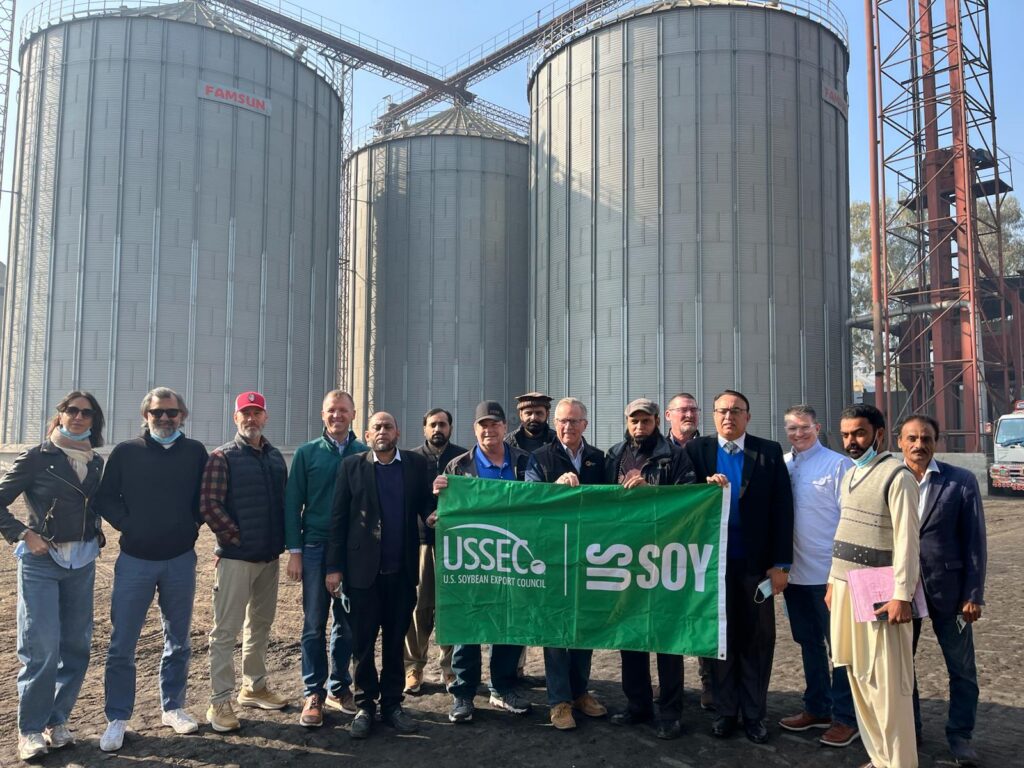
Pakistan has re-emerged as a strong and growing destination for U.S. soy. The country recently surpassed 1 million MT of U.S. soybean imports in the current marketing year, ranking it as the No. 4 export destination for U.S. soybeans. This follows several years of disruption when Pakistan halted soybean imports due to GMO concerns. Trade resumed in early 2025 following regulatory updates and a trilateral MOU between USSEC, the Pakistan Poultry Association and the All‑Pakistan Solvent Extractors’ Association (APSEA).
Despite momentum in the market, Pakistan’s newly implemented “sunset clause”—requiring soybean import authorization to be reapproved periodically—creates concerns for crushers and feed manufacturers considering long-term investment. Industry leaders emphasized the need for regulatory stability to support future crush expansion and infrastructure development. Even with these challenges, Pakistan’s poultry and dairy sectors continue to expand rapidly, signaling sustained opportunity for U.S. soy.
Infrastructure and Industry Engagement
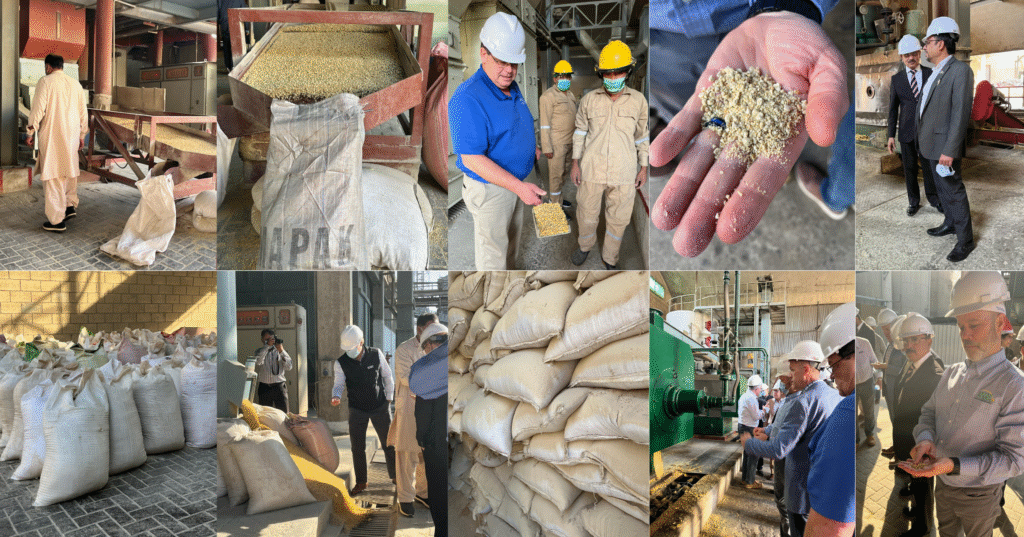
The delegation visited key supply chain points, including the FAP Terminal at Port Qasim which is responsible for handling 90% of Pakistan’s oilseed imports. Meetings with leading poultry integrators, including Dr. Sabir’s Group, unders
cored U.S. soy’s competitive advantage in digestibility and feed performance.
The team participated in the Pakistan Oilseed Summit and the Pakistan Edible Oil Conference (PEOC), where industry leaders emphasized the need for continued U.S. technical education on soy’s nutritional advantages. Additionally, tours of Shujabad Agro and EVA Oils provided a closer look at innovation within Pakistan’s largest processing hubs highlighting the need for consistent supply with projected industry growth.
Meetings with APSEA leadership drew attention to shifting dynamics, including renewed interest in diversified import strategies. Conversations also pointed to growing investment in poultry automation and feed milling across Punjab, where the group toured state-of-the-art layer and feed facilities.
Saudi Arabia: A Rapidly Modernizing Market with Strong Feed Demand
Saudi Arabia presented a different but promising picture, one of accelerated modernization, shifting trade patterns and growing protein demand. Across multiple meetings in Riyadh, stakeholders described significant national reforms: increasing business transparency, infrastructure upgrades and evolving market practices.
A Soymeal-Focused Market
With the country’s major crush plant no longer in operation, Saudi Arabia depends heavily on imported soymeal. Most meal currently originates from South America, with U.S. product accounting for 2–6% of the market. As more U.S. meal becomes available for export, the delegation identified substantial potential to expand market share, particularly as buyers consistently prioritize quality, protein levels and amino acid profiles.
While in Riyadh, the delegation met with leading feed and poultry companies: ARASCO, FeedCo, Al‑Watania Poultry, Fakieh Poultry and Almarai. These conversations reinforced the importance of reliable soymeal supply as Vision 2030 initiatives drive rapid growth in poultry, dairy and aquaculture sectors. Many companies highlighted improvements in logistics and port infrastructure, signaling a more competitive environment for high‑quality U.S. ingredients.
Meetings facilitated by the U.S. Embassy and Foreign Agricultural Service emphasized strengthening trade relationships. Discussions with the Ministry of Environment, Water and Agriculture and the Saudi General Food Security Authority demonstrated strong alignment around long-term protein supply needs and the value of collaboration with U.S. soy.
Takeaways for Illinois Soybean Farmers
The insights gained from this mission reinforce the importance of international relationship‑building. Pakistan and Saudi Arabia both represent dynamic, growing markets where U.S. soy’s reputation for consistency and quality remains highly valued. In both countries, industry leaders expressed strong appreciation for U.S. grower engagement—emphasizing that interactions with farmer leaders build trust and confidence in every shipment.
ISA’s participation strengthened connections with influential buyers and highlighted new opportunities for U.S. soy to deliver value in expanding livestock, poultry and aquaculture sectors. The perspectives brought back by Caitlyn Abbey, Scott Gaffner and Tim Scates will help guide ISA’s efforts to support market access, grow global preference for U.S. soy and ensure strong export opportunities for Illinois farmers.