The Illinois Soybean Association (ISA) works to ensure soybeans deliver value far beyond the elevator. Through research partnerships, entrepreneurial collaboration, and the soybean checkoff, ISA’s Soy Innovation Center (SIC) invests in ideas that turn Illinois soy into new products, new industries and new opportunities.
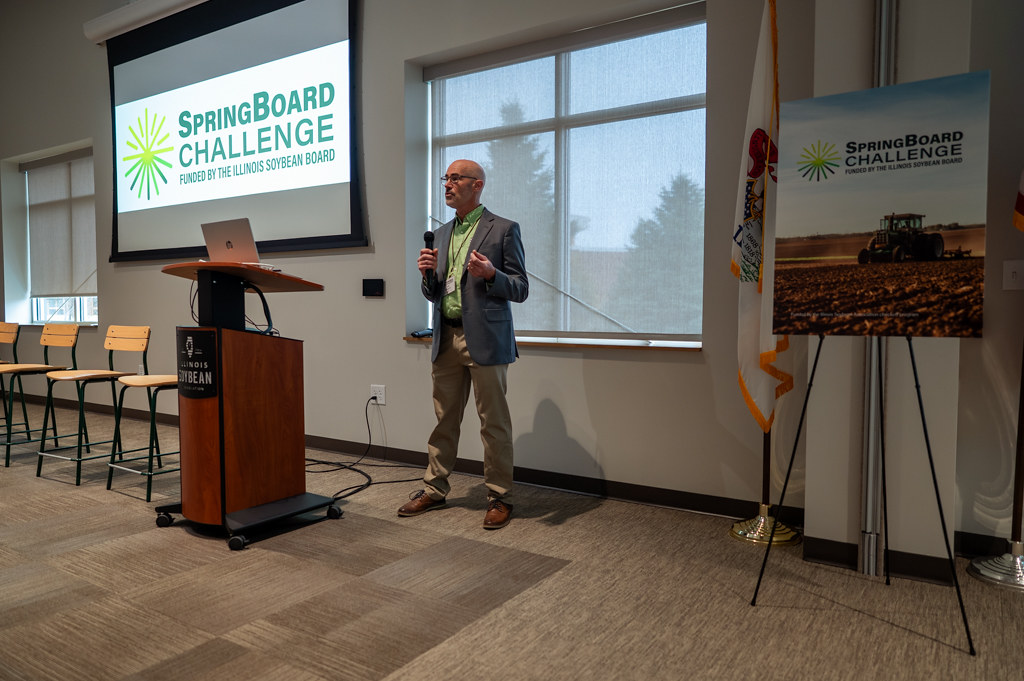
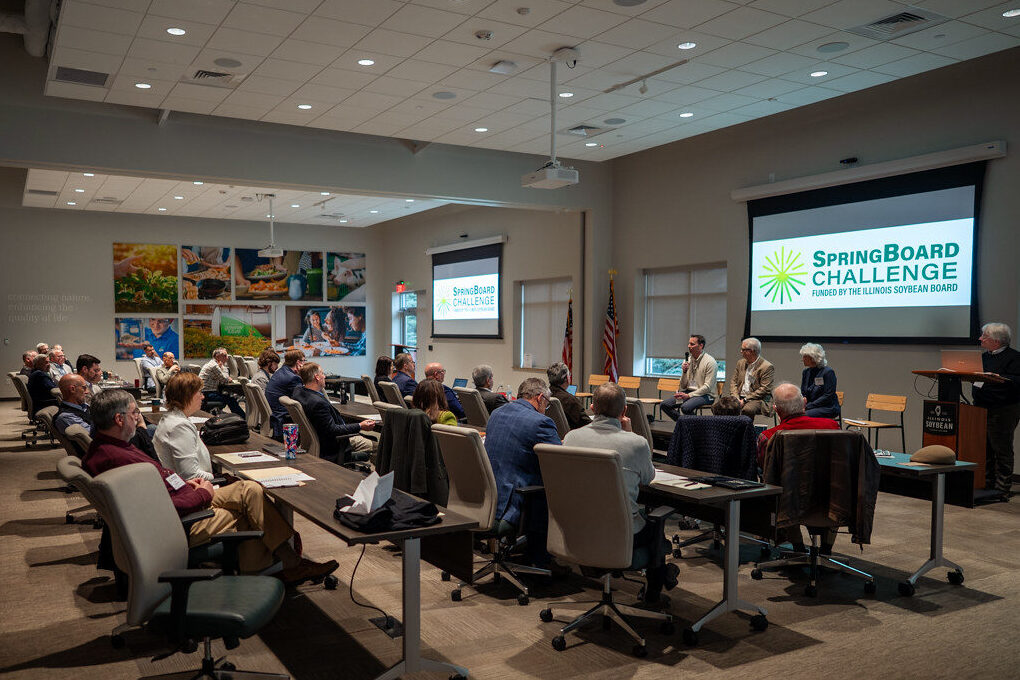
That mission was on full display at this year’s SIC SpringBoard Challenge. Researchers, entrepreneurs and industry leaders gathered to share promising technologies that could transform soybean components and byproducts into high-value materials, chemicals and ingredients.
At its core, the SpringBoard Challenge reflects the purpose of ISA. “Our goal is simple: move the pile,” said ISA At-Large Director Jeff O’Connor. “That means finding new uses for soybeans that create value beyond the commodity market.”
Turning Soy into Next-Generation Products
Presenters highlighted a wide range of technologies in development, many using soybean oil, protein or processing byproducts as foundational materials.
One project focuses on domestic xylitol production; a sugar alternative commonly used in foods and oral care products. Researchers at the Midwest Bioprocessing Center are developing a fermentation-based process capable of producing xylitol from a variety of biomass sources, including soybean waste streams. The goal is to localize production in the United States, where traditional feedstocks are limited, and create a new pathway for value-added soy utilization.
Another project is advancing soy protein-based bioplastics. At Northern Illinois University, researchers demonstrated prototype cutlery made from soy protein isolate and natural additives. After narrowing dozens of formulations down to a handful of top performers, the team is now scaling production through injection molding and extrusion processes while pursuing food-safe certification.
Additional innovations highlighted the versatility of soy-derived materials:
- Renewable lubricants: Purdue researchers are converting sugars from soybean hulls into lipid-based products that can be upgraded into industrial lubricants, an application with significantly higher economic value than biofuels.
- Rare earth extraction: A team at Southern Illinois University is investigating soybean oil as a sustainable solvent to recover rare earth elements from coal ash.
- Self-healing materials: Scientists are designing soy-based polymers capable of repairing microscopic damage through specialized chemical linkages.
- Advanced bioplastics: Engineered microbes are being developed to convert soybean processing waste into polyester-amide polymers with potential industrial applications.
Across these projects, researchers emphasized high-value applications that drive commercialization. Early analyses show that products such as lubricants, advanced polymers and specialty chemicals offer the strongest economic pathways.
Building an Ecosystem for Commercialization
While promising research is essential, turning discoveries into real-world products requires collaboration across multiple sectors.
Panel discussions throughout the event highlighted the roles of farmers, universities, investors and industry partners in building a successful innovation ecosystem. Universities provide critical research and talent pipelines, while technology transfer offices help protect intellectual property and license discoveries to companies capable of bringing them to market.
The Soy Innovation Center works to bridge those worlds. “Programs like the SpringBoard Challenge help de-risk technologies so they can move from the lab into the marketplace,” said one panelist.
This support can be crucial in overcoming what many innovators call the “valley of death”—the gap between academic discovery and market-ready technology.
“For an innovation ecosystem to succeed, all the pieces have to work together,” said Kara Demergian Haas. “When research, workforce, industry and investment align, that’s when real progress happens.”
ISA’s approach to intellectual property reflects that collaboration. Partners retain their existing intellectual property, while newly created innovations are shared, ensuring farmers ultimately benefit from the commercialization of new technologies funded by the soybean checkoff.
Expanding the Horizons for Soy
Looking ahead, ISA is prioritizing research that unlocks new markets for soy-based materials and products. Future projects include:
- Bioplastics that match petroleum plastics in cost and performance
- Industrial and food-grade lubricants derived from soybean oil
- PFAS replacements, where soy-based compounds could substitute for persistent industrial chemicals
- Biopolymer building blocks for advanced materials and manufacturing
- On-farm, soy-based products, such as compostable baling twine and biodegradable agricultural materials
Through its Notice of Funding Opportunity process, ISA invites researchers to submit concept proposals that demonstrate both scientific promise and a clear pathway to commercialization.
From Fields to Possibilities
Illinois already has the variables needed for a thriving soy innovation pipeline: world-class universities, strong manufacturing capacity, abundant soybean supply and a network of farmers eager to support new uses for their crop.
The SpringBoard Challenge demonstrated how those pieces can come together. By connecting researchers with industry leaders and entrepreneurs, ISA is helping ensure that new discoveries don’t remain in the lab, they become real products that create demand for soybeans.
For the farmers contributing to the soybean checkoff, that progress is about more than research. It’s about turning Illinois fields into possibility, where soybeans power sustainable materials, manufacturing solutions and agricultural innovation.