
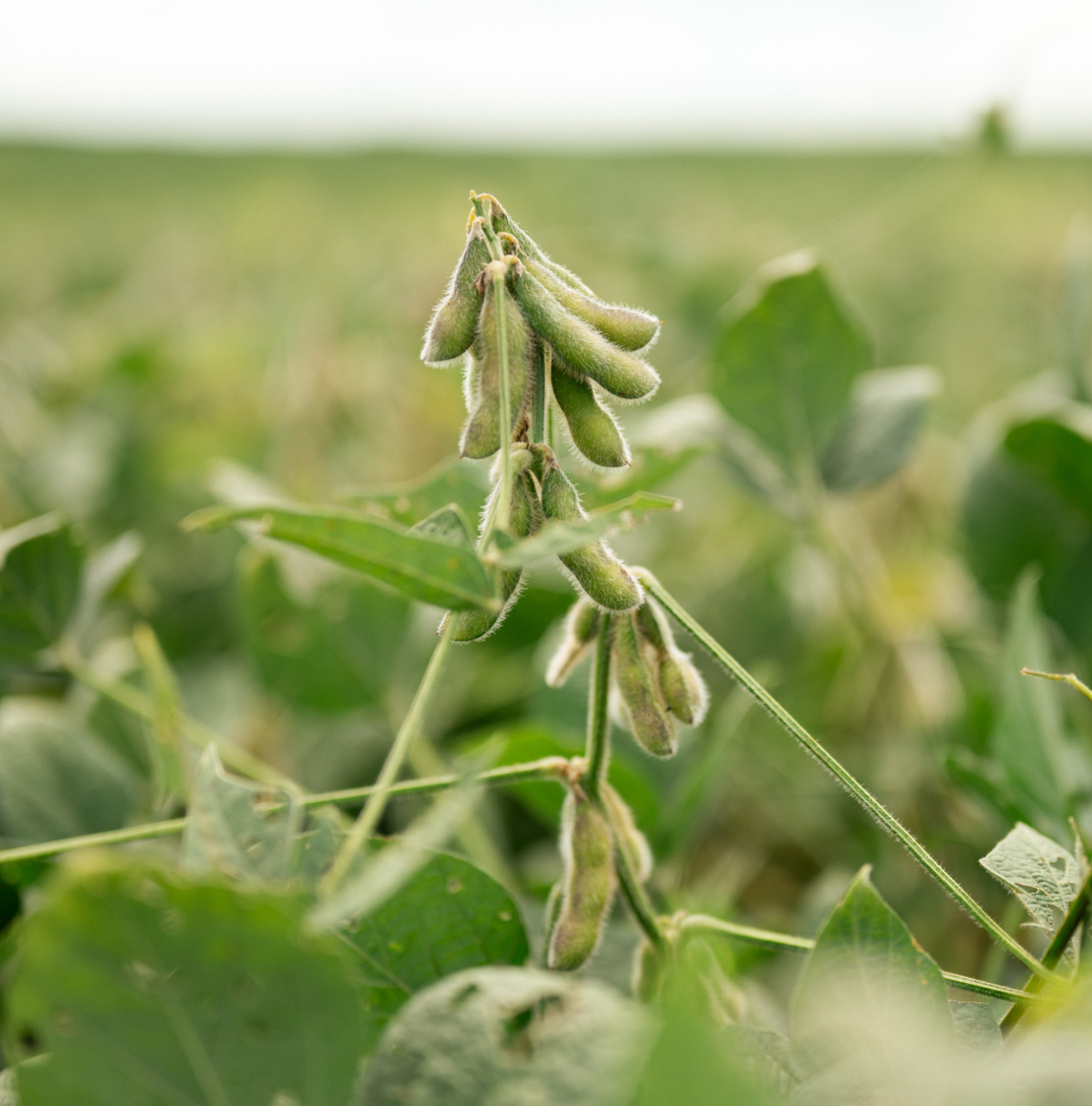
Farming involves hundreds or thousands of decisions. How early should we start planting soybeans? How much fertilizer should we apply? Which herbicides should we use? Are fungicides cost-effective? How can I reduce input costs? Those questions and many more pop up every growing season. Sometimes, farmers rely on advice from industry work or university research, but there are limits to how applicable those results are to real-world conditions.
On-farm research is key to testing how management decisions affect productivity and profitability. There’s a long history of performing research on the farm. Many farmers utilize check-strips or test management decisions on small acreage before jumping all the way in when they change direction. As important as these small trials are to helping drive farmer decisions, they rarely provide much guidance beyond that operation and maybe a neighboring farm.
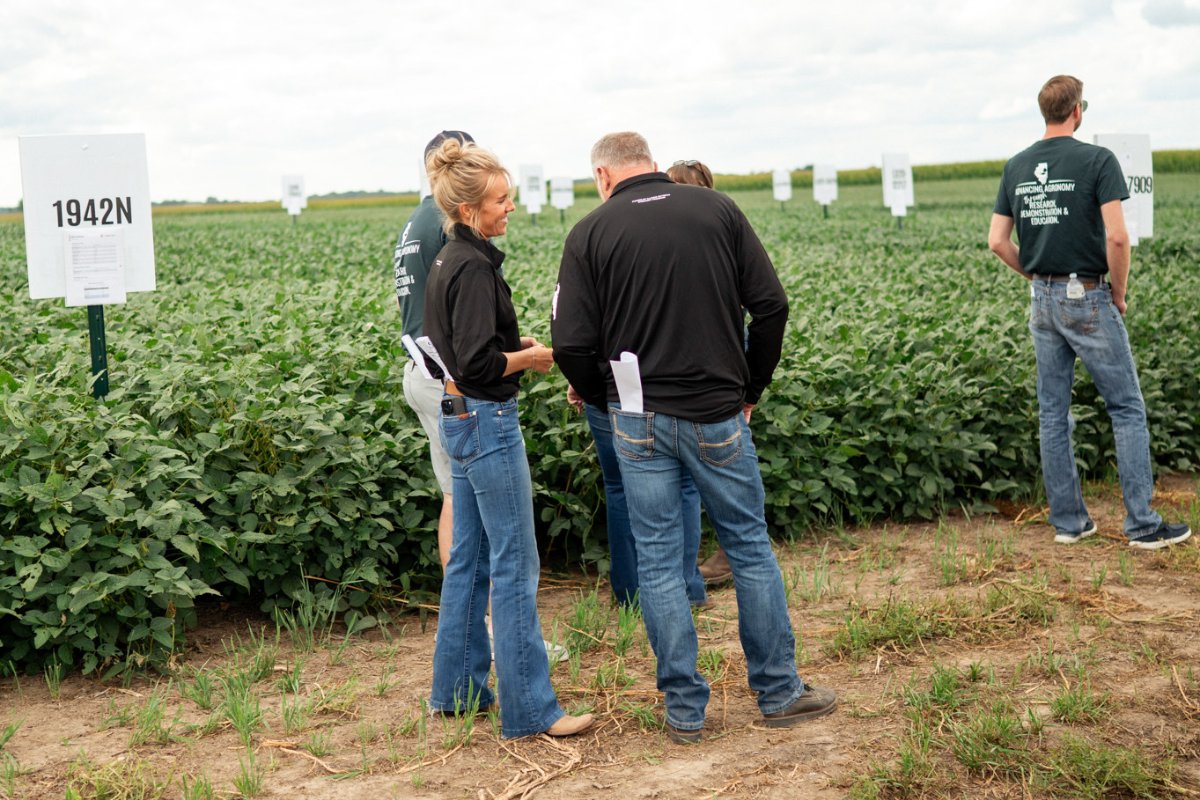
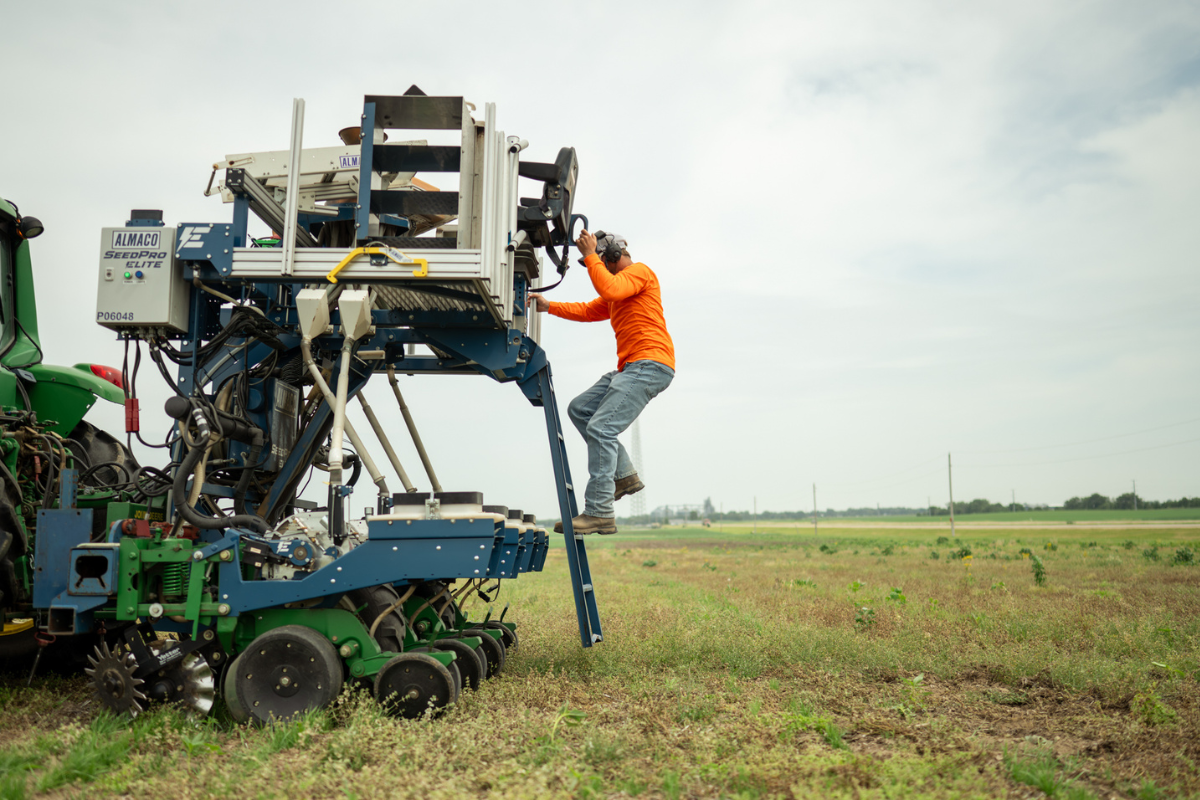
The Illinois Soybean Association’s (ISA’s) On-Farm Trial Network (OFTN) is an initiative to do on-farm research with farmers around the state. The primary objectives are to ask reasonable, feasible and pressing questions and to evaluate them across many different environments, weather conditions and soils. OFTN research trials fall within two main categories: Action Trials and Legacy Trials.
Action Trials focus on agronomic issues and are generally short-term. Legacy Trials have more of a conservation focus and are designed to evaluate the long-term effect of cover crops and minimum tillage on soil health properties. Ultimately, the aim of these checkoff-funded trials is to provide more information back to growers and help guide recommendations to farmers across Illinois.
One issue we are working to address through on-farm research is herbicide-resistant weed species. In our annual Soybean Production Concerns Survey, Illinois farmers ranked weed management as their No. 1 research priority, with waterhemp identified as the top pest of concern. This call to action aligns with findings from one of our current ISA checkoff-funded research projects, led by Dr. Aaron Hager at the University of Illinois, which has documented the widespread and increasing severity of waterhemp resistance to multiple herbicide groups in Illinois. Knowing how quickly aggressive weeds adapt to existing control methods, we are exploring the potential of overwintering cover crops to help suppress weeds through our Cover Crop Biomass and Weed Suppression Action Trial.
In this new Action Trial, we are evaluating cereal rye and winter barley as tools for weed control. Both species can physically suppress weeds by competing for space, water, nutrients and sunlight. They might also reduce germination and early development of certain weeds through allelopathy. Although the potential of these cover crops has been recognized in university research across the U.S., we see the need to test them on real Illinois farm fields. Our goal is to provide farmers with results that are directly relevant and applicable to their own operations here in the state.
For many farmers, weeds aren’t the only unwelcomed guests in their fields, as insect pressures, and the growing costs to control them, are becoming just as concerning. To address this, we are collaborating with Dr. Nick Seiter, Assistant Professor and Field Crops Entomologist at the University of Illinois Urbana-Champaign, on our next two OFTN Action Trials. These projects extend his work on measuring the cost-effectiveness of insecticidal seed treatments and foliar sprays beyond university plots, bringing that research onto Illinois farmers’ fields.
The first Action Trial, Insecticide Seed Treatments in Conservation Systems, will examine how seed treatments perform in high-residue systems, specifically when soybeans are planted into cover crops. Cover crop usage is becoming more common, and their presence can attract different pests than conventional corn–soybean systems, including slugs. In these situations, seed treatments might also kill beneficial insects that would otherwise help control slugs. Our goal is to identify both the impacts and the tradeoffs of insecticide use in conservation management systems.
The second insecticide Action Trial, Return on Investment of Soybean Foliar Insecticides, will look at foliar treatments applied to soybeans at the R3 or R5 growth stages compared to a no-insecticide control. These foliar products are often applied with fungicides during the reproductive stages for late-season protection, but it’s often difficult to know which insects are causing the damage and whether insect feeding levels justify an application. Through insect monitoring, plant-injury assessments and yield collection, we aim to better understand when insecticide applications truly pay for themselves in soybean yield protection.
We conducted these insecticide trials in the 2025 growing season alongside a sulfur trial on soybeans, where we evaluated the impact of applying 30 pounds of sulfur as either ammonium thiosulfate (ATS) or ammonium sulfate (AMS) on yields. For the 2026 season, we again are enrolling growers interested in testing ATS, AMS and/or gypsum as part of our Sulfur 2.0 Action Trial. Previous work by Dr. Shaun Casteel, Professor of Agronomy at Purdue University, has shown promising soybean yield responses to sulfur applications, and many Illinois farmers are wondering if they might see the same results. By collecting multiple years of data, we aim to better evaluate treatment responses and determine whether sulfur applications can have a consistent, meaningful impact on soybean yields in Illinois.
Our final Action Trial for the 2026 growing season will focus on a soybean cropping system working its way up the state: double crop. As more farmers explore a double-crop system, which involves planting wheat in the fall after corn harvest and then following wheat with soybeans, we receive a lot of questions about agronomic management basics for the economic viability of this practice. For this reason, we have developed the Double-Crop Soybean Management – Planting Population Action Trial. We will compare three soybean planting populations: 180,000, 220,000 and 260,000 seeds per acre. By tracking yields and seed costs, we aim to identify which population offers the best economic return for growers.
Although we recruit for Action Trials annually, we also are looking for farmers interested in participating in Legacy Trials in place for multiple growing seasons. Beyond tracking soil changes resulting from conservation practices, the goals of Legacy Trials include providing guidance and feedback for adopting those practices. In 2026, we hope to add two new Legacy Trial sites, ideally in central or southern Illinois. These sites will remain in place for a minimum of five years with replicated comparison strips of cover crops and strips without cover crops. Our team will work with farmer participants on developing a plan that works best for them while still providing us with good comparison data.
We are actively recruiting farmers to participate in these Action and Legacy trials across the state. Requirements vary by trial, so visit fieldadvisor.org/on-farm-trial-network/ to see the full protocols and specific requirements. However, all trials require that farmers have a calibrated yield monitor and a minimum of 40 acres enrolled.
Participants will receive results from all collected trial data such as soil sample results, and a summary of their yield monitor data by plot and soil type. In addition, qualified farmers participating in ISA’s OFTN might be eligible for stipend payments. Program eligibility and payment amounts will vary based on trial type and other guidelines.
Farmers interested in these trials should visit the OFTN page on FieldAdvisor.org. There, you can find the OFTN interest form to indicate your interest in enrolling. The next step will be enrollment calls with interested farmers to collect pertinent information about their operation and research interests. Once farmers have been enrolled and decisions collectively made about the trial type and treatments, we will develop the plot map and help provide guidance on best practices. OFTN team members will coordinate soil sampling and conduct field scouting throughout the growing season. We will work with you to obtain your yield monitor as soon as possible after harvest so we can analyze and provide results back to the farmer participants. We look forward to highlighting research results at future ISA events, including the Field Advisor Forum, Soybean Summit, online on FieldAdvisor.org and in this magazine.
If you have questions about any of these trials, contact Deanna Burkhart, Producer and Field Services Administrator, at deanna.burkhart@ilsoy.org or 309-307-9366.
Recent Articles
What makes Illinois soy stand out on the national and global stage? From our unmatched transportation network to innovative infrastructure projects, Illinois moves soy efficiently and effectively.
By
Where Illinois soy stands today - and where it's headed.
By IL Field & Bean Team