
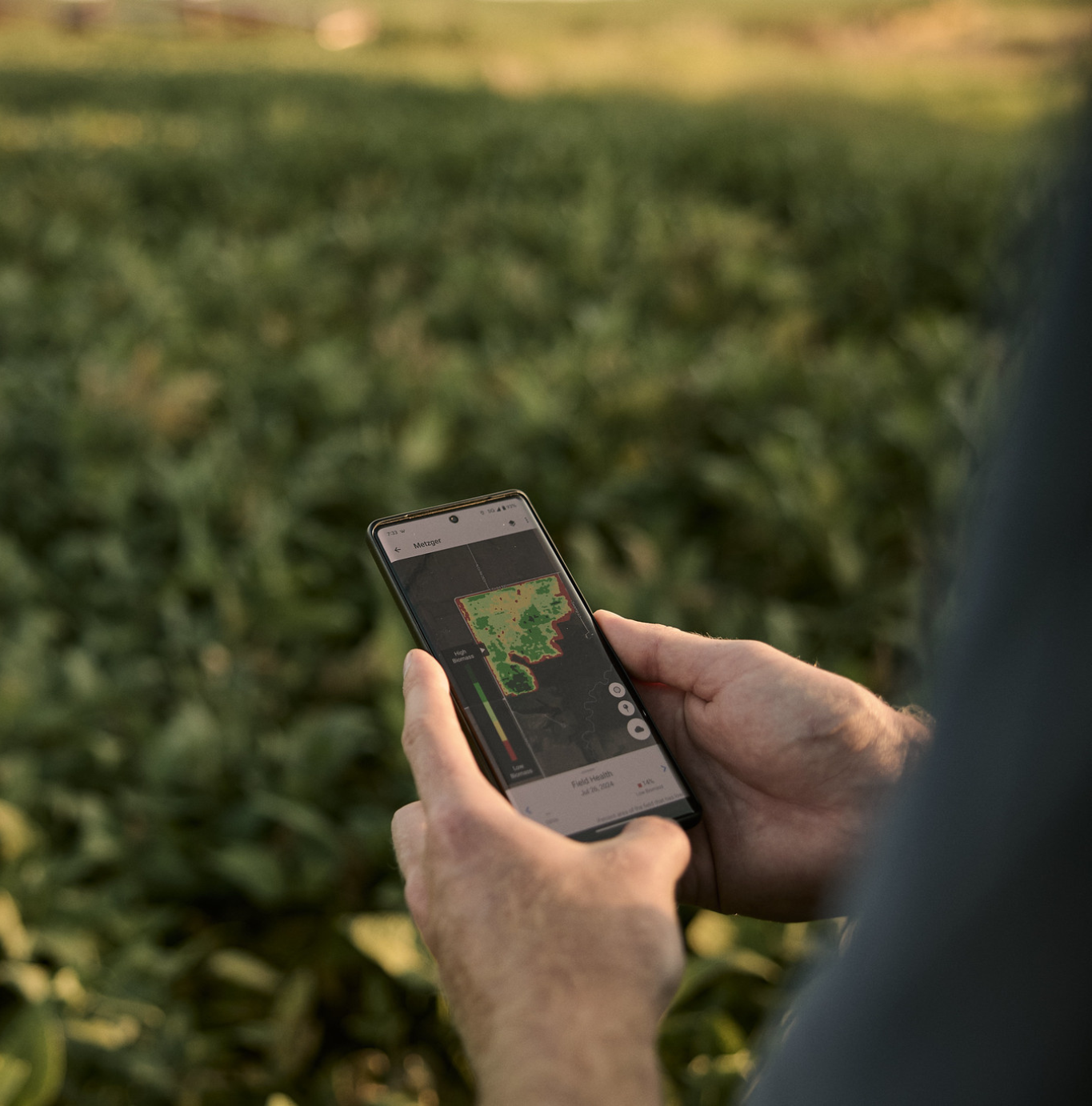
What does the farm of the future look like? Does it have robots? Automation? Fewer workers? The University of Illinois is researching those questions and more through its digital agriculture initiatives.
CDA
The Center for Digital Agriculture (CDA) at the University of Illinois Urbana-Champaign (UIUC) was formed to connect agricultural producers, university researchers and industry professionals. The CDA’s research initiatives center around automation, data, animals, crops and people. This requires connecting researchers in computer science, engineering and agriculture to tackle big-picture ag technology questions. University researchers collectively refer to these topics as digital ag.
“In the last six years, we have focused on making gains to the mission of the CDA,” said Jessica Wedow, Ph.D., CDA’s Associate Director of Research. “CDA combines foundational artificial intelligence research with use-inspired agricultural projects. We systematically pair together researchers from different departments within the projects, building a diverse team to tackle big challenges.”
AIFARMS
The Artificial Intelligence for Future Agricultural Resilience, Management, and Sustainability Institute, or AIFARMS Institute for short, was supported by a $20 million U.S. Department of Agriculture (USDA) grant. Andrew Margenot, Ph.D., Associate Professor of Crop Sciences at UIUC, was charged with leading the soils component of AIFARMS.
Margenot’s team used soil samples from the University of Illinois Morrow Plots, which he directs. This year, UIUC is celebrating 150 years of the plots, which are the oldest experimental crop field in the U.S. and the second-oldest in the world. The plots are split into three sections: a continuous corn rotation, a corn-soybean rotation and a corn-oatsalfalfa rotation.
How easily can artificial intelligence (AI) be integrated into soil science research, including research using soil from the Morrow Plots? According to Margenot, not that easily.
“We realized we were using AI for the wrong things,” said Margenot. “For AI, you need tens of thousands of data points, but with soils, we don’t have nearly that many observation points. We have a ‘small data problem’ in soil science using traditional wet-chemistry methods. That’s when we found out there was a lot of promise in using imaging methods instead.”
By taking magnetic resource imaging (MRI) and computed tomography (CT) scans, the team could get 3-D images of the soil core and was able to see the pores, aggregates (tiny lumps of soil formed by gluing mineral particles with organic matter) and even worm channels.
“One outcome of AIFARMS was that we were able to threedimensionally image soils using advanced machine-learning techniques,” said Margenot. “Basically, we took MRIs of the soils to look at the microscopic pore structures under varying management practices.”
The first part of this study was recently published in the top-ranked soil science journal, Geoderma.
AI can then analyze hundreds of these images per day, as compared to a few a human could do, markedly speeding up the research process.
“I think what this research does for farmers is lay the foundation for pipelines of data processing and build the basis for future techniques that may be offered by soil testing labs,” said Margenot. “This technology and level of soil analysis, which was unthinkable 20 years ago, is on the horizon in 10 to 20 years from now.”
At the end of the day, AI and advanced imaging techniques are enabling researchers such as Margenot to fundamentally rethink how they assess soils by expediting data processing. In this case, quantifying porosity of soils enables measurement of soil physical responses not captured by current methods.
But Margenot noted that farmers should also factor in their own experience when it comes to soils.
“Farmers should not doubt their instincts,” said Margenot. “In research, we should do more to validate what farmers perceive, which is probably real but we’re just now being able to measure and put numbers on some of these things. Sometimes, we confuse measurability with reality.”
OTHER CDA RESEARCH
Boris X. Camiletti, Ph.D., Associate Professor of Crop Sciences at UIUC, is leading a research project funded by the Illinois Soybean Checkoff. His project, Red Crown Rot Management in Soybeans, is studying how to detect red crown rot (RCR) in soybeans with remote sensing, i.e., satellite imagery and drones.
The research, which started in 2024, is taking place on multiple soybean fields across Illinois with a history of RCR, in addition to research plots and greenhouse trials.
“The problem is that we cannot physically scout every corner of a field,” said Camiletti. So, we use satellite imagery to have a big picture of how a field looks. Then, we are doing the drone work to have a close look at the disease and to estimate the disease severity.”
RCR is spreading in Illinois and can cause up to 70% yield loss in a field by infecting plant roots. But it often goes unnoticed until too late because it develops in patches in soybean fields.
The goal of this research is to enable targeted fungicide applications by identifying RCR hotspots, which will reduce unnecessary chemical applications and thus chemical costs. The project will also track disease progression over multiple seasons and map the statewide distribution. At one location, satellite analysis showed an RCR-infected area increasing from 6% to 26% of the field in just two years.
Camiletti noted that his team is looking for farmers with known or suspected RCR in their fields to participate in his research in the 2026 growing season. If you are interested in participating, contact Dr. Boris Camiletti at bxc@illinois.edu.
THE FUTURE
University of Illinois Extension sees the importance of connecting farmers with the digital ag research happening at the university. Dennis Bowman is helping producers understand and implement digital ag solutions in his role as Extension Digital Agriculture Specialist.
“I work to take the farmer perspective to the researchers and then bring research to the farmers through outreach activities and field days,” said Bowman. “The goal of the research is to help farmers make better and more profitable decisions and to develop smarter systems that farmers can get greater value from.”
Many research projects at CDA showcase the convergence of different types of technology, for example the ag benefits of using AI, satellite imagery and drone imagery together. Bowman compared this to how cellphones now contain cameras, maps and apps, rather than only helping farmers make calls.
“From these research projects, there are going to be applicable things for agriculture in the near future, but there are always going to be things we’re going to be researching further out,” said Bowman.
“Going into the next five to 10 years, we want to work with farmers even more to ensure we’re incorporating their thoughts and feedback and making sure the research is helping them get real gains,” added Wedow.
Recent Articles
What makes Illinois soy stand out on the national and global stage? From our unmatched transportation network to innovative infrastructure projects, Illinois moves soy efficiently and effectively.
By
Where Illinois soy stands today - and where it's headed.
By IL Field & Bean Team