
Partnership might sound like a casual business transaction, but for Illinois soybean farmers, the value of partnership runs much deeper. Good things come from partnerships: a research trial that reduces risk, a conservation program that pencils out, a buyer relationship that protects demand or a new soy-based product that moves more bushels.
“At the Illinois Soybean Association (ISA), partnerships are at the heart of everything we do,” explains Abigail Peterson, ISA’s Director of Agronomy and a Certified Crop Adviser. “From universities to national organizations and global networks, these collaborations are essential to delivering practical, farmer-focused research that drives profitability and reduces risk on every acre.”
That’s the larger story behind ISA’s many longstanding partnerships. Together, they bring more expertise, stronger market access, better information and new demand-building opportunities to Illinois soybean farmers.
Read on to discover the value that returns to your farm via collaborations with universities, USDA’s Natural Resources Conservation Service, the U.S. Soybean Export Council, Soy Excellence Centers and the Illinois Innovation Network.
Turning Research into Field-Level Decisions
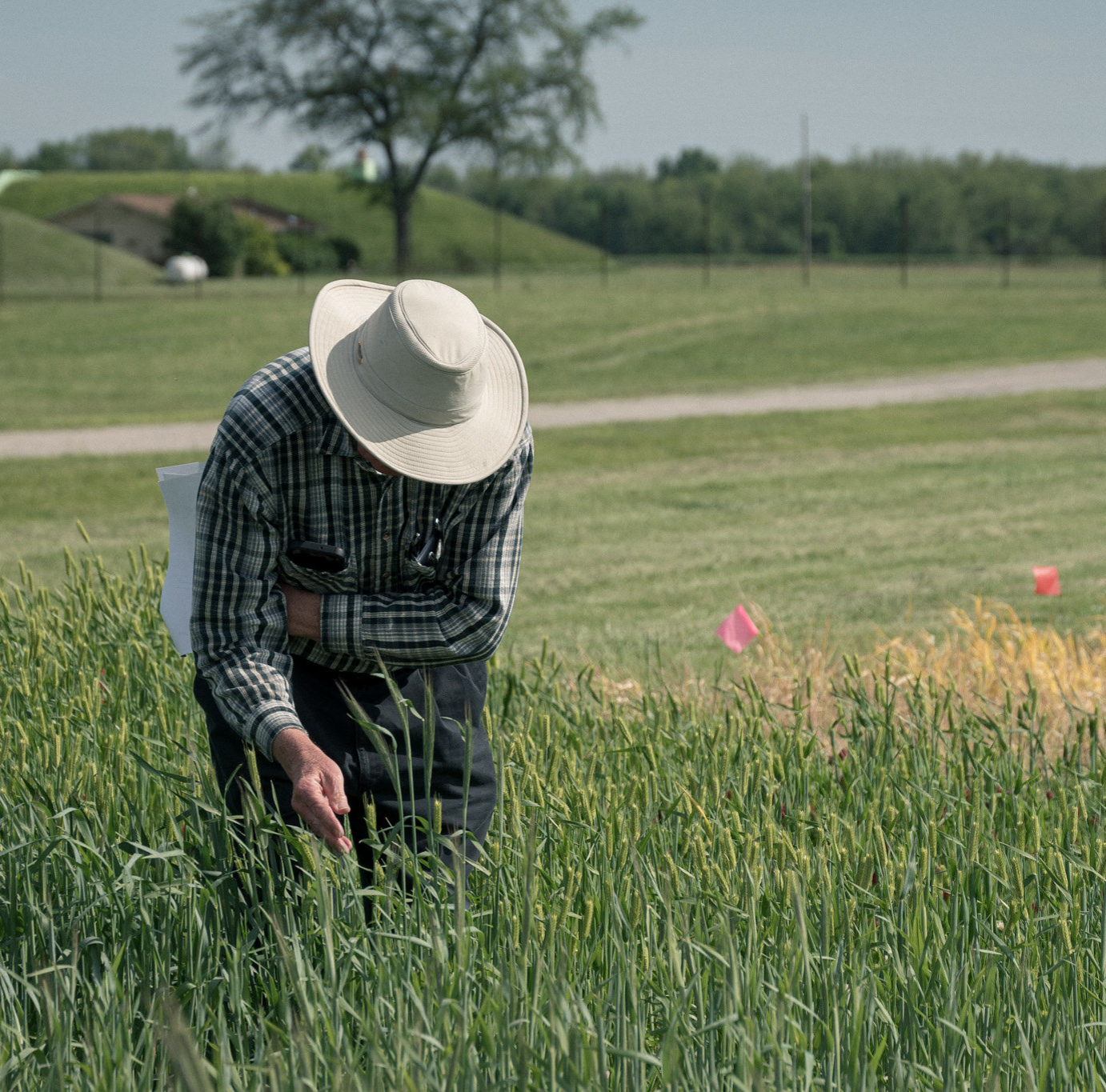
When it comes to cultivating university partnerships, ISA focuses on investing in collaboration and research that will lead to better decisions in the field.
“ISA’s Soybean Production committee is guided by a clear objective: to deliver cross-functional agronomic research and education that creates opportunities for Illinois soybean farmers to increase on-farm profitability and better manage crop production risks,” Peterson says.
By partnering with researchers at the University of Illinois, Southern Illinois University, Purdue University and other institutions, ISA can expand the scope of soybean research while keeping farmer needs at the center. “These partnerships are not just about funding research—they are about co-developing solutions,” Peterson says.
One example is a multi-institution project studying emerging soybean pests and diseases, including dectes stem borer and soybean gall midge. Led by researchers from Southern Illinois University, the University of Illinois and the Illinois Natural History Survey, the project uses field sampling, laboratory analysis and surveys to better understand how these threats affect soybean yields across Illinois.
Research collaboration extends to conservation-focused efforts, too. In the Lake Bloomington and Evergreen Lake watersheds, ISA is working with experts from Purdue University, University of Illinois, McLean County Soil and Water Conservation District, and the City of Bloomington to deliver a practical, data-driven framework that conservation agencies and farmer-led watershed groups can use to target conservation practices such as cover crops to reduce nutrient loss into waterways.
ISA connects Illinois farmers to broader regional research through the North Central Soybean Research Program, which supports multi-state university research on plant stressors that reduce soybean yield and profitability. Through Science for Success, checkoff-funded research is translated into fact sheets, webinars, videos and other tools farmers can use to make timely management decisions.
“These partnerships ensure that Illinois farmers are not facing today’s challenges alone,” Peterson says.
Making Conservation Practical
The partnership between ISA and USDA’s NRCS is helping more Illinois soybean farmers explore how conservation practices, programs and financial resources might fit their operations.
“At a high level, the purpose of the partnership is to increase awareness and adoption of conservation management practices on Illinois cropland by combining NRCS resources with ISA’s strong farmer network and agronomic expertise,” explains Whitney Miller, Agronomic Services Coordinator for ISA.
The five-year agreement began in August 2024 and runs through August 2029.
ISA’s role is to help bridge the gap between federal conservation resources and farm-level realities, Miller says. The association works with farmers to understand barriers such as cost, time, labor and equipment, then turns that feedback into outreach that helps farmers and NRCS staff better understand real-world implementation.
Farmer feedback has made one point especially clear: Many farmers believe in the value of conservation practices, but cost remains a major barrier.
“If cost is the biggest barrier, and not every NRCS applicant can be funded, then economics has to be part of the conversation when discussing the transition to conservation management practices,” says Darby Danzl, Regional Technical Agronomist for ISA.
That economics-first approach has shaped events such as the Illinois Cover Crop Field Day, Dinner and Data, Talk Dirt to Me: Soil Test Interpretation for Profitable Management, cover crop field tours and Soil Health Week programming. These events and others like them connect farmers with data from Illinois-specific checkoff-funded research, NRCS programs and practical insights about cover crops, nutrient management, weed suppression and reduced tillage.
The NRCS partnership also helps farmers better understand federal programs such as CSP, EQIP and RCPP. “The partnership isn’t about creating exclusive access to programs or funding opportunities. Instead, it’s about making sure farmers understand what’s out there and feel comfortable taking that first step,” Miller notes.
Mindset matters. “Peer-to-peer interaction often builds confidence in a way that written materials alone do not,” she adds.
The broader value of the partnership is helping farmers see conservation as another business decision alongside production and financial considerations. “This partnership helps break down that divide by reframing conservation as a practical part of doing business, rather than a label,” Miller says.
For Danzl, another partnership benefit is the opportunity to clear up common misconceptions about conservation program participation and payments.
“In most cases, farmer payments are tied to implementing the agreed-upon practice according to NRCS standards, rather achieving perfect results. For example, if a farmer plants a cover crop and dry weather affects emergence, they may worry that they will not receive the payment,” Danzl relays. “However, that’s not true, and NRCS understands that weather is a huge variable in farming. As long as the cover crop is planted according to program requirements, they will still receive funding.”
Building Global Soy Demand
If production and conservation partnerships help Illinois farmers manage what happens on the acre, ISA’s global partnerships help grow demand for the crop produced from those acres.
By working with the U.S. Soybean Export Council (USSEC) and Soy Excellence Centers (SECs), ISA helps connect Illinois soybeans to buyers, industries and future agriculture leaders in growing markets.
“Customers have the option to buy soybeans from anywhere in the world, so to build long-term demand, we have to form quality relationships, which is what the excellence centers help to do,” explains Eileen Pabst, Market Development Manager for ISA.
Experts at the Soy Excellence Centers, a USSEC-led initiative supported by ISA, train emerging agricultural leaders in high-growth regions such as Southeast Asia, Africa and Latin America. They provide education in areas such as feed formulation and animal performance.
Meanwhile, USSEC strengthens end-user demand in feed, aquaculture, poultry and food uses while positioning U.S. soy as reliable, sustainable and high quality.
Those relationships shape purchasing decisions, build technical understanding and create brand loyalty beyond a single transaction, Pabst says.
Trade missions and buyer relationships add yet another dimension of partnership for Illinois soybean farmers and end users. A recent trade mission to Vietnam and Thailand, for example, helped ISA better understand the soybean supply chain after the crop leaves the U.S. “Nothing beats face to face conversations that offer collaboration and connection,” she says.
Conversations increasingly focus on sustainability and amino-acid profiles rather than crude protein alone, reflecting changing customer expectations from just a few years ago, Pabst says. Partnerships help ISA understand those needs and respond with technical information from a place of trust.
Partnership with USSEC and the Soy Excellence Centers adds critical capacity to serve every country that buys U.S. soy, a service ISA alone can’t provide. That’s particularly crucial in an uncertain trade environment.
“Now more than ever, we need to ensure we have diverse market opportunities for our farmers, and we want U.S. soy to be the first call,” Pabst says.
Creating New Soy Uses at Home
There’s also demand-building work to be done at home, an effort supported by ISA’s partnership with the Illinois Innovation Network (IIN). The collaboration among the state’s public universities includes 15 research hubs focused on innovation and economic growth.
“The IIN has some of the best research facilities in the state, and our collaboration represents the most cost-effective way to develop innovative ways to create new demand for Illinois soy,” says Todd Main, Director of Market Development for ISA.
The collaboration is already producing momentum.
“One of the earliest success stories is that we doubled the project proposals submitted to the SpringBoard Challenge from Year 1 to Year 2,” Main explains. The competition provides seed funding to researchers, students, scientists and innovators developing soy-based, sustainable alternatives to everyday products.
Research is another key element of the partnership. Ideas in review within the IIN illustrate soy’s enormous potential beyond traditional uses. Current or submitted projects include self-healing polymers from soybean oil, biodegradable polyester amides from soy meal and soy hull, low-carbon specialty lipids from liquefied soybean hulls, and a method for rare-earth-element separation and extraction using soybean oil and 3-D nanoporous micro-ribbons.
The partnership includes intellectual property agreements designed to share financial returns from commercialization. Progress takes time, and Main notes that many new products fail along the way. Still, ISA has filed two patents this year—one for soy-based plastics and another for soy-based xylitol—and successful research could lead to others.
Taken together, these partnerships expand the bench available to Illinois soybean farmers, strengthening business decisions, improving demand and cultivating an even better competitive position on every acre.
Recent Articles
What makes Illinois soy stand out on the national and global stage? From our unmatched transportation network to innovative infrastructure projects, Illinois moves soy efficiently and effectively.
By
Where Illinois soy stands today - and where it's headed.
By IL Field & Bean Team