
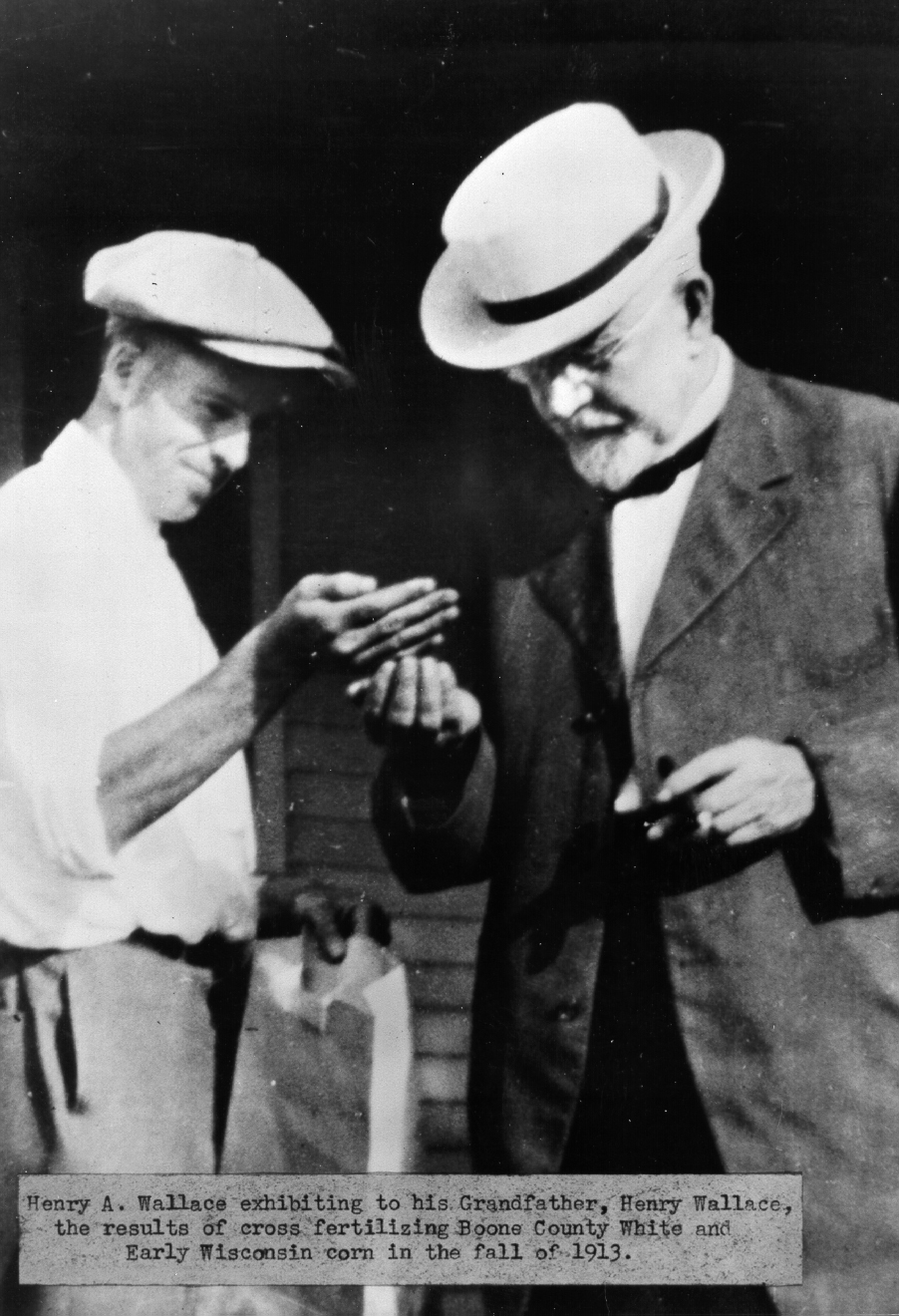
Early in my career, I studied plant breeding and genetics and interacted with different seed companies. What drew me to Pioneer was its Long Look philosophy introduced in 1952.
Long Look meant that Pioneer would focus on long-term farmer success, crop performance, ethics and transparency. That idea is still very much a part of the Pioneer brand today.
As Pioneer marks 100 years in 2026, that’s what I most want Illinois soybean farmers to understand about our legacy. Pioneer has always kept farmers front and center. We want to take care of your needs and provide you with value.
A quick walk down memory lane illustrates how this philosophy has shaped Pioneer’s soybean innovation, then and now.
Built by listening to farmers
Pioneer got its start with hybrid corn, but soybeans have been a key part of the company’s portfolio since they were added to the lineup in 1973. By the mid-1980s, soybeans were the second-biggest crop in Pioneer’s ranks. By the early 1990s, we were the No. 1 soybean brand in the U.S.
Our journey has been shaped by influential leaders: founder Henry A. Wallace, longtime research-and-development head Raymond Baker and seed production leader Jay Newlin among them. But when I think of people who helped shape innovation for Illinois soybean farmers, I think of Paul Stephens, the soybean breeder in Princeton before me. He was an outside-the-box thinker who wasn’t afraid to try new things.
Across our history, growth has come from innovations that responded to real farmer needs, such soybean varieties resistant to soybean cyst nematode (SCN). More recently, Pioneer varieties with Peking-source SCN resistance have offered even greater protection.
Weed management was another farmer pain point. When we launched Enlist E3® soybeans, it provided growers with a complete solution for exceptional, simplified weed control. Together, farmers and Pioneer have adapted to these kinds of challenges out in the field.
Innovation from seed to supermarket
Soybean production has changed so much in short order. Twenty years ago, we weren’t using seed treatments, and we weren’t planting soybeans early all the time. But we recognized where the market was heading and developed genetics well-suited for earlier planting. Then, we applied seed treatments to help establish better stands.
The Y-Series was another important milestone built on novel molecular marker technology. That foundation led to today’s Z-Series soybeans, which have ushered in a new era of high-yield, high-performing soybeans for growers.
New opportunities beyond the crop field have emerged from Plenish® high oleic soybeans. Our research and development initially focused on improving soybean oil so it would be healthier for human consumption, and we succeeded in achieving that. Yet now, it’s also used as an animal feedstock, boosting milk output and quality for dairies.
A century celebration made possible with farmer feedback
The exchange of knowledge between Illinois soybean farmers and Pioneer experts continues to deliver better yields. Pioneer’s outstanding agronomists connect genetic innovations with industry-leading advice. And our agronomists work closely with farmers, who provide us with information on challenges that we can help solve. It’s a powerful feedback loop.
Looking ahead, gene editing represents the next revolution in plant breeding. It will enable us to make genetic combinations that were impossible or very difficult in the past, resolving soybean production challenges while still getting high yields.
Yet innovation is only possible because of you, the farmer. Pioneer’s 100th anniversary is such a significant milestone, and very few companies reach it. Farmers and growers have been a big part of our story and our success, and we want to invite you to celebrate with us.
To mark this milestone this year, we’ll set up Century of Innovation plots in Illinois and across the U.S., hold local events and post displays about our history. To learn more or to find an event in your area, contact your local Pioneer sales representative or visit pioneer.com/100.
At the end of the day, farmers need to produce bushels to be profitable. We remain fully focused on helping you do that.
Recent Articles
What makes Illinois soy stand out on the national and global stage? From our unmatched transportation network to innovative infrastructure projects, Illinois moves soy efficiently and effectively.
By
Where Illinois soy stands today - and where it's headed.
By IL Field & Bean Team