
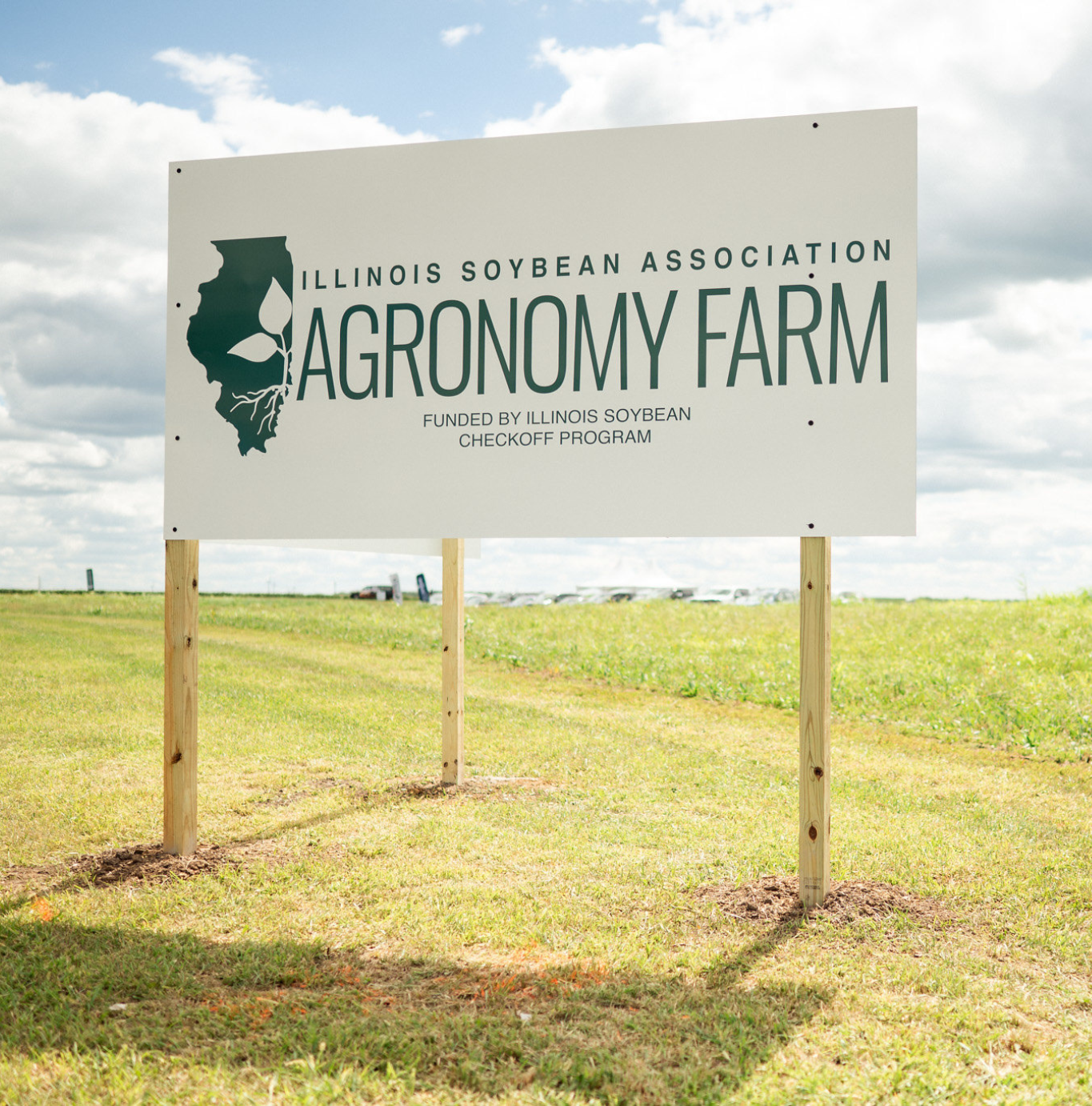
In its first full season, the Illinois Soybean Association (ISA) Agronomy Farm began to take shape as more than just another research site. It is emerging as a long-term, systems-focused farm designed to answer real-world questions about soybean production, crop rotations and return on investment (ROI) in Illinois.
Located just 20 minutes south of the ISA Bloomington office, the farm is uniquely positioned to serve as a hands-on classroom and demonstration site for farmers, researchers, policy makers and industry partners.
THE FARM’S FIRST YEAR
The first year focused on laying a strong foundation.
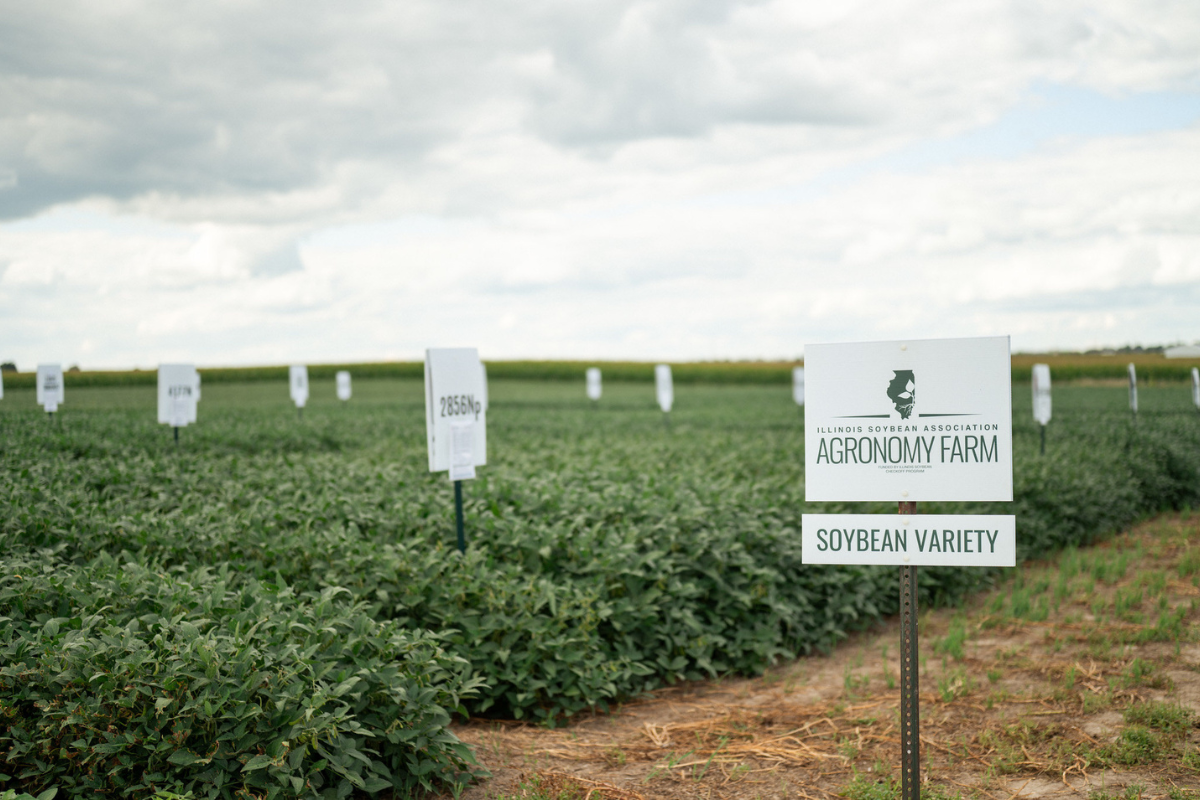
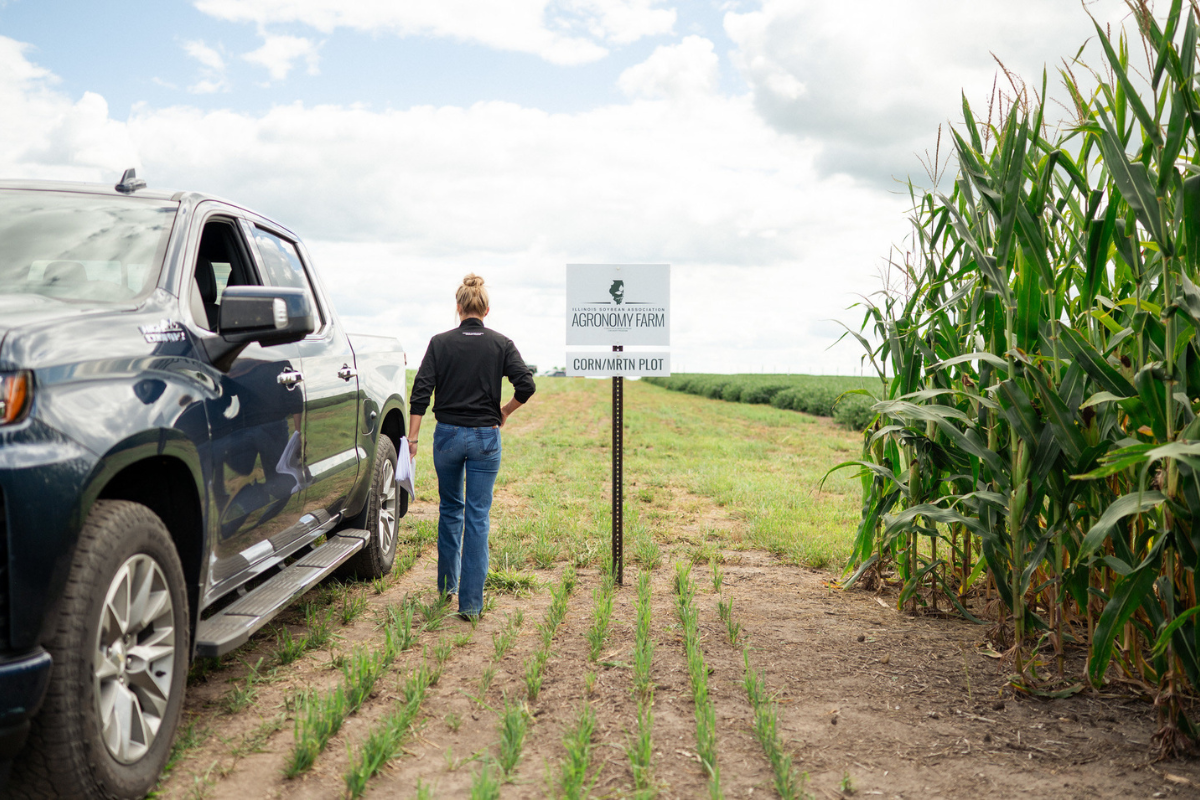
We began with breaking out the front of the field into several larger, 10-acre plots, which included a corn maximum return to nitrogen (MRTN) trial in partnership with Dan Schaefer at the Illinois Fertilizer and Chemical Association (IFCA) and the Illinois Nutrient Research and Education Council (NREC). Soybean acres were dedicated to the variety and breeding program at the University of Illinois with Dr. Eliana Monteverde, and wheat was added to introduce crop rotation into the system. Cover crops were planted in the remaining acres to support weed control and to prepare the field for future trials.
ISA also partnered with the Natural Resources Conservation Service (NRCS) to establish a cover crop species demonstration plot. This plot features a range of species commonly used by Illinois farmers, along with others they might be less familiar with. It will continue to expand in the coming years.
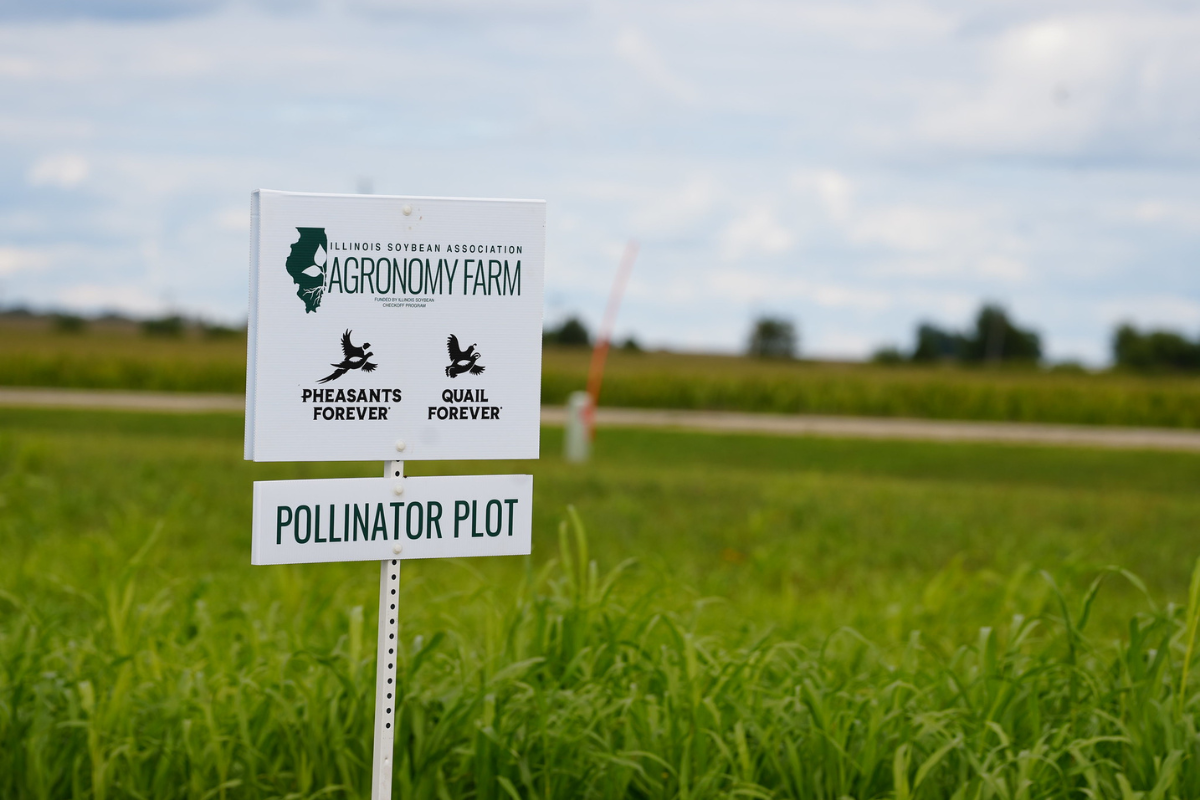
In collaboration with Pheasants Forever and Quail Forever (PFQF), a long-term pollinator plot was established at the very front of the field. Designed to showcase what farmers could implement on their own operations, the plot will require ongoing maintenance to demonstrate the steps needed when incorporating pollinator habitats.
The farm also features a waterway that was previously implemented by NRCS to address field-specific concerns. Today, it serves as both a teaching tool for erosion control and drainage management and an access route to the back of the field for tours and field days.
Thank you to our 2025 partners for helping establish the first year of plots on the farm. Through collaboration with local farmers and university researchers, large-scale demonstrations were successfully implemented and will continue into next year. Focusing on refining field measurements and logistics, and managing wheat, double-crop soybeans and crop production, will support meaningful demonstrations and long-term success for years to come.
DEMONSTRATIONS GUIDING DECISIONS
Demonstration plots at the ISA Agronomy Farm explore varying management approaches with a focus on understanding both economic performance and agronomic impacts.
Some of the cover crop plots will be established in the fall within the typical regional planting window. An additional plot will be planted in the spring to allow farmers and visitors attending in July and August to better observe and compare cover crop development across different species.
This approach will allow researchers and visitors to answer some important questions. For example: When making cover crop decisions, what considerations influence the selection of annual ryegrass, winter barley, cereal rye or triticale? How do species such as balansa clover and berseem clover differ in performance and management? Other topics of study will explore questions of winter survival. For example, can winter barley reliably withstand a central Illinois winter?
These comparisons are typically not easy to observe in one location. The plots at the farm are designed to demonstrate these differences side-by-side, with a focus on agronomic management considerations and soil health principles.
Ultimately, our goal is to create a place where farmers can experience practices they might not typically see on their own farms or in traditional agronomy trials.
WHAT’S NEW THIS YEAR
For the 2026 growing season, several new trials and demonstrations are being implemented.
On the back 60 acres of the field, we’re implementing an action trial evaluating sulfur applications using ammonium sulfate. This work is part of ISA’s broader On-Farm Trial Network, with similar protocols being conducted on farms across the state.
By comparing results from the ISA farm with data from other locations, farmers can better decide whether sulfur fits their system, how timing and rate affect yield and ROI, and if they want to participate in the On-Farm Trial Network themselves or run similar comparisons on their own.
Similarly, a 7-acre biomass demonstration plot comparing winter barley and cereal rye will be implemented this year, which also mirrors the On-Farm Network protocol.
In addition, we’re establishing longer-term plots that compare management approaches such as continuous tillage versus no-till, strip-till systems and cover crops used in systematic rotations. These plots are designed to help farmers visualize how management decisions play out over time, not just in a single growing season.
The high oleic soybean demonstration will also expand to include additional varieties, giving farmers a closer look at differences in oil composition, grain quality and how these traits might align with emerging market opportunities.
LOOKING FORWARD
The future of the ISA Agronomy Farm is to serve as a long-term, farmer-driven systems operation that continuously evolves to address the emerging needs of Illinois soybean farmers. By providing opportunities to showcase a wide range of soybean-system approaches, the farm will continue testing combinations of practices with a clear focus on ROI and real-world practicality.
The farm represents one location within a broader network of on-farm trials being implemented by farmers across the state. Together, these efforts strengthen regional relevance by capturing insights from diverse soils, weather conditions and management environments.
Over the next five to 10 years, the ISA Agronomy Farm is intended to grow as a hub for education and engagement, not only for farmers, but also for students, consumers, market and trade partners, and policymakers. It will serve as a demonstration site for how Illinois soybean systems can adapt to evolving challenges and emerging opportunities.
MARK YOUR CALENDAR: JULY 16 FIELD DAY
We’re looking forward to welcoming farmers, agronomists and partners to the farm for a field day on July 16. Attendees will have the opportunity to walk the plots, explore the systems up close, ask questions and hear directly from researchers and farmer partners. Watch for more details and registration information on FieldAdvisor.org.
We hope to see you in the field!
Recent Articles
What makes Illinois soy stand out on the national and global stage? From our unmatched transportation network to innovative infrastructure projects, Illinois moves soy efficiently and effectively.
By
Where Illinois soy stands today - and where it's headed.
By IL Field & Bean Team