
What’s Ahead for Illinois Soybean Farmers in 2026
As the Trump administration enters its second year, Illinois soybean farmers face a policy environment full of both opportunity and uncertainty. From new federal health initiatives to domestic biofuel incentives, a necessary skinny Farm Bill and shifting global trade patterns, federal decisions made in 2025 will directly shape the 2026 growing and marketing year. Illinois Soybean Association (ISA) is tracking each development closely to ensure farmer interests are represented.
MAHA: A Cautious Eye on a Potential Regulatory Threat
Make America Healthy Again (MAHA) is one of the most significant federal initiatives introduced in 2025. Designed to address childhood chronic disease through nutritional guidance, environmental exposure reductions and chemical review, MAHA represents an approach that touches many parts of the food and agriculture system.
For soybean farmers, MAHA presents potential regulatory risks. Early MAHA materials referenced both pesticide exposure and concerns about seed oils, including products created from soy. Although the initiative is still in its strategic phase, the scope and tone suggest future recommendations or rulemaking could influence pesticide access, labeling or nutrition policy in ways that impact soybean markets.
ISA is approaching MAHA with caution. Farmers recognize the importance of health and nutrition but also know that decisions must be grounded in accurate science, not fear-based narratives or misperceptions about safe, approved crop protection tools. ISA is working to ensure any federal consideration of pesticides or oils includes farmer input, environmental realities and the economic role soy plays in food, feed and fuel markets.
Federal Biofuel Policy Evolution: 40A, 45Z and the Path Forward
Biofuels remain one of the strongest demand drivers for Illinois soybeans, but the current mix of incentives brings both promise and uncertainty.
The new 45Z Clean Fuel Production Credit, active in January 2026, provides valuable short-term momentum for biodiesel and renewable-diesel producers. The credit’s carbon-intensity-based design rewards lower-carbon feedstocks, and soybean oil continues to hold a central place in the industry’s pathway.
However, farmers and biofuel producers alike are concerned about the January 2025 expiration of the longstanding 40A Biodiesel Blender’s Credit, which was the most durable and stable incentive the industry has had. Illinois soybean farmers benefited from policy certainty, something 45Z alone does not provide. The opportunity for biofuels is large, but so is the need for clarity. The outlook for 2026 hinges on whether Congress provides long-term stability for soy-based fuels.
2026 Skinny Farm Bill: A Necessary, Targeted Update
As Congress turns attention to the next Farm Bill, expectations are increasingly centered around a “skinny” package — a streamlined bill that updates essential farm programs without reopening broader political battles.
Much of the heavy lifting for agriculture was already completed in the administration’s earlier omnibus package, often referred to as the One Big Beautiful Bill. That measure included many policy updates that would traditionally be part of a broader Farm Bill debate. As a result, lawmakers appear ready to focus on essentials rather than on major structural changes.
For Illinois soybean farmers, the top priority is preserving a strong, reliable crop insurance program. With volatile markets and rising input costs, crop insurance remains the most important risk-management tool available. A skinny bill that protects crop insurance, addresses rising loss ratios in Illinois for corn and soy farmers, and avoids unexpected disruptions, would be the most beneficial outcome for 2026.
ISA is advocating for a Farm Bill that maintains predictability for growers and prevents sudden changes that could complicate planting or marketing decisions.
Trade Direction and Global Markets
As Illinois soybean growers look ahead to 2026, global trade dynamics continue to evolve, and the role of China, historically our largest customer, has shifted significantly. In 2024, China imported a record 105 million metric tons of soybeans, but only about 22 million tons came from the U.S., placing our country’s share at roughly 21%. That represents one of the lowest market shares in over a decade and highlights how competitive the global marketplace has become.
This past fall, U.S. exporters even saw periods with no new Chinese purchases during harvest. More recently, China has begun booking additional U.S. soybeans for the 2025/26 marketing year, which is an encouraging sign. But it’s far from a return to the dominance U.S. soy once held. Brazilian and Argentine supplies remain strong, and Brazil continues to expand both production and export capacity, strengthening its position with major buyers.
For Illinois producers, this means trade will likely remain more dynamic and less predictable than in years past. The long-term fundamentals of global demand remain strong, but the U.S. will continue competing aggressively with South America for market share. Looking forward, diversifying markets, supporting infrastructure improvements, and expanding domestic demand, such as crush and biofuels, will be key strategies for building resilience.
Recent Articles
In this issue of Illinois Field & Bean Magazine, we're uncovering the top trends for agriculture in 2026.
By
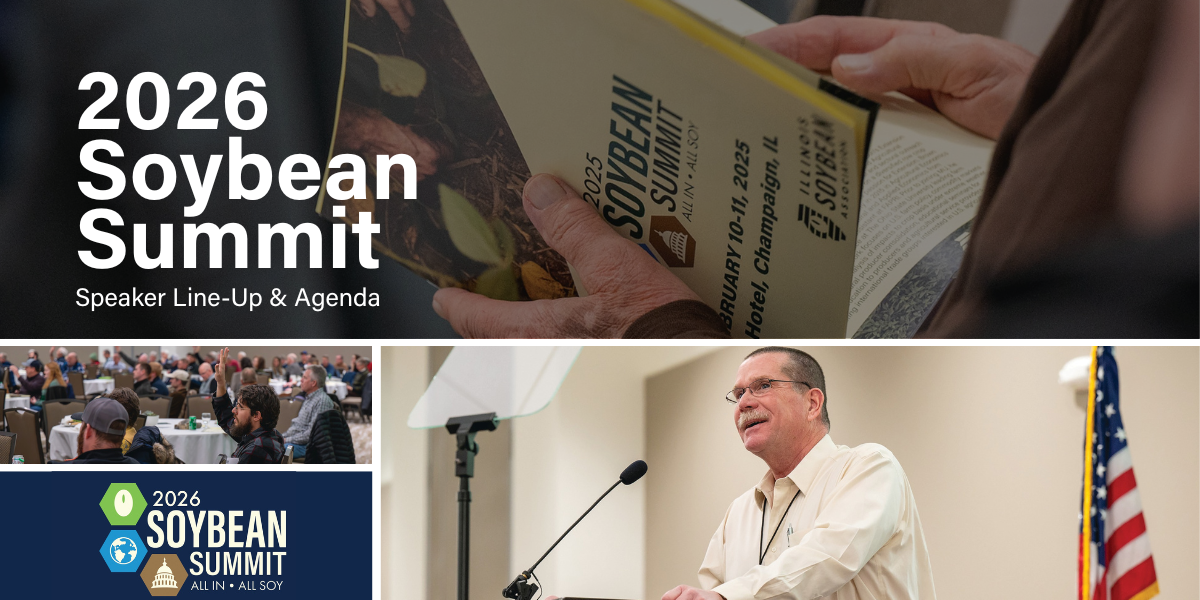
Take a look at this year’s Soybean Summit agenda, which includes topics such as global trade impacts, the future of biodiesel, conservation strategies and what’s next for farm policy.
By IL Field & Bean Team