
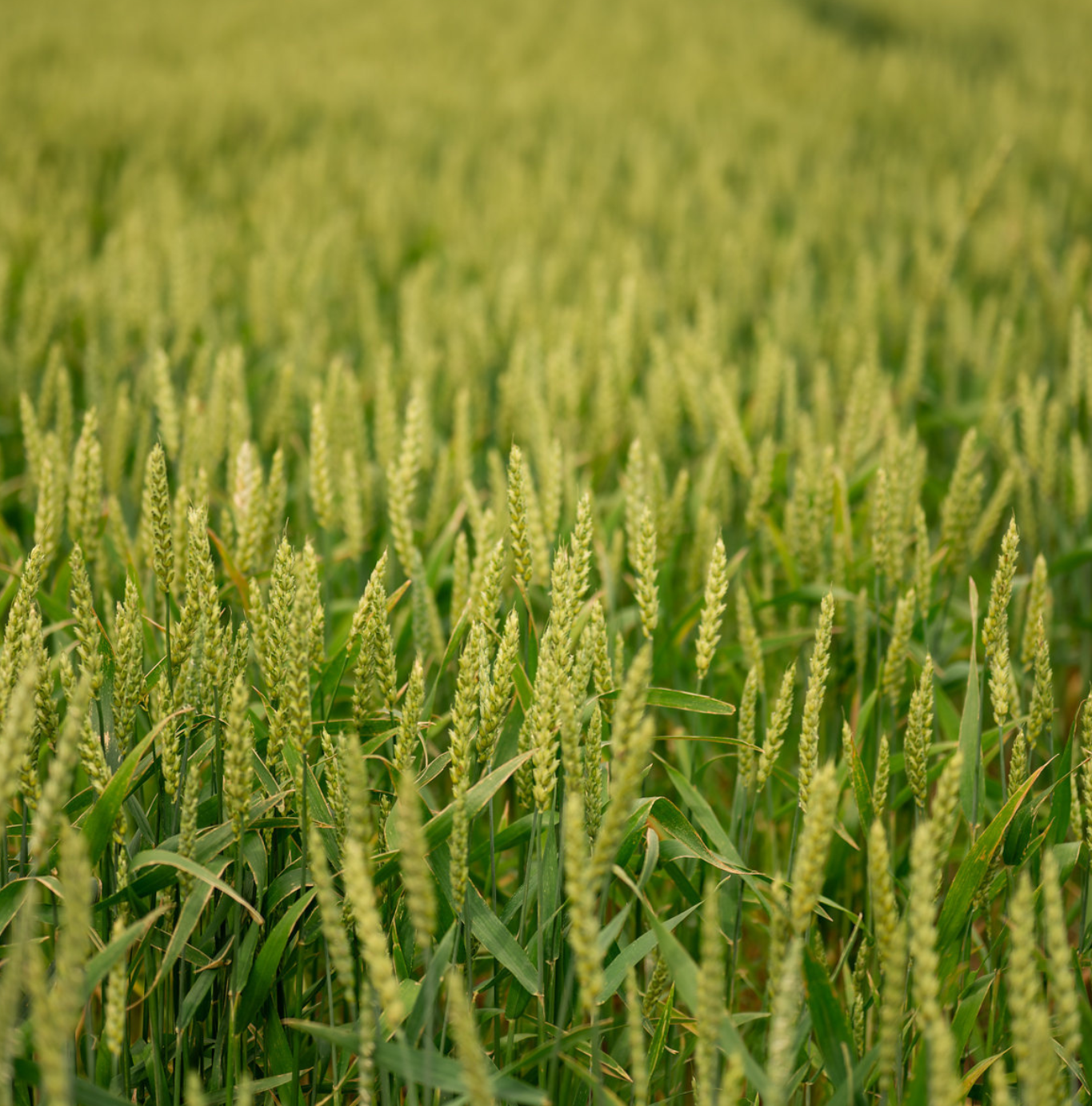
Planting winter wheat on ground in Bureau County represented a notable departure from the long-standing corn-soybean rotation that has traditionally defined much of north-central Illinois agriculture. Incorporating wheat into this system was not something I initially expected to see widely considered by local producers, yet this field—quite literally in my own backyard—served as a real-world example of how rotations can evolve to meet agronomic and economic goals.
The wheat was planted on Sept. 30, 2024, and as spring arrived, the crop greened up quickly, becoming a visible and consistent presence in the landscape. From early spring growth through harvest on July 4, 2025, the wheat stood out, not only as a break from the typical rotation but also as a reminder of the potential value that small grains can bring to Illinois cropping systems.
From planting to harvest, there were many compelling reasons why wheat appeared to be a sound agronomic choice. The crop offered opportunities for improved soil cover, enhanced system diversity and the potential for subsequent double-crop soybean production. At the same time, integrating wheat introduced new logistical considerations. Timing of planting and harvest, equipment availability, input management and marketing strategies all required thoughtful planning and adjustment compared to the more familiar corn-and-soybean cycle.
As the season progressed, several key questions naturally emerged: Was the decision to plant wheat worth the investment? Did the crop provide a positive return on investment when yields and costs were evaluated? And perhaps most importantly, does wheat deserve a place in future cropping plans? These are critical questions for any producer considering diversification.
The experience provided valuable insight into both the opportunities and challenges associated with integrating wheat into a traditional two-crop system. As yields came in and the year drew to a close, the field offered more than just grain—it provided perspective on the role wheat can play in building resilient, profitable and diversified farming operations in north-central Illinois.
The Illinois Soybean Association (ISA) has a longstanding commitment to funding impactful research that advances wheat production and double-cropping systems across the state. Over the years, ISA-supported studies have delivered valuable insights for farmers seeking to improve productivity, manage pests and diversify crop rotations.
One particularly compelling area of research has examined the role of double-cropping soybeans following winter wheat as a strategy for suppressing soybean cyst nematode (SCN) populations. Research conducted by Southern Illinois University demonstrated that soybeans double-cropped after wheat resulted in a 30% reduction in SCN counts compared to fallow systems. These findings highlight the potential of wheat-based rotations to mitigate one of the most persistent yield-limiting pests in soybean production. Additional details on this research can be found in the Crop Protection Network article authored by Leo Rocha referenced below.
Given the limited number of effective tools available to manage SCN, incorporating wheat into crop rotations offers a practical and biologically sound approach to introducing diversity into the production system. Beyond pest suppression, ISA-funded research continues to gain momentum in identifying wheat varieties that enable earlier planting of double-crop soybeans, thereby maximizing the growing season and yield potential.
Dr. Jessica Rutkoski’s research is focused on helping farmers select wheat varieties that deliver strong yield performance without increasing risk from early jointing and subsequent frost events. Her work provides critical guidance for balancing early maturity with resilience to spring weather variability. Comprehensive data on commercial wheat varieties evaluated through this research were published in the University of Illinois Official Variety Trial, available at vt.cropsci.illinois.edu. This work is continuing for a second year in 2025, further strengthening the dataset available to growers.
By applying Dr. Rutkoski’s findings, farmers might be able to select wheat varieties that allow field access up to one week earlier for planting double-crop soybeans—an advantage that can significantly impact overall system productivity. Complementary research from the Illinois Nutrient Research and Education Council has also demonstrated that winter wheat and double-crop soybean systems provide multiple environmental benefits, including reduced soil erosion, improved soil organic carbon levels, and decreased nitrogen loss from mineralization.
Collectively, this body of research underscores the value of wheat as more than a rotational crop. Through its ability to suppress pest populations, enhance soil health and diversify cropping systems, wheat represents a viable and economically sound cash crop that addresses many of the challenges associated with traditional corn-soybean rotations.
Although research provides valuable guidance and data to support decision-making, actual on-farm field experience is ultimately the most effective way to determine whether a system will perform as intended under real-world conditions. Translating research findings into practice requires careful observation of how management decisions, environmental conditions and logistical considerations intersect throughout the growing season.
Detailed information on crop inputs, management practices and in-season observations for this field can be found on FieldAdvisor.org. However, for the purposes of this article—and to remain mindful of time and space constraints—I will focus on several high-level takeaways that might encourage further exploration and consideration of the risks and rewards associated with this production system.
Final yield results were confirmed only after scale tickets were returned and verified to ensure the most accurate weights. The winter-wheat crop achieved a yield of 120 bushels per acre, while the subsequent double-crop soybeans produced 35 bushels per acre. Soybean harvest conditions were dry, allowing for timely field operations, and harvest across the double-cropped fields was completed on Oct. 26.
These results provide a tangible benchmark for evaluating the performance of a wheat– double-crop soybean system within this region. Beyond the yield numbers, the experience reinforced the importance of precise management, adaptability and a willingness to evaluate both agronomic and economic outcomes. Together, the data and field observations contribute to a clearer understanding of how this approach might fit into broader cropping strategies and inform future decision-making.
Through our work with farmers across Illinois, it is clear that there is strong interest in pursuing additional research that supports greater diversity across agricultural acres. In response, ISA is continuing to invest in on-farm research initiatives designed to evaluate practical, field-scale solutions that fit within existing production systems while expanding agronomic and economic opportunities.
One area of focus moving forward is plant population management within double-crop systems. As part of the ISA 2026 On-Farm Trial Network, farmers will have the opportunity to enroll in a population study specifically tailored to double-crop soybean production. This research aims to generate locally relevant data that can help refine management recommendations and improve decision-making under a range of field conditions. Protocols, eligibility requirements and enrollment details are available at fieldadvisor.org/on-farm-trial-network/.
In addition to conducting plant-population studies, collecting ongoing feedback from farmers has highlighted interest in exploring relay-cropping systems and alternative oilseed grain rotations. These approaches have the potential to further diversify cropping systems, enhance resource-use efficiency and introduce new agronomic and economic possibilities beyond traditional rotations. Continued collaboration with producers is essential to ensuring this research remains grounded in real-world challenges and opportunities.
We encourage farmers to share their priorities and research interests by completing the Growing Concerns Survey found on FieldAdvisor.org. Your input helps shape future research efforts and ensures that ISA-funded projects address the questions that matter most on the farm. With your participation, there is a strong possibility that this season’s research could include scouting one of your fields as part of our ongoing commitment to farmer-driven innovation.
References
Crop Protection Network article: Rocha, L. F., Pimentel, M. F., Bailey, J., Wyciskalla, T., Davidson, D., Fakhoury, A. M., and Bond, J. P. 2023. The effect of wheat on soybean cyst nematode populations in double-cropping soybean production. CPN 5010. doi.org/10.31274/cpn-20230127-0
Recent Articles
This issue of Illinois Field & Bean spotlights the On-Farm Trial Network, highlighting how on-farm research drives real-world results.
By
High oleic soybeans have opened new doors of opportunity with their beneficial profile for human-grade food products and animal feed.
By IL Field & Bean Team