
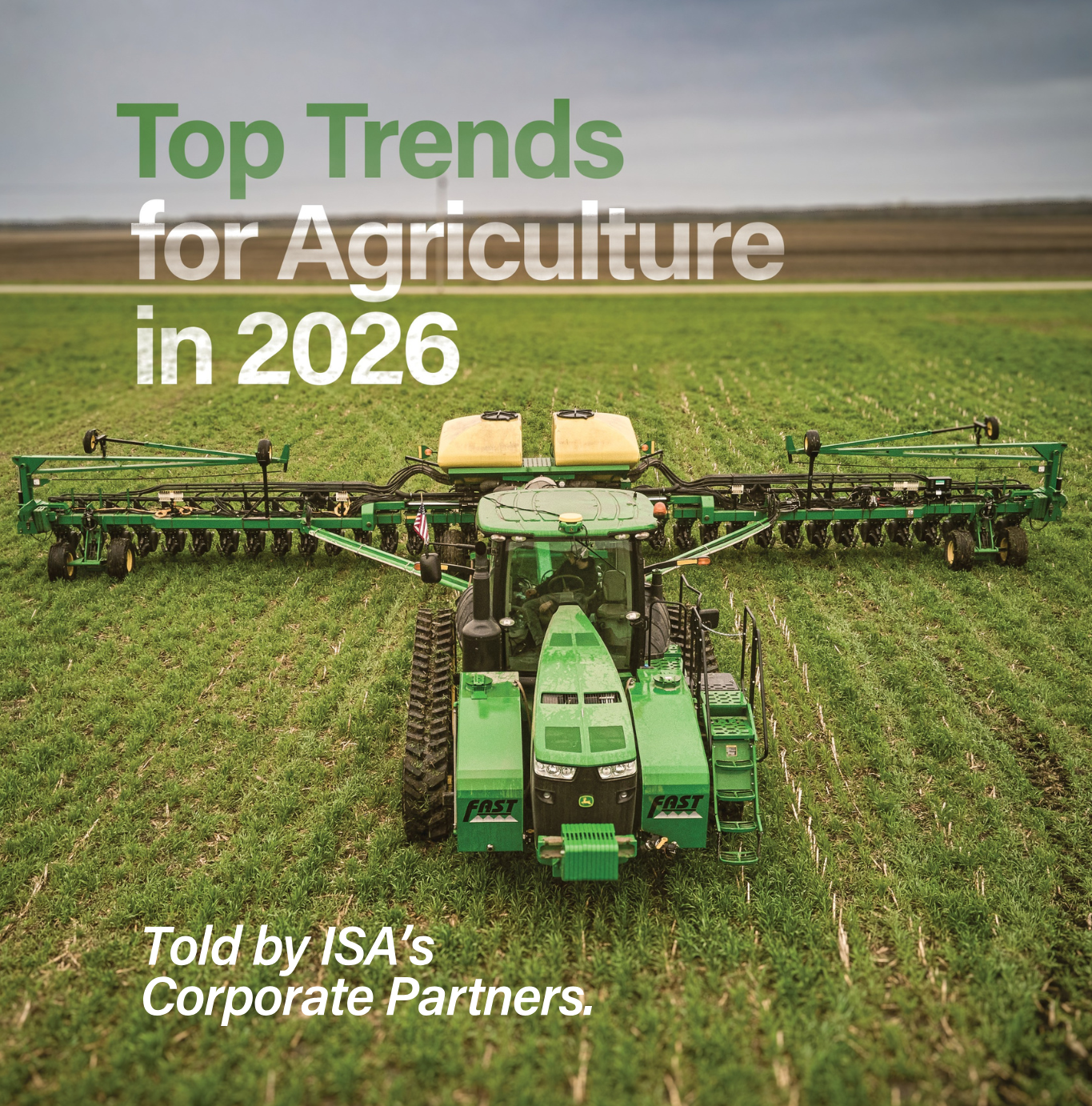
It goes without saying—this past year was one for the books. Anyone who farms, works in the agriculture industry, or knows someone who does, knows that 2025 held many challenges, including droughts, trade wars, low commodity prices, high production costs and a government shutdown. These have both shortand long-term effects that will continue to play out.
And as we wrap up the 2025 calendar year and look ahead with optimism, it makes sense to ask: What’s in store for farmers in the new year? To answer that question, Illinois Field & Bean chatted with some of Illinois Soybean Association’s Corporate Partners to find out what they’re anticipating in 2026. Those partners, including Beck’s, HELM Crop Solutions, John Deere and Valent BioSciences shared a variety of technologies and trends to keep an eye out for. Let’s see which trends made the list.
Artificial Intelligence & Data
Valent BioSciences, with headquarters in Illinois, develops research-based biological and biostimulant solutions. They shared that artificial intelligence, precision technology and data are a trend they expect to continue in 2026.
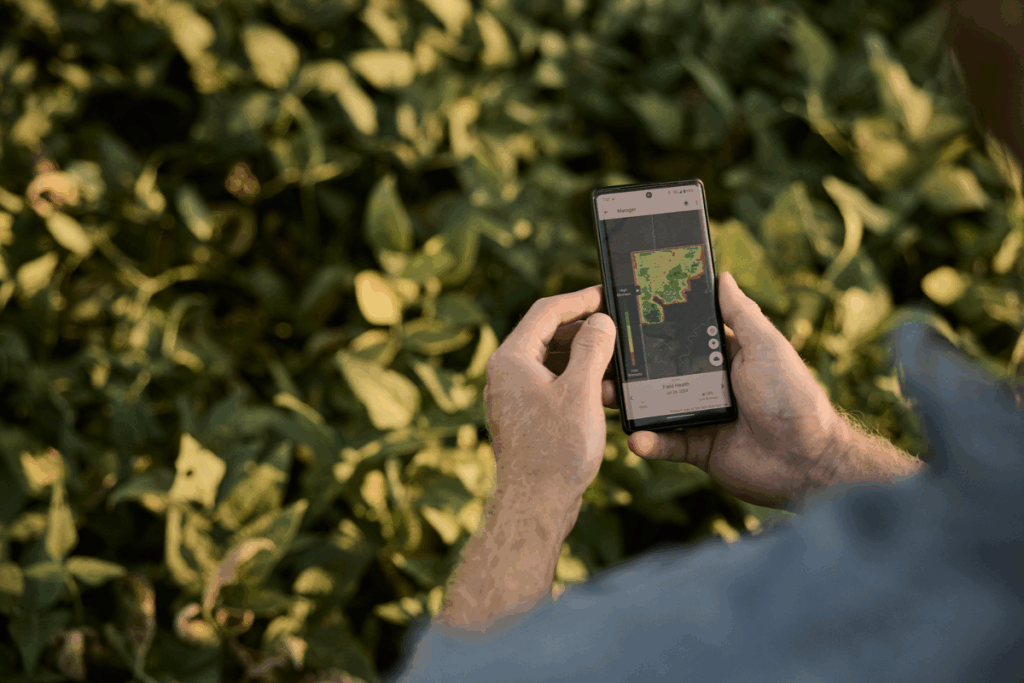
“Farm operations are evolving into powerful data engines,” said Drew Harmon, Midwest Technical Agronomist, Valent BioSciences. “Every piece of equipment, from planters to combines, can now generate real-time information through onboard sensors, satellites, drones and localized weather stations. Artificial intelligence can help translate that flood of data into actionable insights.”
For example, AI can help by flagging early signs of disease or crop stress, optimizing irrigation schedules and guiding variable-rate seeding and fertilization by zone.
Drones and autonomous implements are increasingly used for field scouting and targeted pest control, applying products only where needed. Together, these tools help growers navigate tight margins by improving efficiency and precision, resulting in fewer wasted inputs, more consistent yields and stronger returns on investment across the operation.
“Of course, harnessing that technology and the data it produces requires time, energy and capital—all of which are typically at a premium on a busy, successful farm,” said Harmon. “Growers must learn how to use new digital tools to leverage complex datasets and insights. These are completely new skill sets compared to those most growers have relied on for decades.”
For those willing to invest, though, data-driven farming stands to unlock a new era of productivity and precision for farmers in the coming seasons.
Tight Margins & Profitability Pressures
Valent BioSciences notes that, unfortunately, the farm economy outlook points to another year of tight margins, with commodity prices expected to be far from spectacular. Profitability will once again depend on extracting more bushels from the same acres and ensuring that every dollar invested in crop inputs delivers a measurable return on investment.
“In this environment, success hinges on making informed, data-driven decisions that minimize waste and maximize performance,” said Harmon. “Growers must rely on credible, trusted partners who can provide science-driven solutions, replicated field data, in-season agronomic support and transparent economic insights.”
Looking ahead, the days of relying solely on market luck are behind us.
Red Crown Rot
Red crown rot is rapidly emerging as a serious soybean threat across the Midwest. Beck’s Hybrids, based in Indiana, flagged that some growers have seen 40% to 60% yield loss. In some cases, entire fields have dropped from 60 bushels per acre to bushels in the mid-teens. The disease progresses quickly during the late season, is difficult to identify early and is even more difficult to manage. As is the case with many soilborne pathogens, there is no simple solution for management.
That’s why Beck’s is investing in research to better understand this disease, working with industry partners to evaluate seed treatment combinations, monitoring field spread and connecting with soybean pathologists and research groups across multiple states.
“True management of this disease will ultimately come from a combination of methods including varietal tolerance, enhanced seed treatments and improved agronomic practices,” said Matt Montgomery, Beck’s Agronomy Education Lead and Illinois Soy Envoy.
“Beck’s is committed to learning more about this disease to help farmers protect yield as this challenge expands.”
Machine Learning & Computer Vision
A team of researchers at Beck’s is using machine learning and computer vision to measure soybean seed size at harvest time for new experimental soybean varieties. This is being conducted with a camera system that collects images and phenotypic characteristics to help select high-performing soybean varieties.
The image datasets are used to train computer-vision models to measure and count plants and pods to further understand experimental soybean varieties.
Emerging Crop Protection Technologies
Beck’s is utilizing public funding to advance the deployment of Verdant Robotics’ Sharpshooter™, a cutting-edge computer-vision spraying technology, in organic and conventional soybean production. This system precisely identifies and targets weeds in real time, aiming before it shoots and applying an approved nonselective herbicide with pinpoint accuracy.
“The initiative is designed to significantly reduce the need for costly and labor-intensive hand-weeding while improving the efficiency and consistency of weed control,” said Will Hirschfeld, Beck’s Innovation Project Manager. “By demonstrating this scalable, autonomous approach, Beck’s aims to show how technology can enhance profitability and sustainability for organic farmers across the Midwest.”
Biologicals
HELM Crop Solutions, based in Florida, anticipates the “biologicals boom” continuing in 2026. “Biologicals have the ability to lower input waste, increase return on investment and provide resilience in uncertain times,” said Mark Heineman, HELM Technical Sales Agronomist.
Biologicals and biostimulants help crops absorb and use nutrients more effectively, reducing the need for excess fertilizer and minimizing losses to leaching or volatilization. This doesn’t mean that you need less fertilizer. Instead, HELM advises focusing on creating a more efficient plant to uptake available nutrients.
By improving nutrient uptake, stress tolerance and crop quality, biologicals help growers achieve better yields and marketability without increasing input costs. Nutrigenomics, the study of how genes interact with food, is one area that HELM said allows it to validate the effectiveness of product performance.
With commodity prices under pressure, biologicals offer a way to protect yield potential and profitability, even when cutting back on traditional inputs.
“It’s important to find the right biostimulants for your on-farm goals while simultaneously getting more out of the inputs you’re already using,” said Ben Runge, HELM Plant Advantage Marketing Manager. “As we continue to experience an overwhelming number of products to choose from, growers should educate themselves and evaluate these products so they can be practical in how they incorporate them into their program.”
Precision Technology
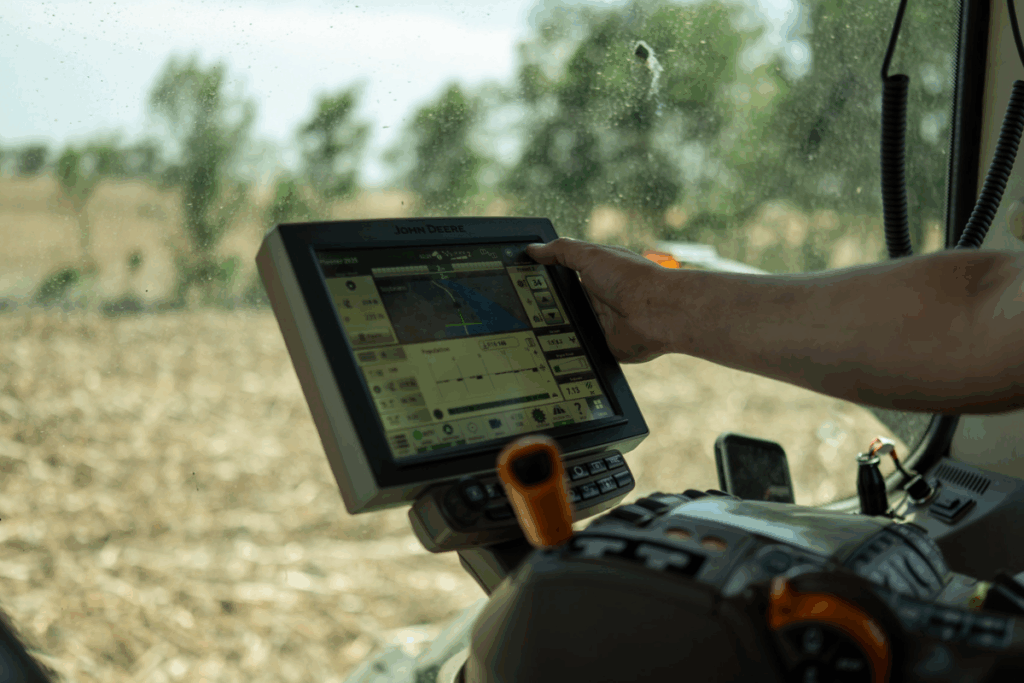
“There are increased pressures for farmers to produce more with less—less time, fewer resources, and tighter margins,” said Ryan Stien, Precision Ag Marketing Manager, John Deere. “John Deere recognizes this challenge and offers precision ag technologies and precision upgrade solutions that help farmers maximize their existing equipment and improve operational efficiency.”
One example is John Deere’s Precision Essentials kit, which gives farm operations of all types and sizes the tools they need to meet today’s challenges and take hold of tomorrow’s opportunities, helping them ensure long-term success in an increasingly competitive and diverse ag market. Precision Essentials offers farmers more ways than ever before to get started in precision ag technology or upgrade the aging technology they have on their farms.
John Deere noted that Precision Essentials is a tool for those farmers who are looking for a low-upfront-cost technology package that gives them the latest core technology components, a G5 or G5Plus display, Starfire 7500 receiver and a JDLink modem. JDLink connects farmers to their entire operation through their John Deere Operations Center™ account.
Another resource, the John Deere Operations Center, exists to help farmers make faster, more informed decisions throughout the growing season by seamlessly connecting data from fields and machines to operators and advisers. For example, growers can share yield data with a seed representative or receive prescriptions wirelessly from an agronomist. The Operations Center not only provides valuable field data but also gives farmers real-time insight into machine performance, helping them monitor equipment health, make informed adjustments and manage the logistics of their entire farm.
“More farmers are leaning into these kinds of technologies for the return on investment they can deliver,” noted Stien. “Precision Essentials and the Operations Center work together to simplify data management, improve machine performance and support improved planning and analysis across the entire farm.”
Recent Articles
In this issue of Illinois Field & Bean Magazine, we're uncovering the top trends for agriculture in 2026.
By
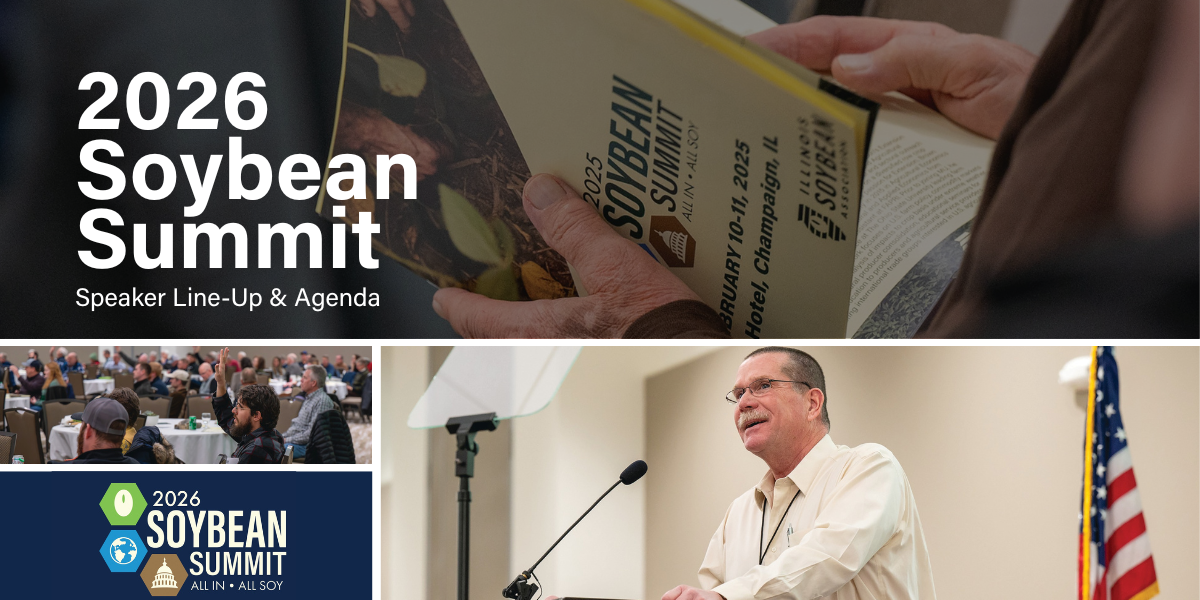
Take a look at this year’s Soybean Summit agenda, which includes topics such as global trade impacts, the future of biodiesel, conservation strategies and what’s next for farm policy.
By IL Field & Bean Team