
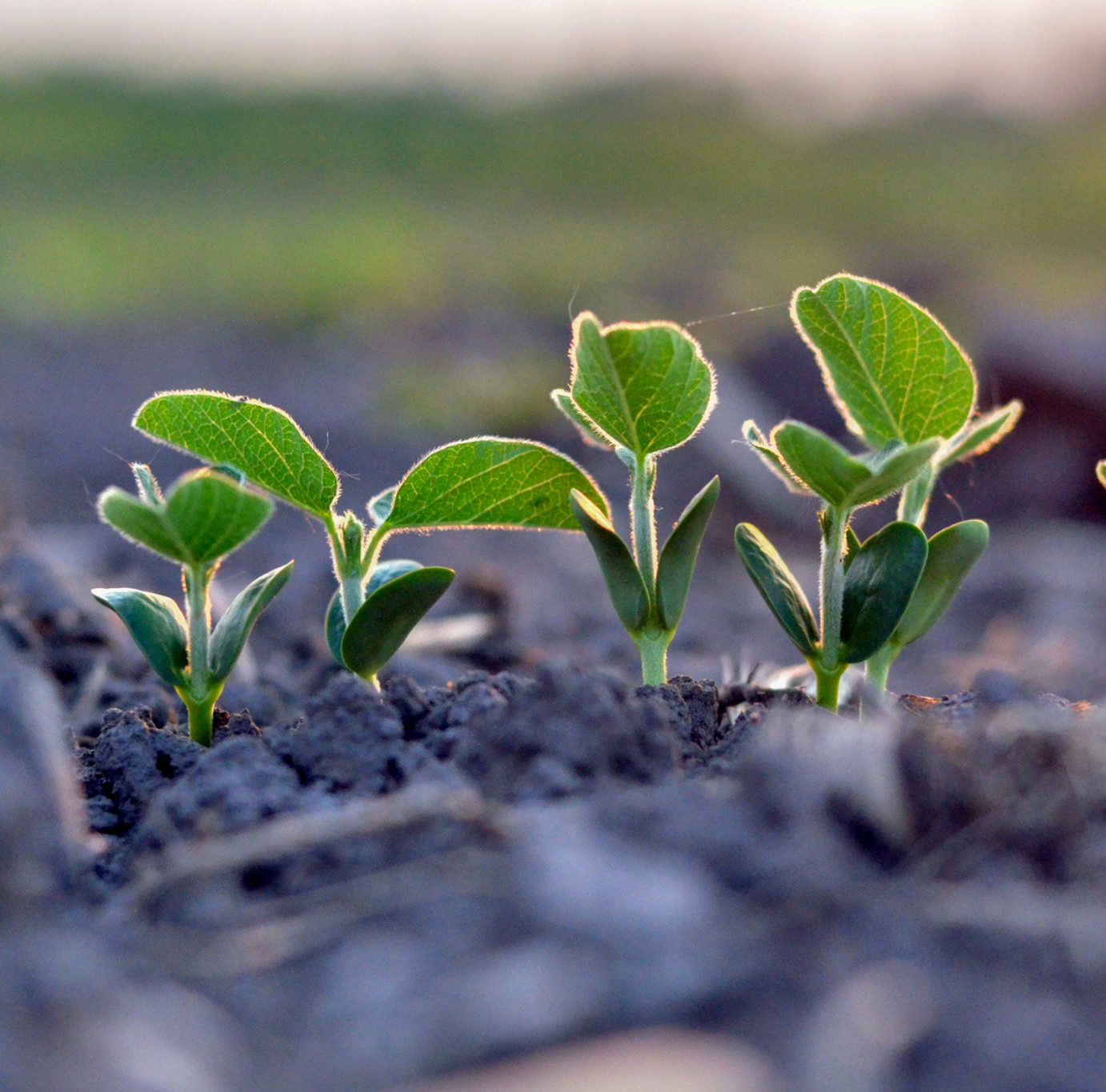
As defined by the U.S. Census of Agriculture, a beginning farmer is anyone who has farmed for 10 or less years. In the 2022 census, beginning farmers accounted for 30% of the country’s 3.37 million producers, and were between the ages of 35-64 years old.
Illinois Field & Bean asked seasoned Illinois producers what advice they would give beginning farmers today. That advice varied from financial, to scalability, to technology, to relationships. Keep reading to meet the farmers and learn their Top 10 Tips.
The Farmers
Ron Kindred (Atlanta), Steve Pitstick (Maple Park), Jeff O’Connor (Kankakee) and Martin Duffy (New Haven) are all long-time agricultural leaders, Illinois farmers and current Illinois Soybean Association (ISA) Board Directors.
1.) Finances
Each of the farmers interviewed agreed that knowing how to manage finances is one of the most critical aspects of farming.
“I think the most important thing is to know your finances and get your arms around them so you don’t get overleveraged,” said Kindred. “The cost of equipment, inputs, and everything else is so much more than it used to be. You have to run your farm as a business.”
“Probably the biggest challenge is capital expenditures,” said Pitstick. “Something I heard a long time ago is seeds of despair are sown in the best of times. What that means is when times are good, you commit to making payments on something but in 5 years, economics change and then you wish you hadn’t bought it.”
“One of the farm sayings that my kids know I say is ‘You cannot save your way to prosperity, but you can sure spend your way to financial problems,’” said O’Connor. “When there is expendable income, always invest in the farm in areas that will give you greater control over your money.”
2.) Off-Farm Jobs
Additionally, getting an off-farm job can be an added source of income, and 72% of new and beginning producers reported a primary occupation other than farming in the U.S. Census of Agriculture.
For Duffy, this has looked like working as a COUNTRY Financial agent for more than 30 years and owning a hunting lodge, The Country Lodge, located in Southern Illinois. “If a beginning farmer can get an off-job farm, it would help their financial situation and help get their mind off their farm,” said Duffy. “I would also tell any young farmer to be really careful with their purchases and don’t get overloaded. I would highly recommend putting money in an account for a rainy day when you need cash flow.”
3.) Grow Your Operation
Pitstick noted, managing your finances also includes planning and growing your revenue for the future, and taking into account inflation.
“We’re in a business that has market competition, which means you can’t raise your selling price so your margin is always tight, but your cost of living is going to go up,” said Pitstick.
“Especially through your decades of living, by the time you have a family, healthcare, college expenses etc. If you’re not growing enough, you’re going to be going backwards.” For grain farmers, growing could mean buying or renting more acreage—something that is
easier said than done.
“My advice is always to buy land because the price continues to go up,” said Pitstick. “But having the wherewithal and money to buy land is always a challenge, especially for young farmers.”
Renting farmland may be a more may be a more economical way for young farmers to grow, but even then, cash rents have to be factored into the cost.
“It’s very complicated trying to figure out flex cash rents and fixed cash rents,” said Kindred. “But my advice is to break it down farm-by-farm to see which ones you’re making money on. If you’re not making any money, you can give those up.”
4.) Know Your Soil
With more robust technology available, farmers are able to take advantage of variable rate technology, but knowing your soils is key.
“In the last few years, we’ve been working with an agronomist on our farms,” said Kindred. “He is doing all of the soil testing and tissue testing and his recommendations help us fine tune our applications to our fields. We’ve been pleasantly surprised by how our yields are doing on poor quality ground.”
5.) Marketing
Marketing is one of the most important aspects of farming yet can be one of the most challenging. Asking for help from grain merchandizers may be one solution.
“The thing that I’ve always struggled with is we can’t control the market,” said Duffy. “You have to understand you’re at the mercy of the market. If I was starting new today, I would get a real good grain merchandizer. Even if I had to pay for it, I would get someone who would know how to market their grain.”
Kindred agreed.
“Marketing is probably the hardest thing we have to do, especially if you have to market your landlord’s grain,” said Kindred. “I think you have to rely on an advisory service that you trust for advice. They might prevent you from being totally wrong because the way you market your grain can make or break you and everybody second guesses themselves.”
6.) Technology
With the increased availability of technology, farmers have to decide what may be a worthwhile investment for their operations.
“Always be on the look-out for what’s coming, whether it’s hardware or software,” said Pitstick. “Right now, it’s artificial intelligence. I can’t answer what it’s going to do, but I think there’s something there. In general, try to set aside money every year for R&D, and experiment on a small scale before adopting.”
7.) Industry Involvement
For the farmers interviewed, being involved with the industry, including but certainly not limited to ISA, has been a worthwhile investment for them.
“I think a lot of it is talking to other farmers,” said Kindred. “My involvement with organizations such as ISA, Illinois Corn Growers Association and Illinois Farm Bureau, all of these farm organizations are a great network to learn from. Most farmers do not know about the researchers that these organizations have relationships with. It’s a tremendous asset to have.”
O’Connor added: “It’s important to work yourself into the industry wherever you can and stay involved in all aspect of the industry.”
8.) The Unexpected Happens
O’Connor, who started farming during 1988, one of the driest years on record, says that he quickly realized that the unexpected can and will happen.
“I had to keep things in perspective, so I went around saying that it was my best year ever, because it was my only year,” said O’Connor. “You have to find a healthy approach to deal with the stuff that comes your way.”
Being adaptable and diversified have helped O’Connor navigate farming the past 38 years.
9.) Relationships
Cultivating relationships has also been a key part of O’Connor’s farming journey.
“I believe absolutely everything comes down to relationships,” said O’Connor. “It might be your relationship with the soil, the weather, your household, your seed salesman. It could be an individual piece of ground, a tractor. If I could give anyone advice, it’s cultivate relationships. Because with that relationship, you’re more efficient, more productive. I think it’s actually a gift that everything we do in farming is based on a relationship.”
Duffy noted that asking for help, especially when you’re just starting out, can be very beneficial.
“The more help you can ask for in any aspect of farming the better,” said Duffy. “When I was a beginning farmer, I wish I had reached out to more organizations. Fertilizer dealers, seed dealers, equipment manufactures. They’re all here to help you.”
10.) USDA Resources
The U.S. Department of Agriculture (USDA) has dedicated resources for beginning farmers and ranchers. Resources can be found at farmers.gov/your-business/beginning-farmers. Individuals can also make appointments with their local USDA Service Centers, including Farm Service Agency, Natural Resources Conservation Service or Rural Development.
Recent Articles
Strategic partnerships are expanding opportunities for Illinois soy. From cutting-edge university research to global market development, these collaborators are boosting demand and driving value.
By
Learn how good transportation makes for good economics.
By Todd Main, Director of Market Development, Illinois Soybean Association