
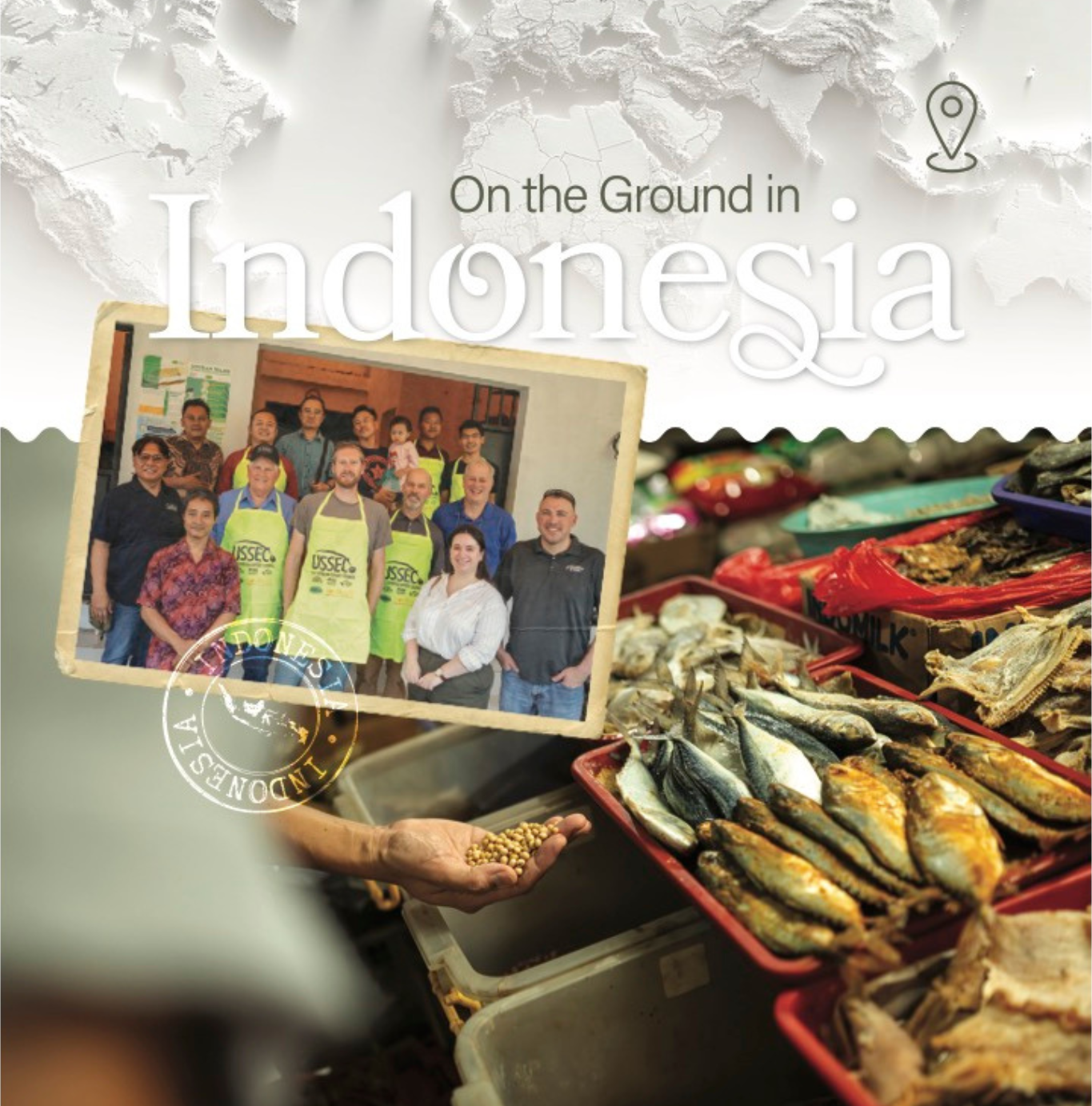
Indonesia rarely makes headlines in Illinois. The nation purchased a staggering $1.24 billionof U.S. soy in 2024 and is poised to grow enormously as a strategic trading partner. Now, ongoing dialogue between the countries aims to remove barriers, build trust and understanding, and supply accelerating demand for tempeh, tofu and animal feed, according to Illinois Soybean Association (ISA) representatives who participated in a July 2025 trade mission to the country.
“What stood out most to me during the Indonesia trip was the opportunity to engage directly with leaders from the country’s halal advisory board,” says Scott Gaffner, a Greenville soybean farmer and ISA Secretary and At-Large Director. “Indonesia places great importance on religious standards and ensuring that imported products meet halal requirements is critical. The board had questions about U.S. soybeans—particularly those that are genetically modified or gene-edited—and there were some misconceptions that could have jeopardized certification. By meeting face-to-face, we were able to provide clear information, address concerns, and reinforce confidence in the quality and integrity of Illinois and U.S. soy.”
A Market Poised to Mirror China
Indonesia has a population of 282 million people and is experiencing rapid economic growth of over 5% annually. It’s now the largest economy in Southeast Asia. More than half the population is under 35, and 86% are Muslim, which makes food security, protein access and halal certification essential, according to data from the U.S. Department of Agriculture’s Foreign Agricultural Service (FAS).
ISA leaders see striking parallels with the early stage growth of China as a soy market.
“Indonesia is going to be the fourth or fifth most populous country in the world and has a stable government and a preference for U.S. soy,” explains Todd Main, ISA Director of Market Development. “It will be a good partner for U.S. soybean farmers.”
Main says the contrast between the country’s rural villages and new high-speed rail system—“better than anything in the U.S.”—illustrates how modernization is happening fast, creating new logistical challenges and huge trade potential. “Food security is going to be central to that modernization,” he adds.
The timing of the trade mission proved critical. Just days before the delegation’s arrival, the U.S. and Indonesian governments signed a historic trade deal that promises to ease barriers and open additional opportunities for U.S. agricultural exports, including soybeans. As Indonesia expands its global role in food processing, retail and exports, ISA representatives say the nation’s appetite for high-quality soy will only grow.
Tempeh, Culture and Soybean Color
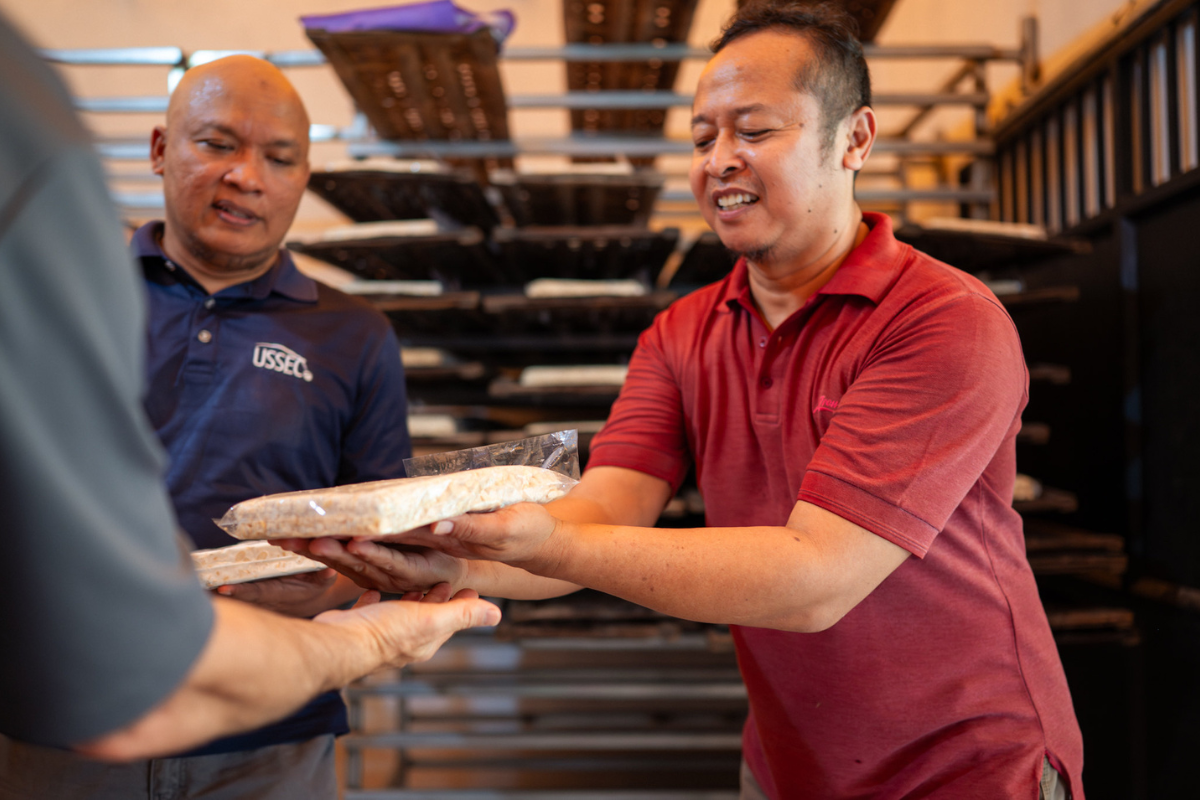
To the Indonesian people, soybeans are not only a commodity but also a cultural staple. Tempeh, a fermented whole soybean food, is consumed by millions daily and serves as a primary protein source. ISA representatives visited both small producers and major players such as Azaki Food International, which has 83 plants in11 countries and is expanding to the U.S. market.
“People who eat tempeh look for a specific color of the product when determining what to buy, and they like the color of the bean that is produced in the U.S.,” says Caitlyn Abbey, ISA International Markets Specialist. “The consistency and reliability of U.S. soybeans was important for them, especially the large producers
who make products for export.” Gaffner agrees.
“Producers told me directly that U.S. soy delivers the best results in processing—whether it’s making tofu, tempeh or feed—and that translates into better taste and quality for the consumer.”
Soy consumption in Indonesia differs from the U.S. in other ways, too, notes Brady Holst, an Augusta soybean farmer and ISA’s Vice Chairman and At-Large Director.
“Tempeh is a staple food, so the people see soybeans used much more often than people in other places in the world,” he says. “That familiarity creates a very
stable base of demand.”
Future Demand to Span Meal, Feed and Biofuels
As its middle class grows, Indonesia’s demand for poultry, aquaculture and processed food is increasing rapidly.
“One of the biggest growth opportunities for U.S. soy in Indonesia is from the growing population and increasing GDP,” Abbey says.
Although soy for human consumption is vital, soybean meal also holds major promise.
“Indonesia has significant potential to utilize this meal for poultry and aquaculture, creating a strong additional outlet for Illinois soybeans,” Gaffner says. “With domestic U.S. crush increasing due to renewable fuels demand, we’ll have more meal to export. Countries like Indonesia that are just ramping up feed production are ideal markets for that surplus.”
Biodiesel markets also are opening up in Indonesia, expanding use cases even further, Main adds.
Such growing demand on multiple fronts could be transformative for the nation and for the Illinois farmers supplying them.
An Inside Look At Soy Logistics and Processing
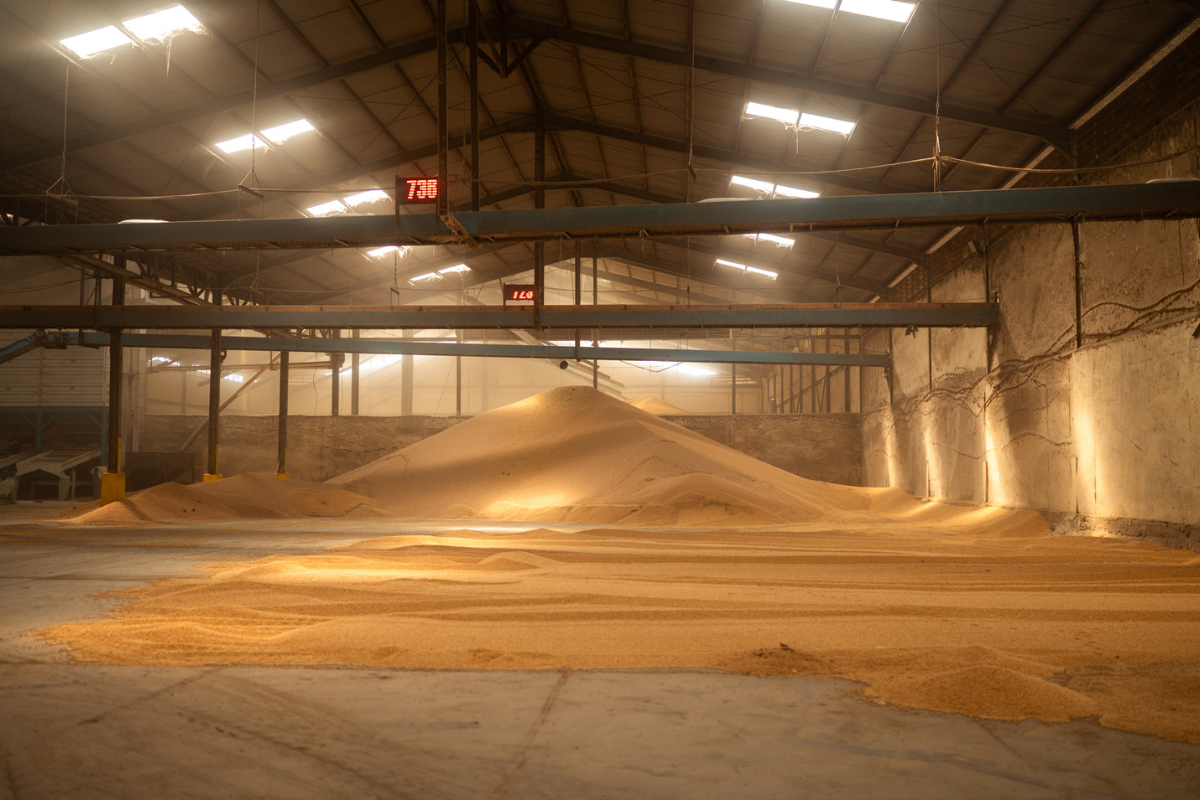
The delegation learned that Indonesia’s unique geography as a country made up of hundreds of islands adds complexity to soy logistics, transportation and processing.
“They have modern port facilities, but the challenges are due to being a nation of islands,” Main says.
Soybeans for tempeh are typically cleaned and bagged before being sent to small-scale processors throughout the country.
“Their soy processing is much more unique than other places in the world because most tempeh production is at smaller scale,” Holst explains.
Illinois farmers’ production efficiency and sustainability practices can add value to the end product.
“Because the Indonesian climate and geography is much different than the U.S., they benefit from our advancements in agriculture and gain access to an efficiently produced soybean they wouldn’t be able to compete with from their own production,” he says.
Processing infrastructure is evolving rapidly. Holst notes that despite the country’s logistical challenges, expanding retail footprints and modern grocery chains in rural areas are beginning to open up new distribution pathways for value-added soy products.
“As demand grows, I think we’ll see increased interest in scaling up processing and feed production. That’s where our soy fits in.”
Trade Barriers and Breakthroughs
Just days before the ISA team arrived in Jakarta, the U.S. and Indonesia announced a breakthrough tariff agreement. It marked a pivotal move in a country where non-tariff barriers have historically included import licensing delays, halal certification requirements and technical inspection issues, according to USDA data.
“The timing of the trip was ideal,” Abbey says. “We were able to meet with government agencies and talk more about how this trade deal will impact imports of
U.S. soybeans into the Indonesian market.”
Main said he saw immense value in those discussions. “We had very positive meetings with two government agencies. It was evident from the seriousness that our Indonesian counterparts approached the meeting that they wanted to nurture the relationship with the U.S.”
Personal connections also play a role in navigating regulatory challenges.
“By being on the ground and providing context about how our soy is grown, processed and shipped, we help dispel misunderstandings and build confidence,” Gaffner says. “It’s not something you can do effectively over email.”

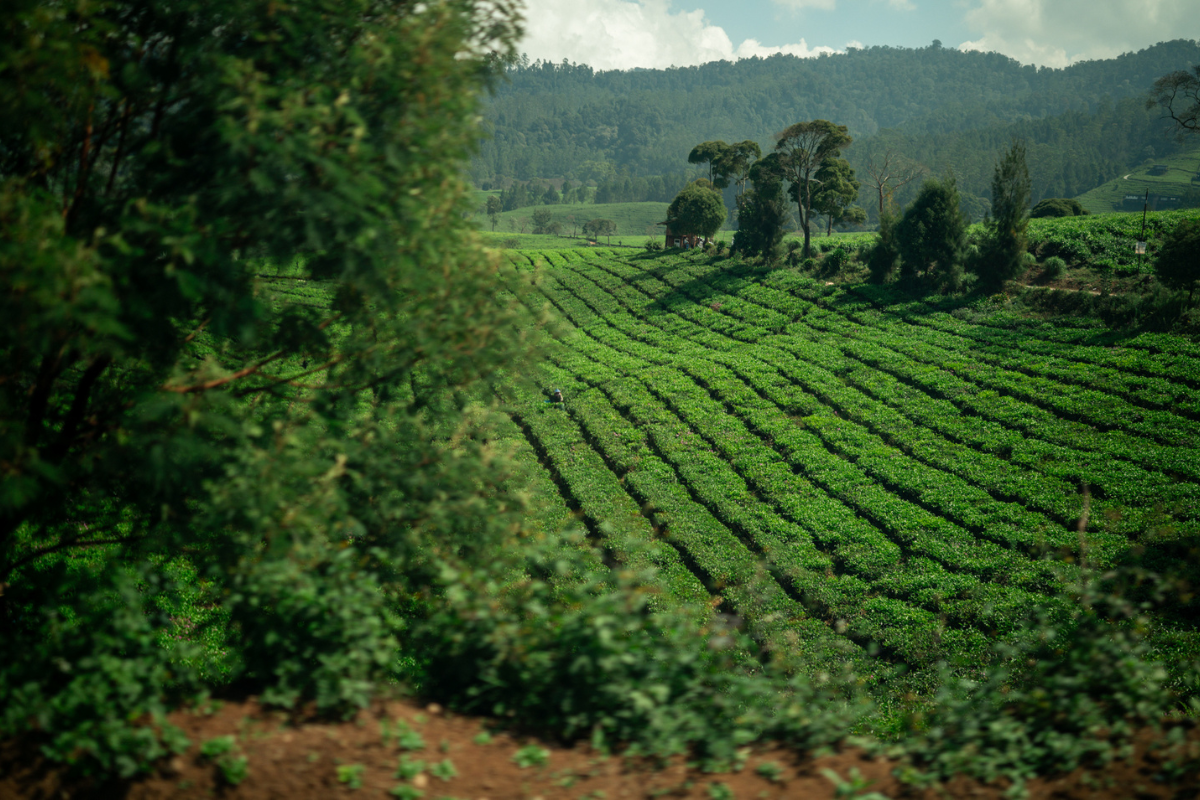
To better understand Indonesia’s agricultural landscape, the group visited a tea research farm and coffee dry mill.
Human Connections and Local Visits
The ISA team met with major buyers, government officials and religious leaders, even visiting a coffee plantation to explore Indonesia’s broader export culture. These face-to-face moments made a lasting impression.
“This trade mission really pulled all of my roles together in a meaningful way,” says Gaffner, who is also involved with U.S. Soybean Export Council (USSEC), World Initiative for Soy in Human Health (WISHH) and USA Poultry and Egg Export Council (USAPEEC). “Tempeh and tofu aren’t occasional foods, they’re staples for millions of families. Add to that the fast growth in poultry and aquaculture, and it’s clear that U.S. soy isn’t just a commodity in Indonesia, it’s a solution to food security and protein demand.”
The delegation’s conversations with tempeh producers and retail food distributors offered valuable insight into how Illinois farmers can align their production to meet international consumer expectations.
“It comes down to quality, traceability and consistency,” Holst says. “That’s what they trust us to deliver.”
Farmer Engagement and Trade Advocacy Opportunities
ISA plans to build on this momentum by strengthening ties with the Indonesian consulate in Chicago and hosting visiting delegations. Illinois soybean farmers
can continue to get involved in these activities.
“We encourage Illinois farmers to reach out to the ISA Market Development team if they are interested in interacting with international buyers or have questions about markets and trends,” Abbey says. “We are a great resource to make connections with buyers around the world.”
She also recommends subscribing to ISA’s monthly emails, which include updates and guest experts providing insights on market trends. Contact olivia.key@ilsoy.org to sign up today.
For Gaffner, this work is essential. “This is the same kind of work that helped open China years ago, and now we’re laying that foundation in places like
Indonesia,” Gaffner says. “It’s not just travel, it’s an investment, one that pays back directly on the farm.”
Holst agrees: “Being aware of international trade dynamics, especially as a younger generation of farmers, is key to keeping Illinois agriculture competitive. These types of missions give us the knowledge and connections to influence future demand.”
Fast Facts About Indonesia and Soy Demand
Population: 282 million (2024); 70% between ages 15–64
Religion: 86% Muslim
2024 U.S. Soy Exports to Indonesia: $1.24 billion
Top Soy Uses: Tempeh, tofu, poultry, aquaculture, biodiesel
Growth Drivers: 5.03% economic growth (2024), rising middle class, modernizing infrastructure
Trade Breakthrough: July 2025 tariff agreement with U.S. expands market access
Source: USDA’s Foreign Agricultural Service, Office of the U.S. Trade Representative, Illinois Soybean Association
Recent Articles
This issue of Illinois Field & Bean spotlights the On-Farm Trial Network, highlighting how on-farm research drives real-world results.
By
High oleic soybeans have opened new doors of opportunity with their beneficial profile for human-grade food products and animal feed.
By IL Field & Bean Team