
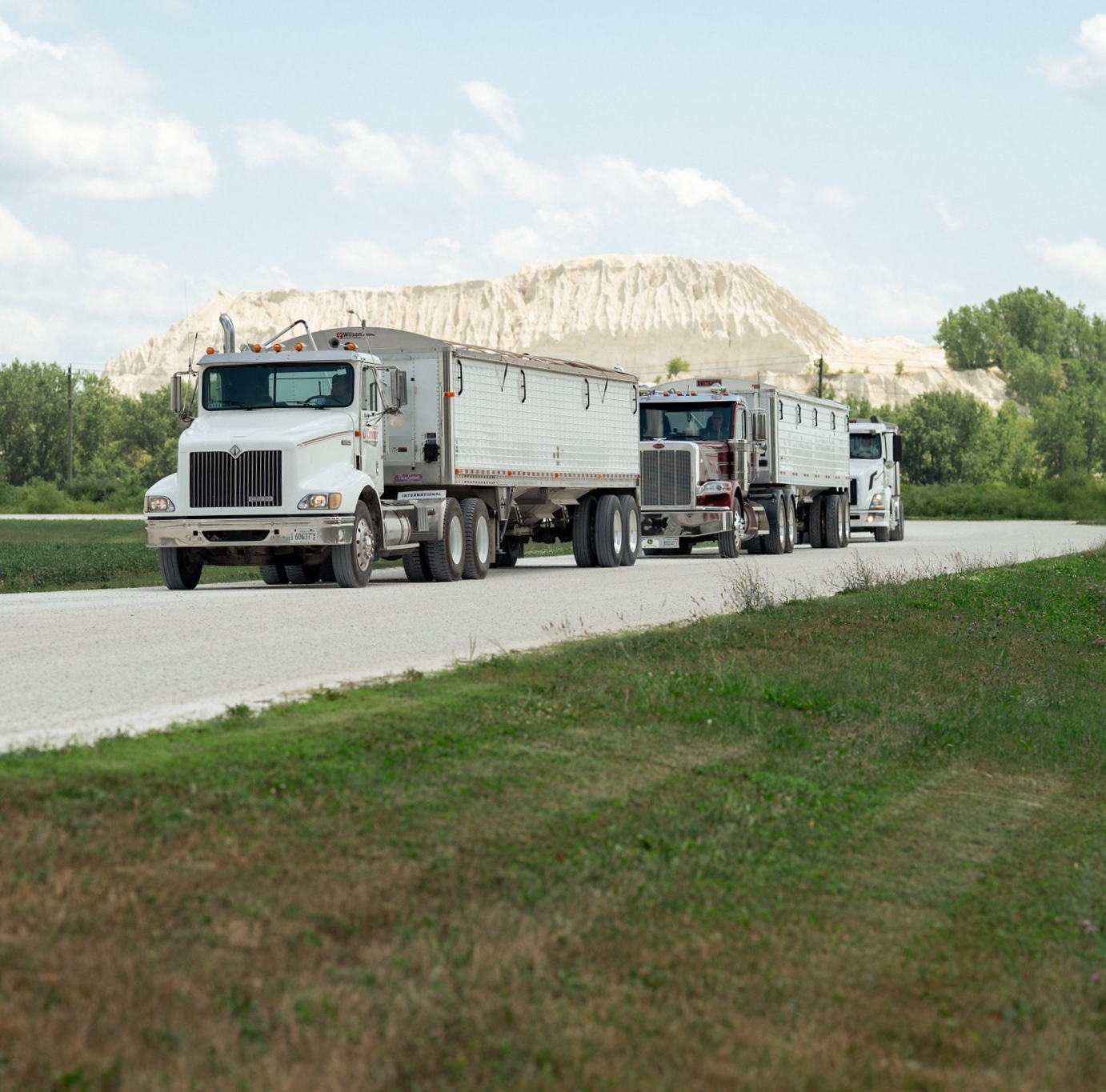
As an Illinois soybean farmer, you already recognize the advantages of our state’s incredible transportation system. But what you might not realize is that we operate in a sweet spot unlike any other on earth.
Consider that we can move our products from the interior of the country out to the coasts. We can go down to the Gulf of Mexico through the Illinois waterways system. We can go to the Pacific Northwest through railroad. That’s just the short list.
The numbers bear this out. Illinois boasts 145,708 miles of roadways, 6,986 miles of rail lines, 2,185 miles of interstate, 77 shuttle facilities and 62 river elevators. That’s according to Informa Economics data published in a 2023 report commissioned by Illinois Soybean Association (ISA).
All of these options give you and your operation a competitive advantage for producing and selling agricultural goods of the highest quality.
Yet as Illinois produces more soybeans and global demand shifts, we’ll need to keep looking ahead and anticipating future needs. We’ll need to rethink our transportation system to maintain our competitive advantage.
The present moment is a bright one, and the opportunities for serving growing markets in Asia, Africa and beyond are exciting. Now is the right time to take inventory of our unmatched transportation network—and to position it for Illinois farmers’ long-term success via new ISA initiatives such as Transportation 2050.
Good Transportation Makes Good Economics
Our ability to transport soybeans efficiently to buyers makes a difference to your bottom line. Two factors make that possible.
First, we can get our product anywhere in the world when it needs to get there. We’re a reliable partner. Buyers make repeat orders from farmers they trust.
Second, we’re efficient and effective. A good transportation system accelerates and emphasizes your advantages as a grower and the care you place into the goods you produce.
We often hear that buyers from around the world prefer U.S. soy because it’s higher in quality. It doesn’t have the same characteristics of stress because it hasn’t been handled multiple times.
Compare this to many soybeans from Brazil. Buyers have told us that because Brazil has a tropical climate, farmers often use wood fires to dry out the crop. This tends to scorch the beans, degrading the amino acid profile containing all the energy, vitamins and minerals that animals and people need in their diets.
Illinois’ transportation costs are also highly competitive. Freight costs make up just 10% to 15% of the value of U.S. soy compared to 30% of the value of Brazilian, according to Diogo Damiani, president of the Rural Union of Sorriso, quoted in a July 20, 2026, article in the Financial Times.
The Illinois transportation network ensures this type of quality and cost structure is preserved through the supply chain from the farm gate to the end user. And it’s as true for conventionally grown beans as it is for non-GMO and other types of value-added soybeans that can be placed on a container directly on the farm and shipped to their final destination.
How Soy Gets To Buyers
En route to its buyer, soy can pass over some combination of rural roads, bridges, railroads or rivers. Every county within Illinois has its own unique makeup of transportation infrastructure. In northern Illinois, a lot of the beans go either to crush facilities or via railroad to the Pacific Northwest. In other parts of the state, soybeans are transported to specific buyers based on whoever is offering the best price. It all just depends on your economics, your region, and the infrastructure available to you.
The benefits and the opportunities for improvement are widespread.
Roads And Bridges Keep Farm Gate Going
Rural roads and bridges ensure your soybean crop gets off the farm and on its way to its end user. Yet 25% of bridges in Illinois are either load-weight restricted or in bad shape and not viable. That adds a lot of costs, as farmers must drive around those locations to get to their final destination.
ISA has been talking about this for quite some time. A few years ago, we raised and advanced the process of bridge bundling in the state. This enables contractors to bid on more than one project at a time in geographically similar areas, reducing procurement costs up to 30%.
Waterways Float Farm Goods To Buyers
Rivers such as the mighty Mississippi are an essential vein for transporting Illinois soybeans. Locks and dams must operate properly to ensure safe passage of our farm goods out to export markets.
A number of 600-ft. locks need to be expanded to 1,200 feet so they can handle modern tows. This would dramatically change the economics of the waterway.
We’re fortunate that the U.S. Army Corps of Engineers has been doing a really good job of upgrading these, but there’s a backlog. All of these locks and dams were built back in the 1920s and 1930s, so they’re long past their 50-year life expectancy. You can do a lot with baling wire and spit and duct tape, but at some point, you’ve got to make the investment.
We applaud the Army Corps for what they’ve been doing and applaud Congress for appropriating money for doing that. But there’s still work to be done.
Railroads Keep Soy On Track
Our Class I railroads are privately owned and in good shape because of the investments the companies have made in them. The Chicago Region Environmental and Transportation Efficiency (CREATE) Program has been working to reduce delays in Chicago caused by train congestion, ensuring things can flow through there a lot easier.
Ongoing efforts are exploring ways to better plug in the short-line railroads, which are arteries off of the main line often managed by separate companies.
Transportation 2050: Future Gains
The transportation system that got us here won’t get us to the next phase of Illinois soybean industry growth, nor will it fully satisfy the needs of future buyers. That’s why we need a shared vision for the future of Illinois transportation.
ISA has put together an initiative called Transportation 2050 to help Illinois meet the market. Over the final six months of 2026, we’ll be doing a lot of listening to farmers like you—understanding what your county’s transportation needs are and how ISA, the ag community and our many transportation partners can position us for long-term success.
As a state, we need to be resilient. We need to have redundant systems so that if a breakdown occurs in one place, it doesn’t completely hamstring us. But there will be key differences. Some areas of the state might need more storage. Other areas might need a multimodal facility with railroad access. It’s going to be a bespoke approach, but it’s knowable, and we just have to think about it.
Although China is the major buyer of our products now, that won’t be the case in 2050. China is expected to lose up to half a billion people over the next 50 years, stemming in large part from that country’s former one-child policy. Demographics are destiny. That’s a lot of demand destruction.
We need to think about the markets of the future. Some of the largest growth over the next 50 to 60 years will be in Africa, where we ship a very limited volume of soybeans today. Very little goes to Sub-Saharan Africa, and we’ve got to have a system that enables us to do that. Strong demand also is expected to continue in Indonesia and other parts of Southeast Asia, to name just a few buyer hubs.
We’re not going to leave our future up to chance. We’re going to start to educate and engage people around the state to make sure we protect that competitive advantage.
Build On Lincoln’s Legacy
Everybody knows how important transportation is to Illinois. You can trace it back to a speech that was given by a now-revered president who, at the time, was stumping for the Illinois State Legislature. In an address published in March 1832, this prominent American argued for public funding for strengthening the transportation system.
His name was Abraham Lincoln.
Now, it’s your turn to engage with ISA and our partners as part of Transportation 2050. What transportation investments does your farm need to thrive? I encourage you to engage in these conversations. Talk to your neighbors. Visit with your elected officials.
Now is the time to map the next chapter in the history of Illinois’ unmatched transportation network.
Recent Articles
What makes Illinois soy stand out on the national and global stage? From our unmatched transportation network to innovative infrastructure projects, Illinois moves soy efficiently and effectively.
By

Where Illinois soy stands today - and where it's headed.
By IL Field & Bean Team