
Research Driving Results
By Abigail Peterson, CCA, Director of Agronomy, Illinois Soybean Association
Every year, as the growing season wraps up, we learn more about what’s working and where there’s room to improve. Through your checkoff investment, we’re able to turn those lessons into practical research that helps farmers make better decisions, improve profitability and strengthen their operations.
At Illinois Soybean Association (ISA), our goal is simple: turn research into real-world value on your farm. Although traditional production research is important, we’re focused on the whole soybean system, unlocking how management practices affect yield, profitability, soil and water quality, and long-term sustainability. That means looking at everything from agronomics to economics and making sure research reflects real conditions across Illinois.
Keep Reading
Soybean Stem Pests: Survey, Impact and Education
Project Leaders: Ahmad Fakhoury, Southern Illinois University; Jason Bond, Southern Illinois University; Nick Seiter, University of Illinois; Kelly Estes, Illinois Natural History Survey
Purpose: This project addressed a key issue for Illinois soybean growers: identifying common insect pests, diseases and associated pathogens affecting soybean stems. The disease portion, led by Ahmad Fakhoury and Jason Bond at Southern Illinois University, combined grower surveys with pathogen identification from symptomatic stems to determine prevalent stem diseases, assess grower concerns and identify pathogens present in Illinois soybean fields. This information will help farmers improve scouting, variety selection and management to reduce the impact of stem diseases.
The insect portion, led by Nick Seiter and Kelly Estes at the University of Illinois, focused on dectes stem borer and soybean gall midge. Dectes stem borer is an established pest that appears to be increasing in importance in Illinois, and researchers evaluated its distribution and relationship to yield loss. Soybean gall midge is a potential invasive pest not yet found in the state; early detection would improve the state’s ability to rapidly respond if it is identified.
Disease Focus Area
Approach: This project combined a statewide survey of soybean producers with field sampling and molecular identification of stem-infecting fungi.
In 2022, an online survey was distributed to soybean producers, agricultural consultants and industry professionals to assess reported incidence of key stem pests and diseases, management history, perceived risks and preferences for extension services. A total of 71 responses were analyzed to summarize grower observations and concerns.
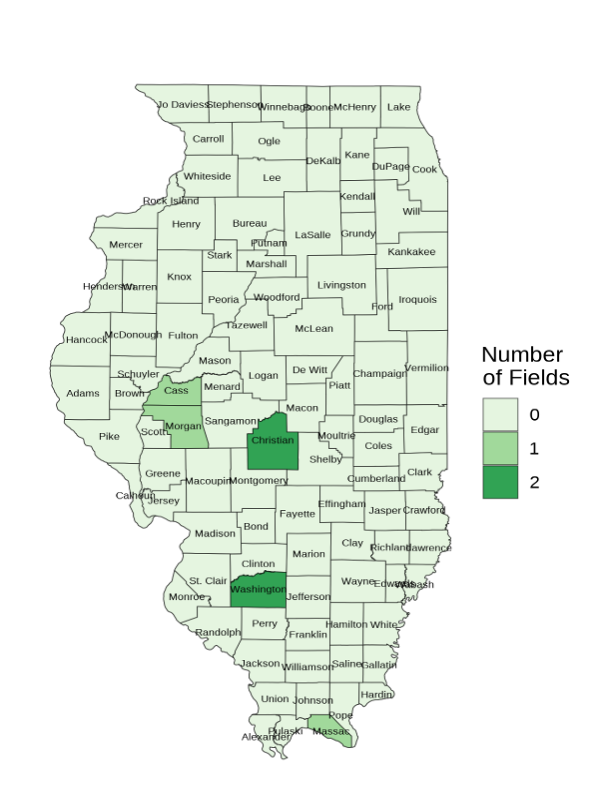
To complement the survey, symptomatic soybean stems were collected from 58 Illinois counties in 2022 and 2023 (see Figure 1). Pathogens were identified using laboratory methods. This approach combined grower input with direct identification of pathogens associated with stem diseases in Illinois. Isolated fungal pathogens were also stored for future research.
Multi-Year Results Summary: This study found Diaporthe species, particularly Diaporthe longicolla, Diaporthe caulivora, and Diaporthe sojae, were the most prevalent soybean stem pathogens in Illinois, present in 75% of samples, especially in warmer, wetter southern regions. Incidence increased with higher temperatures and peaked with moderate to high rainfall, aligning with their preference for warm, moist conditions during the reproductive stages (R3–R6). These pathogens are associated with Phomopsis seed decay, Northern stem canker and pod and stem blight.
Other pathogens, including Fusarium species, associated with root rot and stem rot, and Macrophomina phaseolina, associated with charcoal rot, were also present but occurred independently of Diaporthe, indicating no interaction. Most infections were single, but severity increased with multiple biotic stresses, such as stem borer damage alongside Diaporthe.
Under favorable conditions, fungicides provided limited protection from Diaporthe species in some fields. Management practices, including prior crop rotations and cover crops such as cereal rye, did not eliminate risk but may help reduce disease severity.
These findings highlight the need for an integrated approach to managing Diaporthe-related stem diseases including scouting, resistant varieties, optimized harvest timing and managing stem borer populations to reduce yield loss.
Insect Focus Area
Approach: As part of the Illinois Natural History Survey’s annual statewide insect pest survey, Kelly Estes and her team surveyed Illinois soybean fields for soybean gall midge and dectes stem borer adults. Each season, personnel surveyed several hundred corn and soybean fields. In 2025, this included 200 soybean fields across 45 Illinois counties.
Members of the Seiter lab focused on surveying dectes stem borer larvae. From 2021 to 2023, no-till fields across the state, particularly in southern Illinois, were surveyed in the fall to identify where larvae were most prevalent as they prepared to overwinter. In summer 2025, the Ewing Demonstration Center in Franklin County and the Orr Research Station in Pike County were selected for more intensive sampling because of established populations. Instead of a single end-of-season sample, soybean residue was collected throughout the summer to track lifecycle development of overwintered larvae, including when pupae and adults appeared.
Multi-Year Results Summary: After three years and several hundred fields sampled, soybean gall midge was not found in Illinois. Farmers should continue monitoring neighboring states, but this potential invasive pest is unlikely to impact Illinois in the near term.
Adult and larval populations of dectes stem borer were most prevalent in south-central Illinois, where no-till and reduced-till soybean production are common (Figure 2). Farmers in this region, including Marion, Franklin, Jefferson and Washington counties, should monitor fields for larval infestation as harvest approaches. Fields with more than 30% of plants infested should be prioritized at harvest to reduce lodging, as this insect girdles stems ahead of winter.
In 2025, residue surveys showed dectes stem borer adults appeared in late June and continued through early July. This information helps Illinois farmers better understand risk and timing of adult emergence. Scouting should begin in late July to August, after adults have emerged, eggs are laid and larvae begin to develop.
Next Steps: From an insect perspective, a multistate project funded by the North Central Soybean Research Program is evaluating chemical control options for dectes stem borer, along with its impact on yield from stem tunneling and lodging. Stem tunneling is currently thought to have limited impact on yield.
From a disease perspective, researchers plan to submit two scientific articles to peer-reviewed journals. They also are pursuing additional funding to address questions resulting from this study.

Figure 2. Average dectes stem borer counts (adults per 100 sweeps) by crop reporting district.
Figure 2. Average dectes stem borer counts (adults per 100 sweeps) by crop reporting district.
Red Crown Rot Roundup: 2025 Research Findings
Project Leader: Boris Camiletti, University of Illinois
Purpose: Red crown rot (RCR), caused by the fungus Calonectria ilicicola, poses a significant threat to soybean fields across Illinois with potential yield losses of up to 50%. Despite its impact, RCR might be underestimated because its symptoms are often confused with Sudden Death Syndrome (SDS). Limited county-level assessments also create uncertainty about how widely the disease has spread and how severe it is.
Approach: Boris Camiletti and his team at University of Illinois studied three objectives in 2025 to help growers manage RCR. The research team used greenhouses, outdoor courtyards and growth chambers at the University of Illinois Urbana-Champaign campus, along with field trials in Pike, Madison and Macoupin Counties.
Objective 1: When are soybeans most vulnerable to RCR, how does the presence of soybean cyst nematode (SCN) change disease risk, and what management tools are available that can reduce yield loss in high-pressure fields?
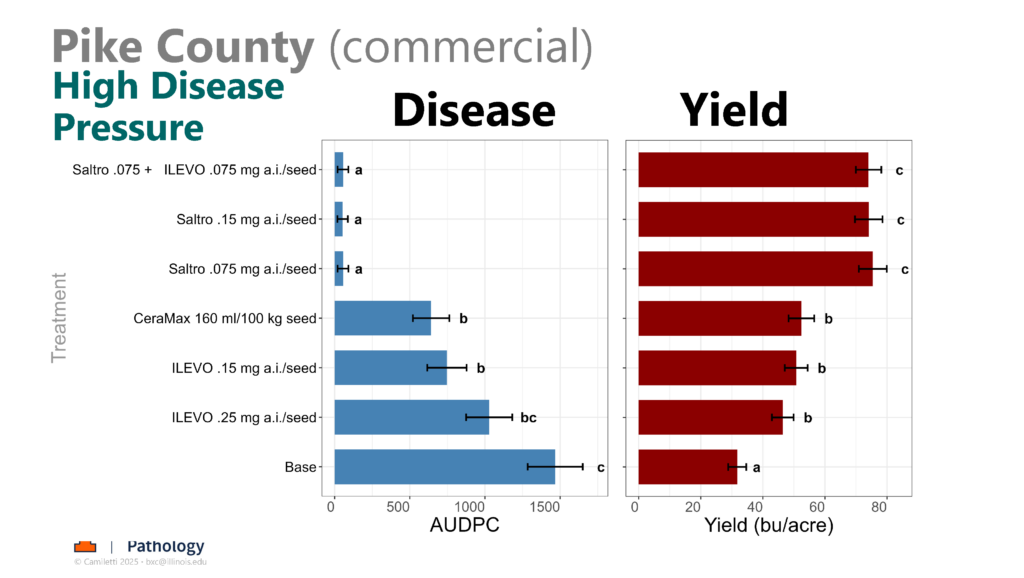
Researchers conducted greenhouse and outdoor courtyard experiments, inoculating plants with RCR at specific timings and SCN levels to evaluate effects on root infection and plant performance. Field trials were also established in RCR-infested plots in Pike County and three naturally-infected commercial fields to assess commercially available seed treatments (Saltro®, ILEVO® and CeraMax®) under real production conditions. Across all experiments, researchers measured disease severity, plant growth and yield data to compare disease pressure and management outcomes.
Objective 2: How can satellite and drone imagery, combined with machine learning, identify where RCR is present, how severe it is and which areas of a field are most at risk?
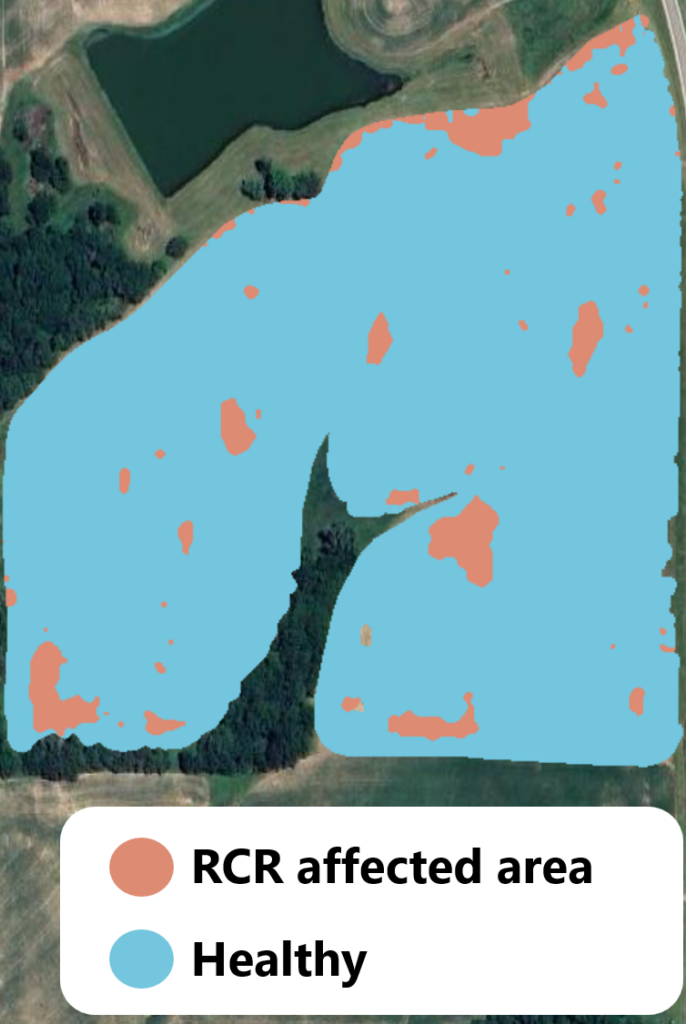
Researchers collected satellite and drone imagery from Illinois soybean fields with known RCR pressure and paired it with field disease measurements to train a machine learning model to detect canopy-level disease patterns. The model was then applied to commercial fields to identify disease hotspots and guide ground checks and field trial placement. As additional field data was collected, the model was refined and validated to improve accuracy and reliability.
Objective 3: Which, if any, commercially available biological products provide RCR suppression and yield protection in soybeans?
Researchers tested a range of commercial biological seed treatments in growth chamber and outdoor courtyard pot experiments. Seeds were planted in either healthy or RCR-infested soil. Researchers measured plant growth, disease severity and yield to evaluate product performance. Laboratory tests also assessed efficacy and to confirm the identity and quality of the bacteria in the commercial products.
Results
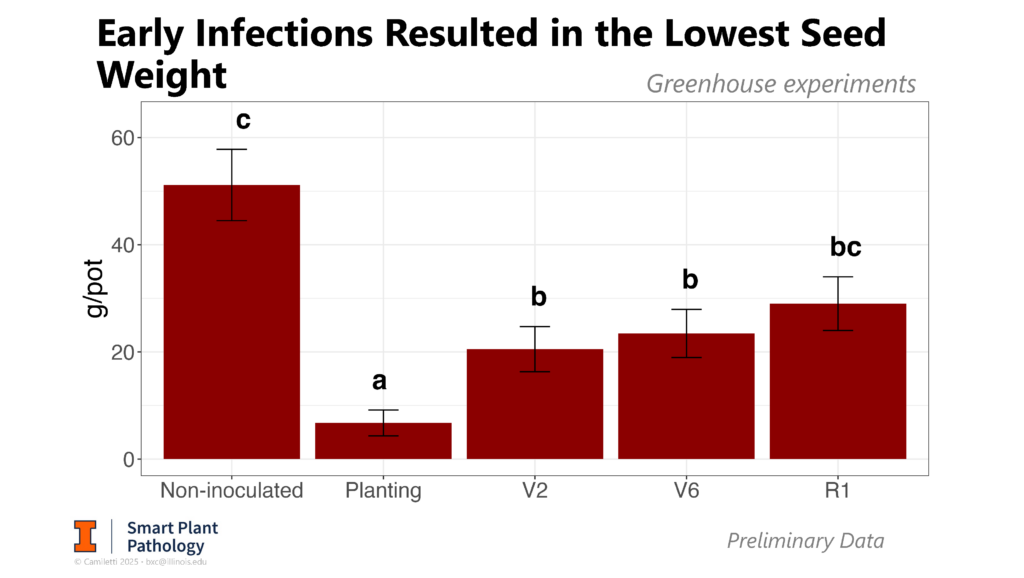
Objective 1: Greenhouse and outdoor courtyard experiments showed early RCR infections cause the greatest yield loss in soybeans, though infections through the R1 growth stage can also significantly reduce yield. No consistent positive interaction was found between SCN and RCR under the conditions tested, indicating SCN alone does not necessarily increase RCR severity.
Field trials showed fungicide performance varied by product and environment; however, among registered seed treatments, Saltro® consistently provided the strongest disease suppression and the best yield performance in RCR-infested fields. ILEVO® and CeraMax® showed moderate disease suppression, although product efficacies varied across locations.
Farmers should prioritize early-season protection, as early infections result in the greatest yield loss, while recognizing infections through R1 can still reduce yield. Fields with a history of RCR should be planted with proven fungicide seed treatments, with Saltro® providing the most consistent suppression and yield protection among registered products.
Because SCN was not shown to increase RCR severity in the SCN-resistant variety tested, there is currently no evidence to support an integrated management plan. However, this work was conducted using a single SCN-resistant variety, and further research across additional varieties is needed to confirm that no interaction exists between these pathogens. In the meantime, RCR risk should continue to be addressed aggressively in infected fields. This approach should be applied across entire fields with a known history of RCR, especially in high-yield or high-value acres where yield loss risk is greatest.
Objective 2: The model identified RCR hotspots in commercial Illinois soybean fields, enabling researchers to place field trials where disease pressure was highest. This demonstrates that the technology can reliably detect disease activity without relying solely on traditional scouting.
With additional ground-truthing, the model was refined and validated, achieving about 80% accuracy in identifying disease patterns across fields. This allows farmers to use imagery-based maps as an early warning system to locate problem areas, monitor disease spread and evaluate management outcomes over time.
Farmers should consider using satellite imagery to identify RCR hotspots rather than relying solely on in-field scouting. These maps can guide targeted scouting, helping confirm disease presence early and inform decisions on fungicide treatments, seed selection or other management practices. This approach is especially valuable for medium to large operations where full-field scouting is impractical, and disease might go undetected until yield loss occurs. Over time, repeated mapping can help identify consistent high-risk areas and support long-term management and variety decisions.
Objective 3: Several biological products showed partial suppression of RCR in growth chamber and greenhouse experiments; however, control was inconsistent and much lower than that of standard chemical seed treatments.
Products with potential were advanced to courtyard pot trials that more closely mimic field conditions, but no biological consistently provided reliable suppression. Combined disease ratings and seed weight data showed current commercial biological seed treatments alone are not sufficient to manage RCR.
The findings indicate biological products alone cannot reliably control RCR or replace proven chemical seed treatments. Although some products showed limited activity, none consistently provided meaningful protection beyond standard fungicide seed treatments. For fields with a history of RCR, farmers should prioritize chemical seed treatments and consider biologicals only as supplements if future products demonstrate clear added value.
Next Steps: Work on RCR in Illinois continues in 2026. Camiletti’s team is preparing scientific articles from this research and are seeking additional funding and industry partners to accelerate the development of improved RCR management tools for Illinois soybean farmers.
Objective 1: Researchers are combining SCN-by-RCR interaction studies with field trials to identify products, including the recently registered seed treatment Victrato®, and application strategies that provide the most reliable control.
Objective 2: The next phase will expand the number of fields and environments used for training to improve model reliability across soil types, varieties and growing conditions. This will help transition the tool from a research prototype to a practical system for tracking disease spread, identifying high-risk zones and guiding targeted scouting and management decisions.
Objective 3: Researchers will evaluate whether biologicals add value when combined with proven chemical seed treatments. The Illinois Soybean Checkoff program has funded a FY26 project, now underway, to assess combinations of biological products with chemical seed treatments, such as Victrato® and ILEVO®, under greenhouse and field conditions.
First Step Toward Liming Recommendations in Illinois
Project Leaders: Andrew Margenot, University of Illinois; Yuhei Nakayama, University of Illinois; Robert Miller, Agricultural Laboratory Proficiency Program, and Fertilizer Recommendations & Support Tool Lime Project coordinator; Mx. Ezra Moses, University of Illinois
Purpose: Liming recommendations in the Illinois Agronomy Handbook have not been updated in decades, and they do not account for the now-common use of buffer pH to estimate the liming requirement. Although most U.S. states, including neighboring Iowa, Michigan, Indiana and Ohio, base recommendations on buffer pH tests, Illinois relies on soil water pH and broad soil classifications based on organic matter (proxied by color) and cation exchange capacity. Although this provides a reasonable estimate of reserve acidity, it might also introduce error in estimating how much lime is needed to neutralize active (soil water pH) and reserve acidity, which is what buffer pH tests are intended to measure. Because buffer pH testing is already part of routine commercial soil testing, updating Illinois recommendations using new calibration data and buffer pH tests will help growers more accurately determine liming requirements and increase profitability.
Approach: In fall 2023, waterhemp seed was collected from soybean fields across Illinois. Researchers screened the waterhemp populations in the greenhouse to determine which contained resistance. This process involves growing the plants after a preemergence application of a Group 15 herbicide (Dual II Magnum) at a discriminating dose – the amount of herbicide that controls a sensitive population, but not a known-resistant one (Figure 1). If a population shows the same or less control than the known-resistant population at the discriminating dose, it is moved to the next phase of research to confirm resistance (Figure 2). This research will conclude in 2025.
Researchers reevaluated Illinois liming recommendations by:
- Collecting and characterizing 36 soils representative of Illinois croplands across a range of soil pH values (3.8 to 6.5).
- Measuring key soil properties, including water pH, salt pH, buffer pH, texture, organic matter and Mehlich-extractable nutrients.
- Evaluating common buffer pH tests used in surrounding states, including: Sikora, Sikora-2, Adams-Evans and modified Mehlich methods.
- Conducting a lab incubation study on 24 of the 36 soils with soil water pH below 6.5 to estimate lime requirement and calibrate soil pH tests.
- Applying seven lime rates (0-6 tons/ac.) and measuring resulting soil water pH after an eight-day incubation – the gold standard approach for lab-based calibration of lime rate and soil pH change.
- Using these results to calculate lime requirement to achieve a soil water pH of 6.5 and to calibrate buffer pH test to lime rate for the target soil pH desired.
- Conducting 11 on-farm trials (seven in 2025, four in 2026) in central-southern Illinois to evaluate soil pH and yield response to lime rates of 0 tons/ac. to 3 tons/ac., and for additional field-scale validation of lab-based buffer pH calibration. Soil pH and yield are being tracked for two years following the lime application since lime impacts on yields might be delayed.
Results: Lime requirements for the 24 soils ranged from 0 tons/ac. to 3 tons/ac. based on lab results. Buffer pH methods more accurately predicted the lime requirements than water pH. Accuracy improved further when soil properties such as organic matter and texture were included.
Current Illinois recommendations, despite relying on water pH, performed reasonably well but tended to overestimate lime needs. Recommendations from other states (e.g. Delaware and Kentucky), particularly those using Sikora and modified Mehlich buffer pH methods, were generally more accurate. That said, the soil color-plus-texture-with-water-pH approach of the current Illinois recommendations is “close enough,” especially given the lower cost than buffer pH testing. For truly accurate lime rates, however, buffer pH testing is needed.
On-farm trials showed soil pH increased from fall 2024 to spring 2025, but differences among lime rates were not evident at that time. By fall 2025, higher lime rates (2 tons/ac. to 3 tons/ac.) resulted in greater pH increases compared to lower rates. Soybean yields in 2025 ranged from 68 bu./ac. to 71 bu./ac. and did not differ by lime rate.
Farmers can continue using the Illinois Agronomy Handbook recommendations for liming with reasonable accuracy. However, more accurate lime recommendations can be achieved using Sikora/SMP or Mehlich-3 buffer pH tests. The Adams-Evans method is not recommended, as it consistently underestimated lime requirements.
Next Steps: On-farm and small-plot lime rate trials are needed, pending funding, to calibrate buffer pH tests with lime rates at field scale. This next step will allow researchers to develop lime rate recommendations for Sikora and Mehlich-3 buffer pH tests, which have proven appropriate for Illinois soils. Researchers are partnering with GROWMARK Inc. to identify additional on-farm trial locations and welcome any interested farmers in partnering for on-farm lime rate evaluations. Additional funding is needed to expand the number of trials, improve confidence in lime-rate calibrations and evaluate soybean versus corn yield response to lime-rate timing. Additionally, Margenot and his team are preparing results to publish in peer-reviewed scientific journals.
Quantifying Conservation Benefits for Illinois Soybean Farmers
Project Leaders: Kaiyu Guan, University of Illinois; Ziyi Li, University of Illinois
Purpose: Conservation benefits vary widely by location, but most information available to farmers is based on regional averages or limited experimental sites. This creates uncertainty when considering management changes, particularly as conservation incentives, sustainability metrics and ecosystem services markets continue to emerge. This research aimed to bridge the gap between field trials and practical farm decision-making. By combining soil, weather and crop data with modeling tools, this project provided Illinois growers with location-specific estimates of crop performance, greenhouse gas emissions, soil carbon outcomes and nitrogen losses. This information can help farmers make more informed conservation and management decisions and prepare for participation in emerging carbon and ecosystem services markets.
Approach: This project used remote sensing, field measurements and modeling to estimate conservation outcomes at field scale. Researchers combined soil, weather and crop data with algorithms and modeling tools to evaluate how different practices perform under practical farm conditions.
The model looked at past conditions from 2017 to 2021 and tested scenarios such as adding cover crops, adopting no-till, reducing nitrogen rates by 10% and improving application timing, as well as combining practices. Results included impacts on yield, soil carbon and greenhouse gas emissions, allowing for field-specific comparisons across management options.
Model results were validated using data from seven long-term corn and soybean rotation trials in Illinois from 1999 to 2021, where management practices and yields were well documented.
Multi-Year Results Summary: Soybean-corn rotations reduced nitrogen losses and lowered nitrous oxide and ammonia emissions compared with continuous corn, reflecting improved nitrogen balance and less surplus inorganic nitrogen after harvest. Farmers considering a switch away from continuous corn should prioritize acres prone to nitrogen loss, such as tile-drained or seasonally wet fields, to reduce leaching and gaseous emissions.
Soybean–corn rotations also slowed soil organic carbon buildup or led to slight declines compared with continuous corn at standard nitrogen rates, likely due to faster decomposition of soybean residue. Pairing rotations with carbon-supporting practices such as winter cover crops, reduced tillage and residue retention can help support soil carbon.
Findings from the nitrogen portion of the study showed that timing and inhibitors can matter as much as rate. Applying nitrogen closer to peak crop demand, such as spring application with early sidedress, and using a nitrification inhibitor improved nitrogen use efficiency, sustained or increased yield, and reduced nitrogen loss and emissions.
Fall nitrogen applications increased losses and reduced or destabilized yield, particularly in wetter springs, even at similar rates. These applications should be limited to situations when they are necessary and used with practices that reduce loss.
Next Steps: The research team published one peer-reviewed article related to this research in the journal Agriculture, Ecosystems & Environment titled, “Comparing continuous-corn and soybean–corn rotation cropping systems in the U.S. central Midwest: trade-offs among crop yield, nutrient losses, and change in soil organic carbon.” The team is preparing a second article focused on nitrogen management. Researchers also plan to expand this work beyond Illinois.
Injury Potential to Very Early Planted Soybeans from Various Soil-Residual Herbicides and Active Ingredients
Project Leaders: Logan Miller, University of Illinois; Aaron Hager, University of Illinois
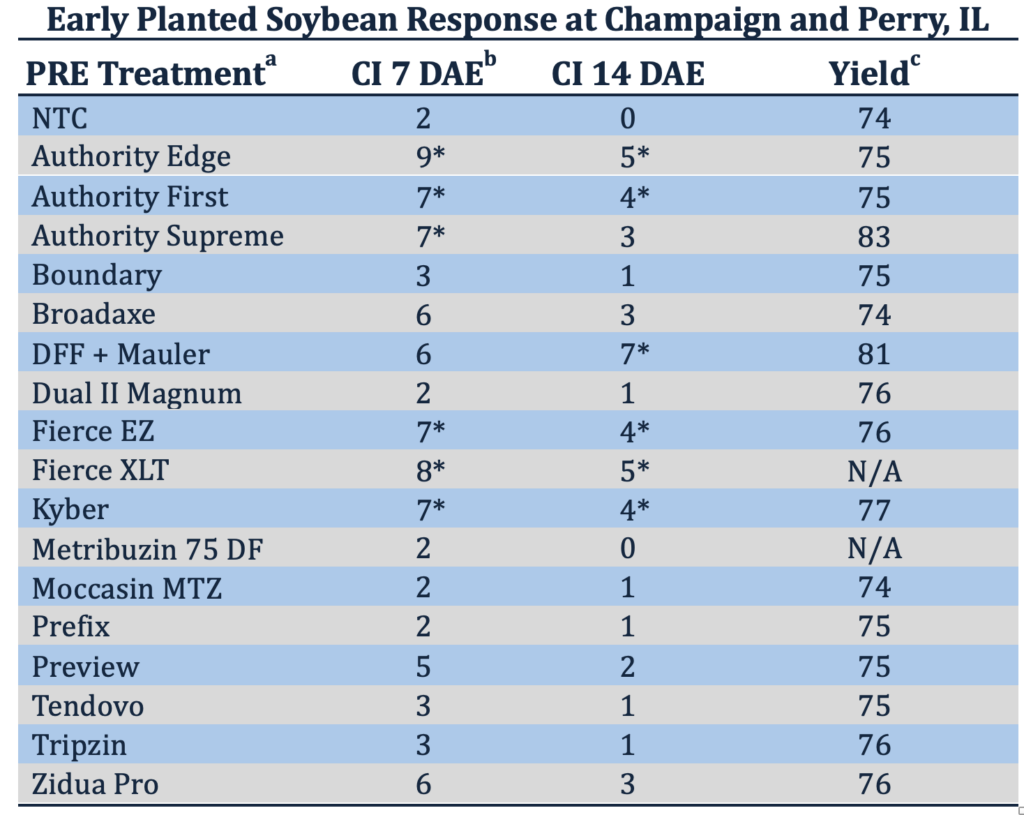
Purpose: Soybeans planted earlier are more likely to emerge in cool, wet conditions. These conditions, along with certain preemergence (PRE) herbicides, can increase the risk of stand loss and crop injury. This project aimed to understand whether specific commercial PRE herbicides or active ingredients are more likely to injure soybeans and reduce yield. Evaluating a range of commercial PRE herbicides will help identify products or herbicide groups farmers might want to avoid when planting early. With this information, farmers can build weed-control programs that protect crop safety while maintaining effective weed control.
Approach: Field research was conducted over two growing seasons in Champaign (2024 and 2025) and one in Perry (2025), using soybean variety 33XF3 with a base seed treatment of Acceleron® in both years. Treatments included several commercially available herbicide premixes applied at 1x labeled rates at planting. In Champaign, early planting occurred April 15, 2024, and April 12, 2025, while conventional planting took place May 19, 2024, and May 17, 2025. The Perry location had a single planting date of March 26, 2025. Sudden death syndrome (SDS)-treated (ILEVO®) and non-SDS-treated soybeans were included across all PRE treatments and planting dates. Researchers recorded soybean injury, stand counts and plant height throughout the season, along with yield. Yield data was not collected at the Perry site.
Multi-Year Results Summary: At Champaign in 2024 and Perry in 2025, PPO-based herbicide premixes (Authority®, Fierce®, etc.) caused the most soybean injury. However, in Champaign in 2025, PPO-based products caused little to no injury.
Differences in rainfall timing and total precipitation likely drove these results. Compared with 2024, soybeans in Champaign in 2025 experienced more favorable early-season growing conditions, with no excessive rainfall. In Perry in 2025, soybeans took 26 days to emerge, compared with 13 days in Champaign. This delayed emergence reduced stands at Perry regardless of treatment, while stands in Champaign were not affected.
As in 2024, PRE herbicide had no effect on soybean yield in Champaign in 2025 (Table 1). Unlike in 2024, the early planting date in 2025 (April 12) did not outperform the conventional planting date (May 17).
Results for SDS-treated (ILEVO®) soybeans were mixed. In 2024, May-planted ILEVO® soybeans had an average yield reduction of 11 bu./ac., along with significant stand loss, while April-planted soybeans showed no yield difference. Footn In 2025, ILEVO® did not affect yield or plant stand in May-planted soybeans. However, in April-planted soybeans, ILEVO® increased yield by 4.5 bu./ac. compared with non-SDS-treated soybeans.
Results from the second year reinforced a key takeaway from the first year: Weather during and shortly after soybean emergence remains the most important factor influencing soybean injury and stand reduction.
Farmers can select PRE herbicides that best fit each field based on weed species, seed treatment and soil characteristics, including drainage, pH and organic matter. Because field conditions vary, choosing the right PRE herbicide for each field can help maintain effective weed control while minimizing crop response. Fields prone to standing water are particularly at risk for herbicide injury, especially with early planting. Additional factors such as soil texture, surface crusting and residue levels might also influence crop response, and differences in soil type between locations (e.g. Perry versus Champaign) could contribute to variability in results.
Next Steps: Researchers are repeating this study in 2026 in Champaign and Perry without funding from the Illinois Soybean Checkoff program.
Genetic Engineering Methods for Soybean Cyst Nematode Control
Project Leader: Matt Hudson, University of Illinois
Purpose: Soybean cyst nematode (SCN; Heterodera glycines) remains the most economically damaging soybean pest, responsible for billions of dollars in yield losses annually. In the U.S., SCN consistently ranks as the leading cause of yield reduction, often without visible symptoms. Current management relies on crop rotation, resistant cultivars and limited chemical use. However, SCN populations are adapting to widely used resistance sources, including PI 88788 and Peking. Nematicides are costly and might provide inconsistent control.
This project aims to identify SCN genes that could be targeted to reduce population. The long-term goal is to develop more precise, durable control strategies that help protect soybean yield.
Approach: This research is being conducted in a laboratory at University of Illinois Urbana-Champaign. SCN progresses through several life stages, from egg to juvenile to adult. Identifying and collecting each stage can be challenging. In the first year of this project, researchers refined growth and timing to reliably collect SCN at key growth stages under varying conditions, including temperature and soybean variety in order to identify the genes that regulate the production of male and female nematodes.
The team also optimized methods to extract SCN from soybean roots, allowing for consistent recovery of feeding juveniles and adults for further study.
In addition, researchers developed new methods to analyze gene activity from individual SCN, including refining and publishing a set of genome sequences (a pangenome) for SCN, to allow them to identify genes in Illinois SCN samples. This approach provides more precise information on how the nematode develops and reproduces, which may help guide future management strategies.
Results: Researchers established a reliable system to grow SCN under controlled conditions. Growth chamber conditions were optimized to support both soybean plants and SCN populations, ensuring a consistent supply of nematodes for experimental use. This foundation was essential for all subsequent work.
Last summer, RNA was collected from all targeted stages, including juvenile and adult males and females. RNA samples were sequenced, creating a valuable resource for SCN research. Researchers completed and published the SCN pangenome and, using this information to identify genes, completed the first single-worm RNA-seq analysis conducted across the full life cycle of a plant-parasitic nematode.
This work helps identify genes tied to SCN development and reproduction, including the first genes linked to sex determination. Over time, these findings could support new tools to reduce SCN populations, improve the durability of resistant varieties and help protect soybean yield while lowering input costs. Researchers also found genes likely involved in how SCN feeds on and interacts with soybean plants, pointing to potential targets for future control strategies.
Early trials also show that soybean variety and some crop inputs may influence the ratio of male to female SCN. Because females drive reproduction, shifting this balance could help reduce SCN populations over time.
Next Steps: This project received an additional year of funding through the Illinois Soybean Checkoff program and is currently underway. The team has already published two peer-reviewed articles in scientific journals from the first year of this project.
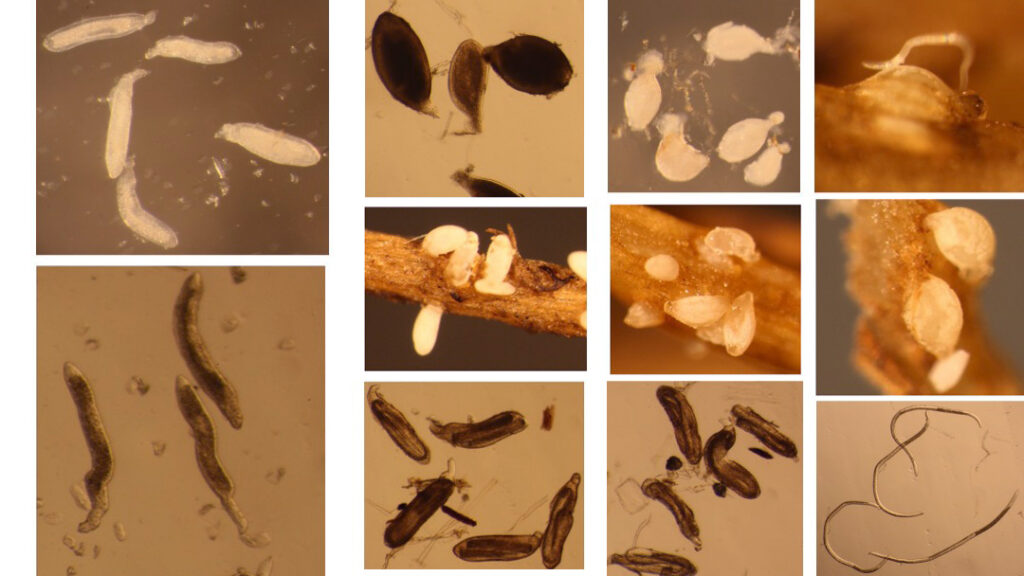
Images of male and female nematodes isolated using new methods.
Recent Articles
What makes Illinois soy stand out on the national and global stage? From our unmatched transportation network to innovative infrastructure projects, Illinois moves soy efficiently and effectively.
By
Where Illinois soy stands today - and where it's headed.
By IL Field & Bean Team