
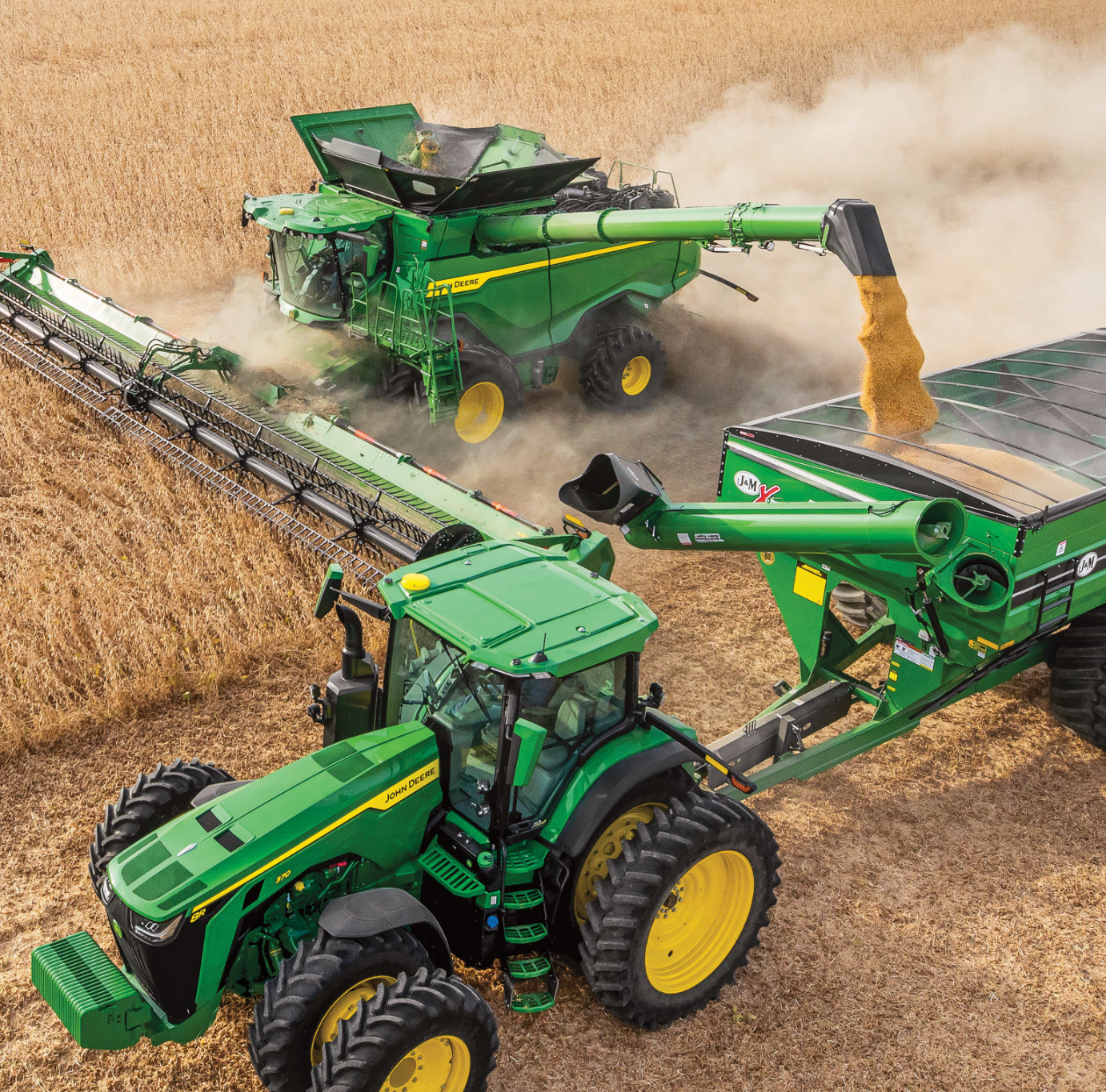
Renewable fuels are no longer a future concept; they are a growing part of today’s agricultural economy. For Illinois farmers, they represent more than just another demand stream. They offer a connection between what’s grown in the field and how energy is produced, used and valued across the country and around the world.
As demand for lower-carbon fuel sources continues to grow, renewable fuels are becoming a key opportunity for soybean and corn growers alike. From biodiesel and renewable diesel to ethanol and emerging feedstocks, the role of agriculture in energy production is expanding — and Illinois sits at the center of that conversation.
At its core, renewable fuels are built on three long-standing principles: economics, energy independence and environmental benefits. Those pillars continue to guide growth in the sector today, creating both immediate and long-term opportunities for farmers.
Why Illinois Leads the Conversation
Illinois is uniquely positioned to benefit from the rise of renewable fuels. As one of the top producers of both soybeans and corn, the state generates a significant volume of feedstock for biofuels.
That proximity matters. Renewable fuel production is most efficient when feedstocks can be processed close to where they are grown. Crushing soybeans into oil for biodiesel or processing corn into ethanol near the farm reduces transportation costs and strengthens local markets. In turn, this creates a more direct pathway from the field to the fuel tank.
For Illinois farmers, this means renewable fuels are not just an abstract market — they are a local opportunity. Strong demand for soybean oil, corn oil and other feedstocks helps support commodity prices while creating additional outlets for production. It also reinforces agriculture’s role beyond food and feed. Increasingly, Illinois farms are helping power vehicles, equipment and infrastructure through fuels grown across the countryside.
A Market Driver with Staying Power
Renewable fuels already play a significant role in agricultural demand, and that role is expected to grow. Biofuels continue to serve as a major market driver not only in the United States, but across the globe. Policies, consumer demand and industry innovation are all contributing to expanded use of renewable diesel, biodiesel, sustainable aviation fuel (SAF) and ethanol.
At the same time, other countries are demonstrating that higher blend levels are possible, signaling additional room for growth in the U.S. market. For farmers, that translates into long-term opportunity. As renewable fuel production increases, so does the need for consistent, high-quality feedstocks, creating a stronger, more stable demand outlook for crops like soybeans and corn.
And while renewable fuels are a major piece of the puzzle, they are part of a broader system. Feed demand for livestock remains strong, and export markets continue to play a role. Renewable fuels simply add another layer of demand, one that continues to expand.
From the Field to the Fuel Tank
One of the most compelling aspects of renewable fuels is their direct connection to the farm. Soybean oil, corn oil, animal fats and even emerging intermediate crops all contribute to fuel production. That diversity of feedstocks highlights how renewable fuels benefit multiple segments of agriculture, not just a single commodity.
For example, soybean oil is a primary input for biodiesel and renewable diesel, while corn processing produces both ethanol and corn oil. Livestock production contributes tallow, which can also be used in fuel production. Even crops like canola are gaining attention as additional feedstock options in certain regions.
This interconnected system creates “stair-step” opportunities across agriculture. Advancements in one area — such as biodiesel demand — can positively impact others, including row crop production, livestock and specialty crops.
What It Means on the Farm Today
While renewable fuels are a major market driver, their use on the farm is still evolving. Many farmers are already using biodiesel blends in on-road vehicles like semis and pickups, often without realizing the exact blend level. State incentives and fuel standards — especially in Illinois — have helped increase the amount of biodiesel blended into diesel fuel.
However, use in off-road farm equipment is less defined. Higher blends, such as B20 or B30 (containing 20% or 30% biodiesel), are not yet widely available in all areas. That is beginning to change as conversations between farmers, fuel suppliers and equipment manufacturers increase.
In many cases, the first step is simply awareness. Farmers are starting to ask questions:
- What blend am I using today?
- Could I use a higher blend?
- What would it take to make that transition?
Those conversations are helping build momentum, even if adoption happens gradually.
Moving the Needle on Biodiesel
One of the most notable areas of progress is the push toward higher biodiesel blends. Advancements in equipment compatibility are helping support this shift. Increased confidence in fuel quality, storage practices and performance is also playing a role.
At the same time, real-world examples are becoming more important. Farmers are increasingly interested in learning from other farmers to understand what works, what challenges exist and what benefits they can expect. Demonstrating successful use of higher blends, such as B30, helps bridge the gap between theory and practice. In 2025, John Deere approved the use of B30 across the company’s entire portfolio Tier 4 engines. This year, Deere is working with several Illinois growers to run their fleet on B30 throughout the 2026 growing season. One of the key objectives of this project is to drive awareness and confidence in using higher biodiesel blends through the experience of growers. This farmer-to-farmer learning approach is critical in building trust and accelerating adoption.
The Role of Data and Precision Agriculture
Renewable fuels are not just about what happens after harvest; they are also connected to how crops are grown. Precision agriculture tools are helping farmers improve efficiency, reduce inputs and document practices in ways that support sustainability goals tied to renewable fuels.
Technologies that optimize planting, fertility and crop protection allow growers to produce more with fewer resources. From precise seed placement to targeted spraying, these tools help maximize yield potential while minimizing waste.
At the same time, digital platforms are becoming increasingly important. Programs tied to renewable fuels and sustainability often require documentation, proof of practices, crop rotations or input use. Having accurate, easily accessible data helps farmers participate in these programs and capture additional value.
As new opportunities emerge, such as intermediate crops used for biofuel production, data will play an even greater role in verifying and supporting those systems.
Expanding Opportunities with New Cropping Systems
Renewable fuels are also opening the door to new cropping opportunities. In parts of Illinois, farmers are exploring intermediate crops, such as winter canola, that can be grown between traditional growing seasons. These crops provide an additional harvestable product while contributing to renewable fuel feedstocks.
In some cases, these systems can replace lower-performing crops or add a new revenue stream to the operation. Precision technology and improved management practices are helping make these transitions more feasible.
As these systems continue to develop, they may offer another way for farmers to diversify income while supporting renewable fuel production.
Challenges to Navigate
Despite the opportunities, there are still challenges to address. One of the biggest is familiarity. Diesel has long been the standard fuel for farm operations. Switching to higher biodiesel blends or exploring new fuel options requires changes in management, storage and seasonal planning.
Cold-weather performance is another consideration. Like traditional diesel, biodiesel can present challenges in lower temperatures, requiring proper handling and blending strategies. In many ways, the transition comes down to education and confidence. Farmers, fuel suppliers and equipment providers must work together to ensure that renewable fuels are used effectively. As knowledge increases and success stories become more common, those barriers are expected to decrease.
A Generational Opportunity
Interest in renewable fuels spans all age groups, but the next generation of farmers may view them through a slightly different lens. Younger farmers are often looking for ways to build long-term viability into their operations. Expanding markets, improving sustainability and adopting new technologies all play a role in that mindset. Renewable fuels check many of those boxes.
They represent a growing demand stream, align with broader sustainability goals and connect directly to the crops farmers already produce. For those entering the industry, they offer a longer runway of opportunity. At the same time, adoption is not limited to any one generation. Across the board, farmers are focused on one key question: where is the best market opportunity? Renewable fuels are increasingly part of that answer.
Looking Ahead: More with Less
As agriculture continues to evolve, one theme remains consistent: the need to produce more with fewer resources. Renewable fuels fit into that equation by creating additional value from existing crops. Combined with advancements in precision agriculture and equipment, they help farmers improve efficiency while expanding market opportunities.
Looking ahead, growth in renewable fuels will likely be driven by a combination of factors:
- Increased blend levels
- Expanded infrastructure
- Continued policy support
- Advancements in technology and data
Together, these factors point to a future in which renewable fuels play an even larger role in agriculture.
Homegrown Horsepower
At the end of the day, renewable fuels represent something simple, but powerful. They are grown with energy from the farm. From soybeans and corn to emerging crops and co-products, Illinois farmers are helping produce the fuel that powers equipment, transportation and industry. That connection between agriculture and energy is only becoming stronger.
As demand continues to grow, renewable fuels offer an opportunity to strengthen markets, improve efficiency and support the long-term success of Illinois agriculture. In many ways, it comes down to one idea: turning what’s grown in the field into fuel that drives the future.
Recent Articles
What makes Illinois soy stand out on the national and global stage? From our unmatched transportation network to innovative infrastructure projects, Illinois moves soy efficiently and effectively.
By

Where Illinois soy stands today - and where it's headed.
By IL Field & Bean Team