
Each growing season, farmers generate endless amounts of data – from yield maps and planting rates to equipment hours and grain storage levels. Although these datasets and trials contain powerful potential to improve decision-making and profitability, they won’t help your bottom line if left on your monitor or notebook.
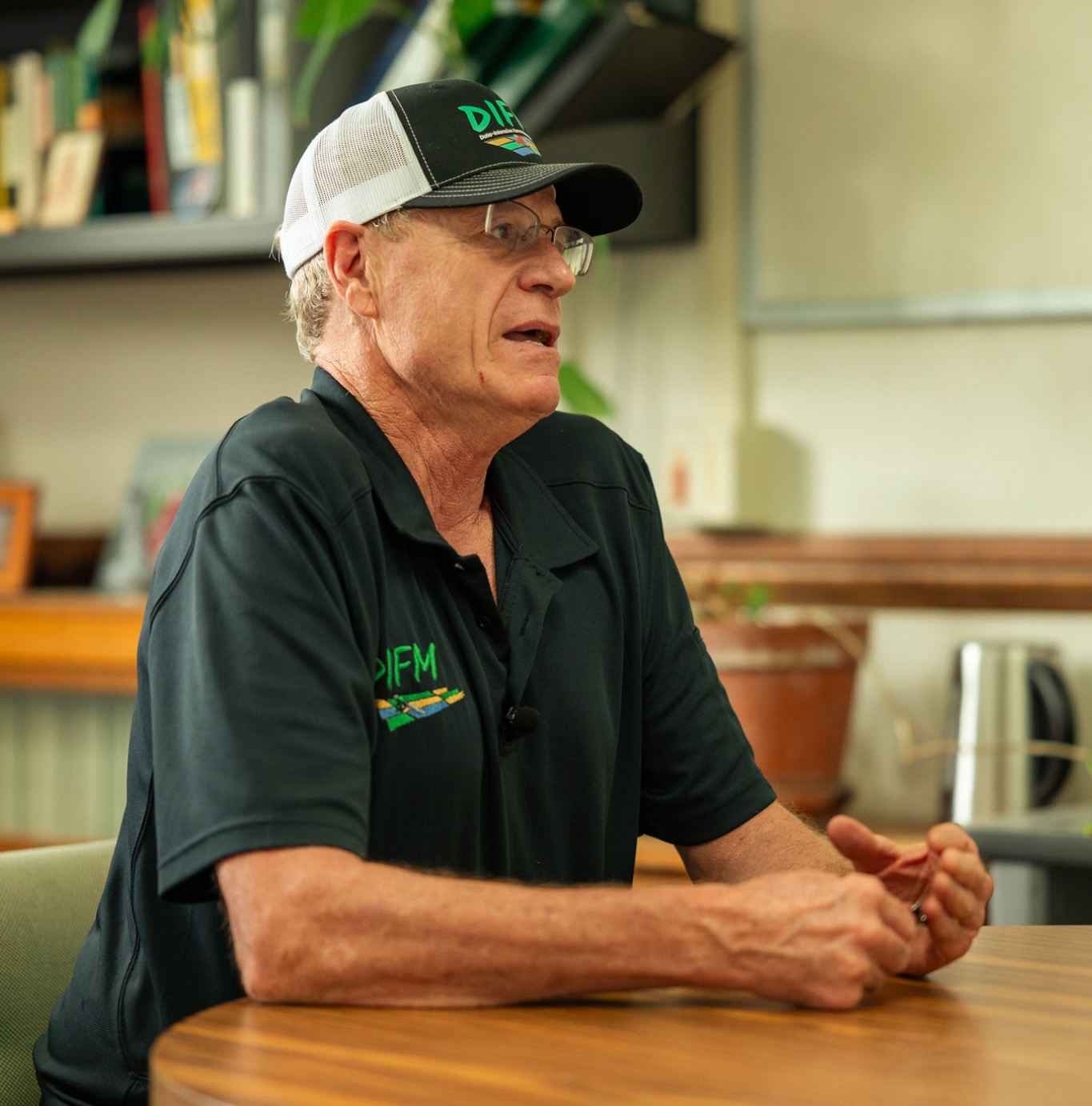
As a professor at the University of Illinois and the Principal Investigator of the Data Intensive Farm Management (DIFM) Project, David Bullock, Ph.D., works with farmers to turn numbers into on-farm results by using GPS-reliant precision agriculture technology to conduct large-scale agronomic field trials to generate data on yield, input management and field characteristics. Through his research, Bullock has realized that the problem doesn’t come from a lack of data. Farmers have told him, “I’ve got all this data, and I don’t know what to do with it.” What Bullock believes is that farmers need to know why they are generating data to know how to figure out what data they should generate. That way, they’ll have real objectives that will allow them to capture high-quality data for the right reasons.
Knowing Why You’re Collecting Data
Before investing any time or money into technology, one of the most crucial steps of successful data management is to define your “why.” Why does this data need to be collected? What decisions will it inform?
“Some farmers just ignore it,” Bullock notes. “They’ll say, ‘Yeah, it’s on my hard drive but it just stays on there.’ That’s fine, maybe that’s all you want to do.”
In some cases, farmers collect data simply because their equipment allows it or automatically gathers it. For some, this might be enough. But for those farmers who want to farm more data-intensively, purposeful management is key. As Bullock further explains, “What’s important is the kinds of data you’re getting — not just amass data — but amass data for reasons and have focused reasons to understand why you want the data and have some idea of what to do with it.” With different products coming out, and constant change, Bullock understands farmers’ frustrations. “So often people get excited thinking about ag data, and I think farmers get frustrated because it’s like, OK, what next? Like when yield maps first came out, everybody was really excited. Farmers were able to see how much yield they were getting in different parts of their field. But it wasn’t long before they were saying, ‘OK, that’s a pretty yield map. What am I supposed to do with it?’” Without a focused reason or “why” attached to the trials and tests farmers are conducting, a yield map becomes nothing more than a pretty visual.
Integrating On-Farm Trials
As Bullock describes, one of the most powerful and simplest ways farmers can obtain useful data is by conducting on-farm trials using the equipment technology that is already available to them. DIFM allows farmers to create checkerboard trials in different fields to test various input rates in a rigorous fashion, allowing farmers to assess real performance differences.
By entering basic information about the equipment, type of seed and field measurements, farmers can create trials in just a few minutes. Bullock notes, “What once took people a lot of time, they can now do at the push of a button. All of a sudden, you’ve got data you can work with. It’s not hard to learn, and it’s not hard to do. And that’s why farmers really love it.”
By using DIFM, Bullock explains, farmers might generate a report that examines crop yield response based on seed selection: “It’s looking for things that will make a difference. It’s looking for what can we measure on this field. Like terrain and slope that might make a difference and cause seed rate to be optimal in different places. It’s looking through all of this data and using statistical ways to figure out what matters. And at the very least, this tells farmers, ‘If the weather is the same again next year, we think this is what you should do.’ Now farmers will say ‘Yeah, but the weather is not going to be the same.’ But we’re doing this for the long run, we’re envisioning a world in which your crop consultant works with you, and you do this for 30 years.”
On-farm trials, when designed with intention, can provide personalized answers to some of the most challenging questions growers face.
The Cost of Ignoring Data
Although integrating data management practices onto the farm might feel overwhelming or daunting, ignoring this data holds serious risk in the current competitive environment. Bullock touches on this risk by saying, “A lot of farmers went out of business in the 1970s. You don’t want to say that about yourself in the 2020s. It’s a competitive world out there. You’ve got to be ready. You’re going to have to work hard and think about what you are doing, and that’s what the successful farmers will do.” In other words, making decisions based on data is no longer optional. Data has become the backbone of staying competitive, sustainable and profitable in a tightening agricultural economy. But how do farmers navigate this? Bullock says, “For DIFM, the desire is to create a decision tool that farmers can sit down with and talk to each other about. You have to find the right people to work with. It’s all about people in the end, and you may even want to work with the Data Intensive Farm Management Project.”
The Future: Probabilities and Confidence
Looking toward the future, Bullock sees a world in which farm data management decisions are driven by data and can integrate probabilities. “Farmers are gamblers, there’s no way around it. So, we are trying to make them better gamblers,” he says. “We want to give them a tool that talks about odds. You know, for example, we think if you put this much nitrogen down under these weather conditions, there’s a 70% chance of this outcome. And that way farmers can start making decisions with probabilities, which is what they want to do anyways.” For too long, farmers have had to rely on gut instinct when making decisions. However, Bullock notes, “We are in a place where we can be in a data-rich environment, especially with precision agriculture,” and farmers will remain the decision-makers in this environment, but with the ability to predict outcomes with more confidence.
Conclusion
Today, farmers have access to more data than any generation before them. However, this advantage doesn’t come from the quantity of data, it comes from trusting it and knowing what to do with it.
Bullock believes this advantage will be key for the future of agriculture. “I think we’re really getting a foothold on some new stuff – some revolutionary agronomic research,” he says. “It’s going to change how farmers farm. I think farmers are going to begin farming more data-intensively. And they’re going to trust what they see because the data is coming from their own field, and they’re going to be involved in the research.”
By embracing purposeful data practices now, farmers can build stronger confidence heading into the next season. “There’s a new world coming in agriculture research,” Bullock adds. “Farmers won’t just be farming grain. They’ll also be creating information about how to farm grain better, and that’s always been the goal.”
For more exclusive content, watch Dr. Bullock’s video interview below!
Recent Articles
In this issue of Illinois Field & Bean Magazine, we're looking forward to the 2026 Soybean Summit.
By
Sulfur is essential for plant growth, yet it's only just becoming a common addition to fertilizer management plans. This shift is no coincidence.
By Darby Danzl, ISA Regional Technical Agronomist