
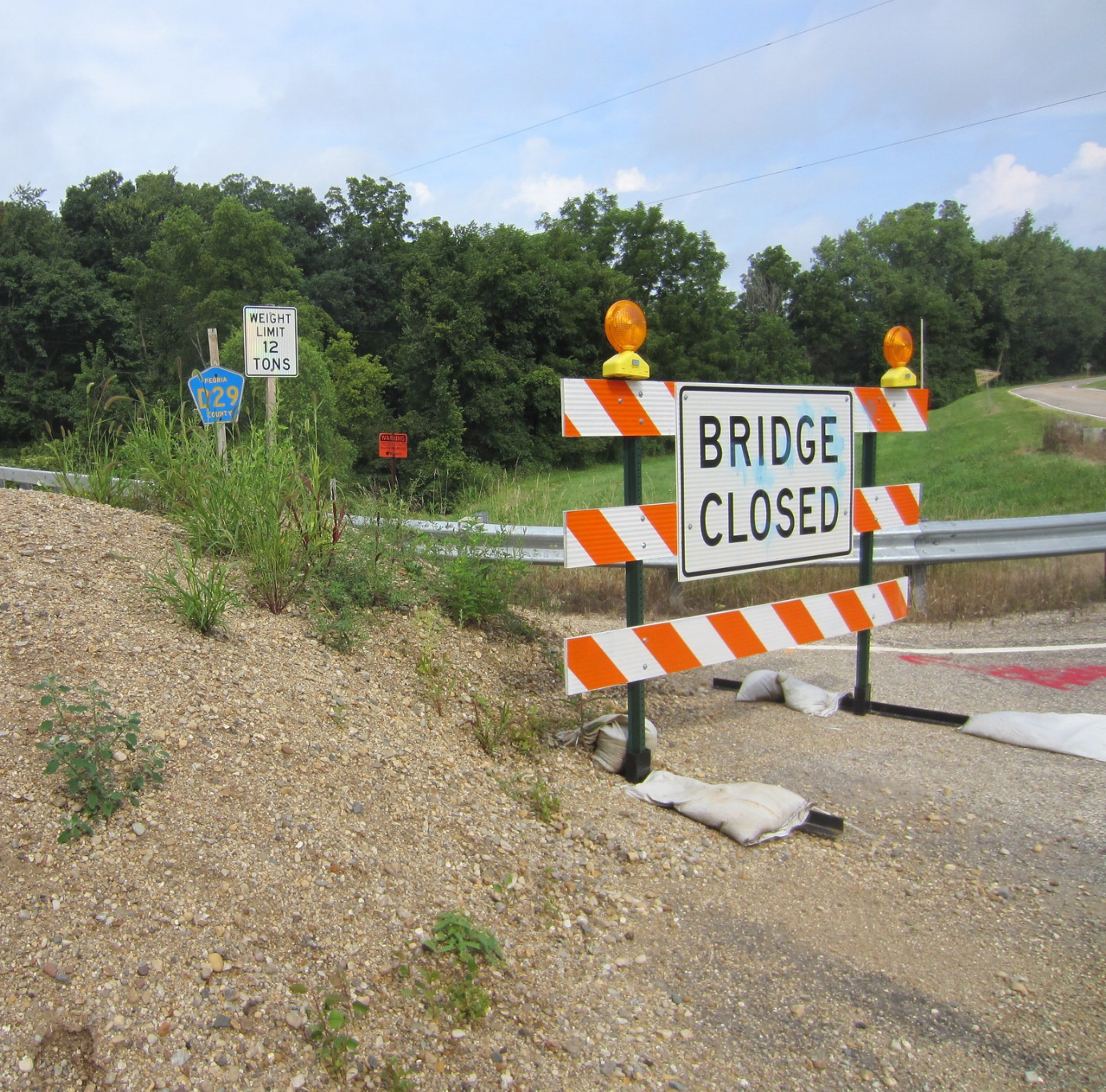
For most Illinois soybean farmers, getting the crop to market is just as important as growing it. Every load leaving the field depends on a transportation system that works — from township roads to county highways and, perhaps most importantly, the rural bridges connecting them.
Those bridges may not receive much attention during planting or harvest, but when one is weight-restricted or closed altogether, the impact can be significant. Longer truck routes, higher fuel costs, delayed grain deliveries and additional wear on equipment all chip away at a farm’s bottom line.
That’s why the Illinois Soybean Association (ISA) made rural bridge infrastructure a key priority. Through research, education and advocacy, ISA is helping local governments explore a strategy called bridge bundling. This approach can stretch limited infrastructure dollars while keeping Illinois agriculture moving efficiently.
Every mile matters
Illinois farmers benefit from one of the most extensive transportation networks in the world. Grain moves from farms to elevators, processors, rail terminals and river ports through thousands of miles of local roads and bridges before reaching domestic and international markets.
When one piece of that network fails, the effects ripple outward. A bridge closure often forces trucks onto lengthy detours, adding mileage, fuel costs and travel time during the busiest seasons of the year. In some cases, roads that weren’t designed for heavy agricultural traffic experience additional wear, creating even more infrastructure challenges for neighboring communities. Emergency vehicles, school buses and local businesses are affected as well.
For farmers operating on tight harvest schedules, even a short delay can lead to higher transportation costs and missed marketing opportunities. According to ISA, roads and bridges serve as the first connection between soybean farmers and the marketplace, making reliable infrastructure essential to maintaining Illinois’ competitive advantage.
An aging bridge system
Illinois faces a significant infrastructure challenge. The state has nearly 27,000 bridges, one of the largest bridge inventories in the nation. Yet many of those structures are showing their age. Recent ISA research found that approximately 65% of Illinois bridges are rated in fair or poor condition, with thousands requiring rehabilitation or replacement. Many are owned by counties, municipalities and townships that often have limited budgets to address growing maintenance needs.
Waiting until a bridge reaches a critical condition can be costly. Emergency repairs often cost more than planned maintenance, and prolonged closures impose additional economic burdens on rural communities. As bridges continue to age, local governments face difficult decisions about where to invest limited transportation dollars.
Looking beyond one bridge at a time
Traditionally, bridge projects have been completed individually. Each bridge requires its own engineering, bidding, contracting and construction process. Bridge bundling takes a different approach. Rather than replacing or rehabilitating one bridge at a time, multiple bridge projects are grouped together under a single contract. The bridges may be located within one county or across several neighboring jurisdictions.
The concept is similar to buying seed, fertilizer or fuel in larger quantities. Purchasing in bulk often reduces costs, and the same principle applies to infrastructure projects. By combining projects, local governments can reduce administrative expenses, purchase materials more efficiently and streamline project management. Contractors can mobilize crews once instead of repeatedly moving equipment between separate projects, helping reduce overall construction costs while completing more work in less time.
ISA estimates that bridge bundling can reduce project costs by more than 30% while helping local governments maximize available funding.
Bigger returns from every dollar invested
Improving bridge infrastructure isn’t simply an expense; it’s an investment. A recent economic analysis commissioned by ISA found that every dollar invested in bridge improvements across Illinois generates nearly $5 in economic benefits statewide. Within Illinois’ top agricultural counties, every dollar invested returns approximately $3 in benefits.
Those returns come through reduced freight costs, improved transportation efficiency, job creation and broader economic activity. Over a 30-year period, researchers estimate statewide bridge investments could support more than 52,000 jobs, generate $2.83 billion in labor income, and contribute more than $5.6 billion in additional economic value.
For agriculture, reliable infrastructure means grain reaches markets more efficiently, transportation costs remain lower and Illinois producers stay competitive in domestic and global markets.
Helping local communities find solutions
Recognizing both the need and the opportunity, ISA has spent several years working alongside transportation experts, engineers and local officials to better understand how bridge bundling can work in Illinois. That effort has included commissioning engineering research, conducting statewide stakeholder surveys, hosting educational webinars and developing practical resources for local governments.
One result is ISA’s Bridge Bundling Toolkit, an online resource that walks counties, municipalities and townships through the process of evaluating, planning and implementing bridge bundles. The toolkit includes planning guidance, case studies, funding information and communication resources designed to help local officials navigate what can often be a complex process. ISA has also developed an interactive bridge dashboard that allows users to better understand bridge conditions across Illinois and identify opportunities for future projects.
Investing in agriculture’s future
For farmers, bridge maintenance may seem like a local government issue. But reliable infrastructure directly supports farm profitability. Every bushel harvested depends on a transportation network capable of moving grain safely and efficiently from field to market. As equipment grows larger and harvest windows become tighter, dependable bridges become even more critical.
Investing proactively, rather than waiting for bridges to fail, helps reduce long-term repair costs while minimizing disruptions to agriculture and rural communities alike. Bridge bundling offers one practical way to make those investments go further. By combining projects, stretching taxpayer dollars and improving transportation reliability, Illinois communities can preserve critical infrastructure while supporting the state’s largest industry.
For Illinois soybean farmers, that means fewer detours, more efficient grain movement and stronger connections between the farm gate and markets around the world.
Recent Articles
What makes Illinois soy stand out on the national and global stage? From our unmatched transportation network to innovative infrastructure projects, Illinois moves soy efficiently and effectively.
By

Where Illinois soy stands today - and where it's headed.
By IL Field & Bean Team