
Illinois Community Rallies After Tragic Grain Bin Accident
Family and friends remember Blue Mound soybean farmer Tom Ritter, 73, as a kind and generous man who gave his best to everyone, expecting nothing in return. So when Tom died Aug. 20 in a tragic grain bin accident, it shocked his community—and rallied them to help his family bring in his final crop.
“I just picture Tom’s smile and his wry grin, his ornery nature,” recalls Jeff Kraft, who grew up friends with Tom’s son, Cory, and also farms in the area. “He always loved to pull a prank or make a dad joke. He was not a loud outspoken man. Not at all. He wasn’t a guy that had to control the room other than with his presence.”
Tom’s life, and his neighbors’ affection for him, reflects a bright silver lining in agriculture.
“In ag right now, there’s a lot of negative things, and spirits and profitability are low,” says Cory, the oldest of Tom’s three sons. “But the fact that so many people gave up their time, their labor, the use of their equipment, it was a beautiful day.”
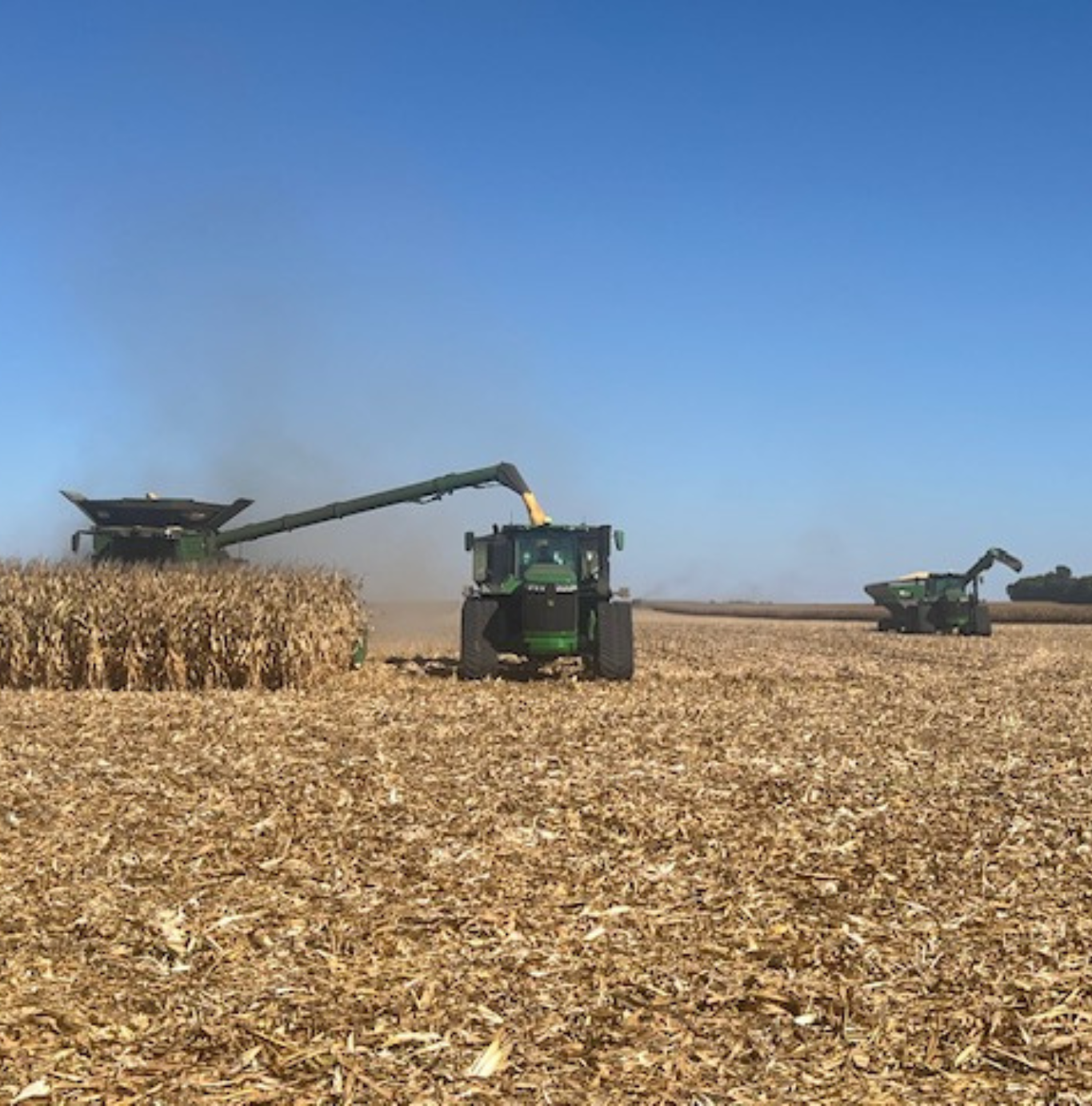
He’s referring to an incredible feat: In about 12 hours—with roughly 13 combines, 10 parallel harvesting operations, and 70 pounds of pulled pork for lunch—dozens of fellow farmers, church friends, neighbors and new acquaintances gathered Tom’s entire 1,000-acre corn crop.
A Dark Day
In many respects, Tom’s final day was a perfectly ordinary one given the fall season.
Late on Aug. 20, “he was cleaning out our last bin of corn, something he’s done hundreds of times before,” Cory explains. He was using a grain vac, and something on the system had come apart. Tom entered the bin to fix it, probably thinking it would take two seconds. That’s when some corn slid down and trapped him.
A tree-trimming crew drove past and noticed the auger running and the grain truck overflowing. They knocked on the door of Tom’s home and alerted his wife, Diana, who contacted Cory. They couldn’t find Tom and alerted emergency officials. Soon, eight or nine fire departments were on-site along with fellow farmers, employees of the local coop and others.
It took rescuers two and a half hours to recover Tom. They’d cut holes in the side of the bin, spilling a bunch of corn onto the ground. By noon the next day, friends and neighbors cleaned up the area.
“It was just a relief knowing that was not something I had to go down there and relive that close to when the accident happened,” Cory says. He also applauds the team at Farm Rescue, a nonprofit that helps farm families in crisis. They provided a driver—now his friend—and a truck for Tom’s harvest.
As the farm’s sixth generation, Cory is hopeful Illinois soybean farmers learn from this experience.
“Think twice before doing some of the dangerous things we do,” Cory says. “We run very hard, especially in the spring and fall. We get tired. That’s when mistakes happen.”
A Bright Rally
The immediate shock of Tom’s passing gave way to something more hopeful: A fiercely loyal community ready to do whatever the Ritter family needed.
Duane Noland raised his hand to help bring in Tom’s harvest along with dozens of others. He and Tom, a few years his senior, grew up across a section from each other out in the Illinois countryside. They attended the same school and church and worked together in various community and farm organizations.
Among other leadership roles, Tom served over decades as a trustee and elder at Central Christian Church in Decatur, as a Trustee and former President of Richland Community College and as member of a school merger board. He was an ag advocate instrumental in bringing Farm Progress Show to Decatur. This year’s show included a moment of silence in his honor.
“He was not engaged in an organization for prestige or the limelight,” Duane reflects. “He was just a good servant, a good Christian man that believed in giving back and improving his community.”
For Tom’s harvest, Cory and Diana “did a nice job of dividing up fields, giving each farm family one or two fields here and there,” Duane recalls. “In one day, we pretty much handled all of the corn crop, which is remarkable.”
That morning, as Duane and others prepared to get started, Cory came out to thank the workers.
“All I knew to do was to give him a big hug,” Duane says. “Your heart just grieves for him. But yet, at the same time, there’s a sense of pride that you could help and knowing that you’ve paid respects to Tom as a man and a farmer.”
For Jeff, another family friend, Tom’s harvest felt surreal. He knew Tom and Cory should be the ones gathering the crop, not him. It brought back memories: Tom’s family taking Jeff on vacation and teaching him how to ski. Tom taking him to his first University of Illinois football game. Traveling with Cory in Tom and Diana’s car to board the school bus so they could play in out-of-town basketball games during high school.
“It sounds cliché, but you take for granted the things you had around you your whole life, and I sure was lucky to have Tom be an influence on mine,” Jeff says.
Cory wants the story of his dad and of this year’s harvest to remind Illinois farmers about what’s right in U.S. agriculture.
“The community is almost like a family, and they want to help,” Cory says. “I encourage people to not only accept the help but to reach out and help others, too.”
Just like Tom would have done.
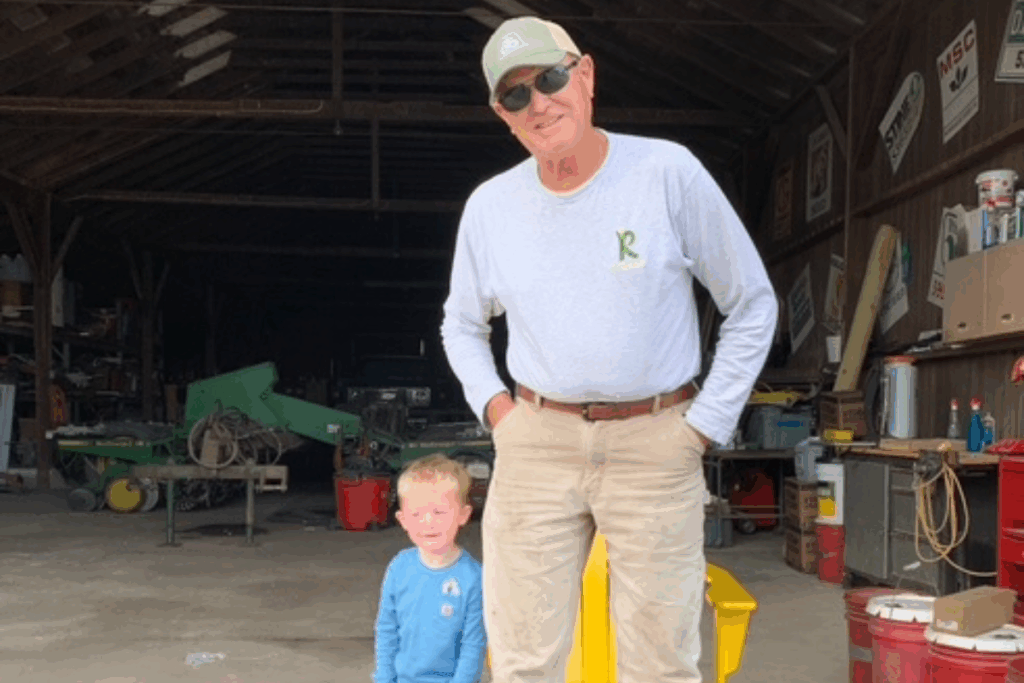
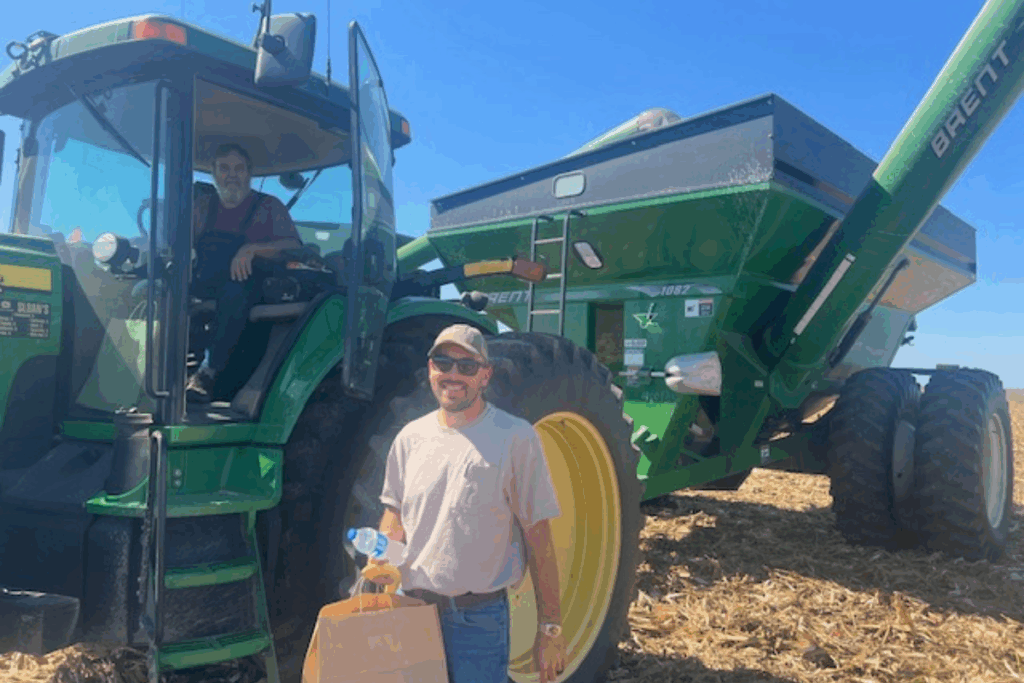
LEFT: Tom Ritter, 73, proudly served as a fifth-generation corn and soybean farmer in Blue Mound. “It was his passion. He loved the act of putting in a crop, taking out a crop,” says his oldest son, Cory. “There’s always stuff everybody doesn’t enjoy about a job, but he loved the whole process of it. I also think he was very proud. It allowed him to stay close to the whole community.” Photo credit: Cory Ritter. RIGHT: Neighbors help the Ritter family harvest Tom’s corn.
Recent Articles
In this issue of Illinois Field & Bean Magazine, we're looking forward to the 2026 Soybean Summit.
By
Sulfur is essential for plant growth, yet it's only just becoming a common addition to fertilizer management plans. This shift is no coincidence.
By Darby Danzl, ISA Regional Technical Agronomist