

Sustainability has become a buzzword in agriculture. If you ask 10 farmers what sustainability means in their operation, you may get 10 different answers.
That’s because every county, township, and even field can have multiple soil types and elevations that shape the plan for growing a crop. On our farm, we practice no-till, conventional-till and utilize cover crops. We fit the practice to the ground based on what is best for its long-term success and what will ultimately be profitable.
While the primary argument for sustainability is soil health and longevity, the key points really are risk tolerance and profitability. Any new practice that is introduced has risk. There is new equipment needed, education acquired, and the scariest thing of all for farmers, change. Farming is inherently a risky industry with low margins and many factors out of the owner’s control like weather and international markets. Despite the risk, farmers remain optimistic year after year and the generational nature of farming lends itself to doing what is right for the land.
I am the 6th generation on our farm, and when I encounter adversity or uncertainty, I gain hope from the knowledge that many generations of my family have survived economic and environmental disasters to keep the farm going. I know that I wouldn’t have had the chance to farm if previous generations hadn’t sacrificed to do what is right for the farm rather than themselves. There are programs available that de risk some of these practices, especially cover crop programs, but they still are a cost share not a cost covering situation.
There is no sustainability without profitability. It’s that simple. If a business suffers consistent losses, it shuts its doors, and a farm is no different. A lack of profitability might survive the current generation operating it because of outside revenue or equity, but it deters the next generation from returning. It’s like passing a boat with holes in it onto the next generation and then being shocked they don’t take it out on the lake. While the numbers can’t be the only reason to make a decision, especially a conservation decision, it must play a part. If I ignore the numbers, there is a good chance I won’t be the one farming the ground in the future.
The key is balance. Find what practices fit the equipment you have access to, the knowledge you can attain and implement, and most importantly what fits the ground you have. You must be honest with yourself and create a plan that gets you to where you want to be. There are so many ways to invest your time and money in your operation. You have infrastructure investment, machinery costs, ever fluctuating fertilizer, chemical and seed costs. Balance your sustainability choices with your ground, finances, and time.
Farmers are the most pessimistic optimists I know. If you talk to one at any given point throughout the year, they are always very aware of what is lurking around the next corner, whether its commodity prices, weather prices, or ever rising input costs. To be honest, most of the time these concerns are justified because they either become the reality or are based on past battles. However, the farmer also goes counter to that pessimism and puts a crop into the ground with no certainty as to the outcome.
Sustainability practices aren’t a one size fits all. We must trust farmers to do what is best for their land. My dad has always referred to the family farm as our farm, never his. He takes ownership and responsibility for the outcomes while honoring those that came before him and leaving a brighter future for those to come. That sounds pretty sustainable to me.
Recent Articles
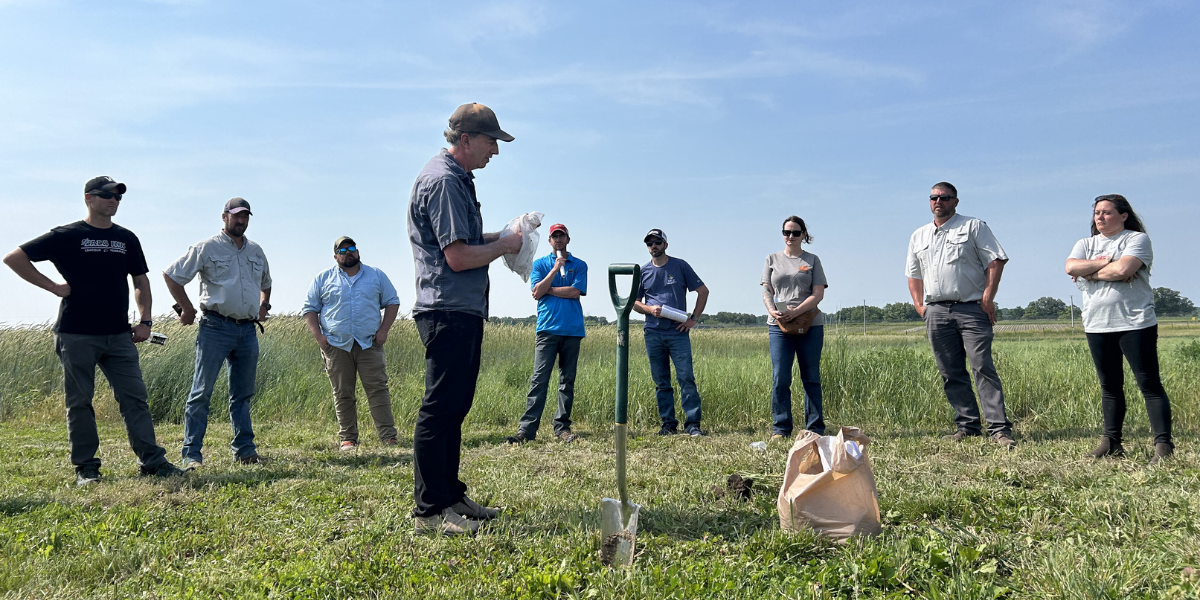
Discover how Illinois is developing a new crop of soil health leaders.
By IL Field & Bean Team