
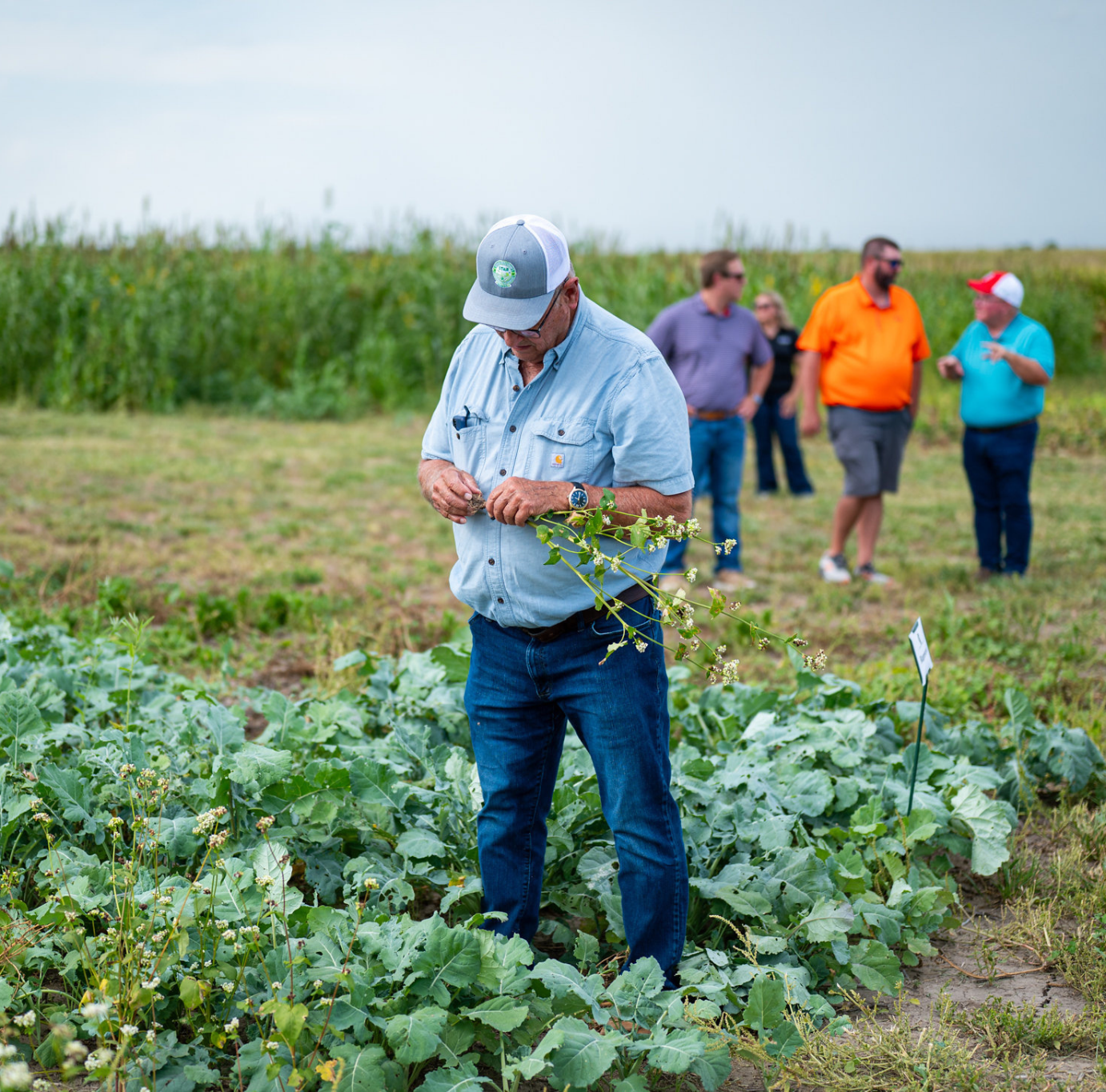
The 2026 National Cover Crop Survey shows farmers are finding value in cover crops, but economics, time and management remain real considerations. Experience, however, may change the equation.
Will they pay? Will there be enough time to get them planted during harvest? What happens if they create problems when it is time to plant corn or soybeans next spring? And will they actually work on *my* farm?
For farmers considering cover crops, those are practical questions with real implications for the bottom line. The 2026 National Cover Crop Survey offers a look at how farmers across the country are answering them, capturing perspectives from experienced cover crop users, intermittent users and farmers who have yet to try the practice.
For Dr. Rob Myers, director of the University of Missouri Center for Regenerative Agriculture and a longtime leader of the national cover crop survey effort, three findings stood out: continued growth in cover crop acreage, adoption of technologies such as drones and virtual fencing and farmers’ willingness to continue using cover crops after financial incentives end.
Different farms, different reasons
There is no single reason farmers plant cover crops. For livestock producers, additional grazing may be the draw. Others are looking for another tool to manage weeds. Across the survey, however, one benefit was cited most often.
“The most commonly cited benefit to the cover crops, the farmers say, is soil health,” Myers said. Farmers are looking for soils better equipped to handle extreme weather, from dry spells to excessively wet periods. Long-term cover crop users reported improvements in soil health, with some seeing modest gains in soil organic matter over several years.
Myers said farmers report better water infiltration during heavy rains and greater moisture-holding capacity during dry periods. Some survey respondents described fields that previously held standing water but drain better after years of cover crop use.
Those improvements do not all happen on the same timeline. Changes in soil organic matter may take four or five years to become noticeable, Myers said. Other benefits can appear much sooner. Farmers may notice more earthworms during the first year, for example, while weed suppression, nitrogen contributions from legumes and grazing opportunities can provide more immediate value.
Does it pencil out?
For farmers who have never used cover crops, cost remains a major barrier. Previous national cover crop surveys indicate it can take two to three years for cover crops to begin paying for themselves. Over the longer term, modest yield improvements may be accompanied by opportunities to reduce fertilizer and herbicide expenses.
This year’s survey also revealed an interesting shift in seed costs. Farmers reported slightly lower cover crop seed costs per acre than in previous surveys, even as the per-pound cost of seed has not necessarily declined.
Management appears to be part of the reason. Myers pointed to cereal rye as an example. While a farmer may once have seeded 50 to 60 pounds per acre, some now use rates closer to 30 pounds per acre. The lower rate reduces total seed expense even if the cost per pound has increased. More farmers are also growing their own cover crop seed, providing another way to manage costs. Still, making cover crops pencil out is about more than the price of seed.
The cost of another pass
During harvest, time can be every bit as valuable as any other input. Farmers who have not adopted cover crops commonly cite concerns about fitting establishment into an already busy fall schedule. Farmers who use cover crops on only a portion of their acres often face the same challenge: They simply do not have enough time to seed every field.
Rotation matters, too. Some farmers are comfortable using cover crops ahead of soybeans, but remain hesitant to use them before corn. The weather can further complicate the decision. An excessively wet fall may prevent establishment altogether, while a dry fall can make it difficult to justify spending money on seed that may not germinate.
For that reason, Myers cautions against viewing adoption as an all-or-nothing decision. Some farmers may use cover crops on certain fields or at specific points in their rotation. Others may skip a year when the weather does not cooperate and return to the practice the following season.
When the first try doesn’t go as planned
The survey also offers insight from farmers who tried cover crops and stopped. Poor establishment was the most commonly cited reason. A dry fall can result in a disappointing stand, while residual herbicides can occasionally interfere with species such as radishes and some clovers. When a farmer invests time and money in a cover crop that fails to establish, trying again can be a difficult sell.
Spring management presents another potential stumbling block. A farmer new to the practice may allow cereal rye to grow too large before termination. If tall rye is terminated and planting is delayed by a week or two, the resulting residue mat can keep the soil wet and make planting more difficult. Large cereal rye can also tie up nitrogen if it is not managed appropriately.
Experienced growers may intentionally keep a cover crop growing later into spring, but they have learned how to adjust termination timing and equipment to manage the additional biomass. That distinction between beginners and experienced users shows up repeatedly in the survey.
Experience changes the equation
Farmers who had used cover crops for 10 years or more reported corn and soybean yield increases of more than 5%, Myers said. Across survey respondents as a whole, reported yield gains were more modest, at approximately a couple of percentage points, depending on the crop.
“As farmers gain experience with cover crops, they learn how to optimize that management,” Myers said. Long-term users tend to evolve their systems. They are more likely to use cover crop mixes, allow covers to grow longer and experiment with practices such as planting green.
Instead of simply establishing a species that grows during the fall and winter-kills, experienced users may begin managing cover crops to capture additional benefits. That learning curve also makes farmer-to-farmer education particularly important.
Myers said farmers want to know how others have made cover crops work, including how they handle establishment, termination and planting. Sometimes the necessary adjustments are relatively minor, such as changing closing wheels or how row cleaners are used on a planter. But finding someone with the right experience can be difficult.
“They may not have a neighbor that has the type of experience they’re looking for,” Myers said. Connecting experienced cover crop users with farmers who are just getting started may therefore be as important as simply providing information about the practice.
Helping farmers through the transition
Cost-share and incentive programs can provide another bridge through the learning curve. Farmers who have not yet adopted cover crops indicated that adequate incentive payments could make them more likely to try the practice, particularly when programs are easy to enroll in and flexible enough to fit individual operations.
For farmers already using cover crops, those dollars can serve a different purpose. Myers said some experienced users credit incentive payments with helping them through the first two or three years, when they were beginning to see soil benefits, including reduced erosion, but had not yet reached the point where cover crops provided a financial return.
Once they learned to manage the system and saw sufficient benefit, many continued to plant cover crops at their own expense. Meanwhile, concerns surrounding cover crops and crop insurance have declined over the years the survey has been conducted, Myers said.
Another tool against tough weeds
For Illinois farmers, cover crop discussions often center on soil and water quality. But Myers believes another finding deserves particular attention from soybean growers: weed control.
It’s a topic that hits close to home. Myers grew up on a family farm near Blue Mound, Illinois. During a recent visit to central Illinois, he noticed more fields struggling with weeds than he remembered seeing in decades. That observation stood out against this year’s survey results.
“It was quite notable that they were really feeling the cover crops were helping with weed control,” Myers said. The benefit may become particularly important as farmers contend with herbicide-resistant weeds.
Experienced growers may intentionally allow a cover crop to produce more biomass in the spring because greater growth can provide additional weed suppression. For soybean farmers, that makes cover crops another management option to use alongside available herbicides rather than a replacement for them.
“As people are dealing with weed challenges, think about how cover crops can be another tool to help with that challenging situation,” Myers said.
Start simple
So, what should an Illinois farmer do if the biggest question remains, *Will this actually work on my farm?* Start simple.
“Don’t necessarily come in with a complex mix,” Myers said. “Maybe start with one or two species together.” Cereal rye ahead of soybeans is one system Myers considers well-proven. Farmers who are more concerned about managing covers ahead of corn could begin with winter-kill species such as oats or radishes, which can provide fall soil and erosion benefits without leaving a living cover to terminate the following spring.
Illinois farmers can also turn to resources from the Midwest Cover Crops Council, Precision Conservation Management, American Farmland Trust and Illinois agriculture organizations for management information and local recommendations.
For those still considering the practice, success does not have to mean adopting the most advanced cover crop system across every acre on day one. It may simply mean finding the right place to start.
Recent Articles
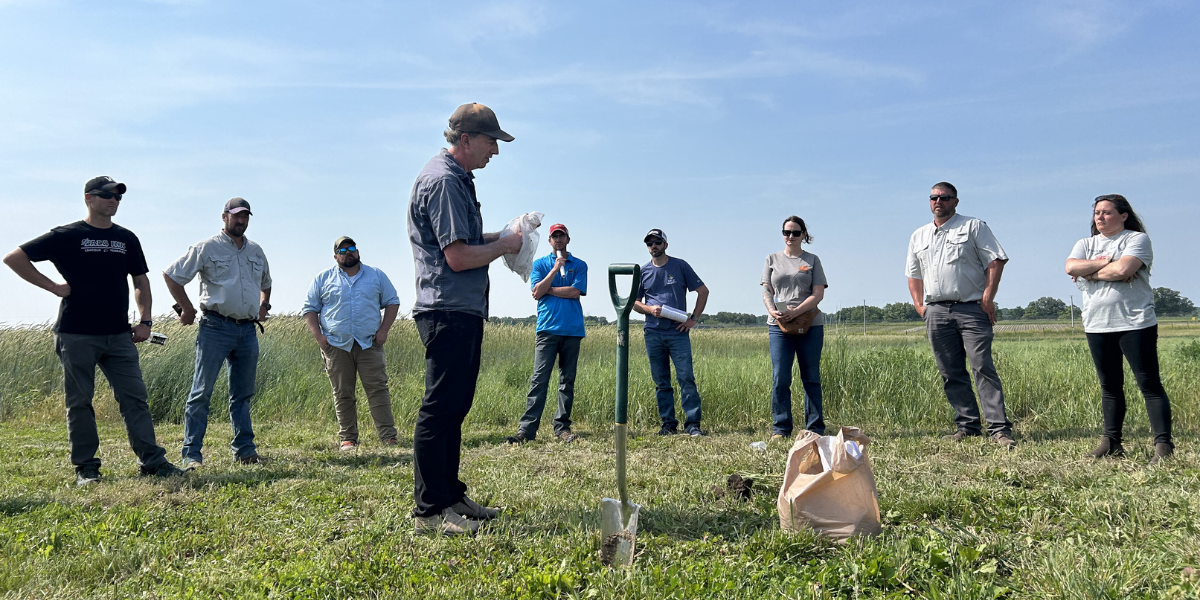
Discover how Illinois is developing a new crop of soil health leaders.
By IL Field & Bean Team