
How Illinois is developing a new crop of soil health leaders
A decade-old soil health education and leadership program primarily funded for the past three years by Illinois Soybean Association (ISA) is paving the way for conservation implementation at scale—one relationship at a time.
Launched in 2017, the Soil Health Leadership Program (SHLP) convenes cohorts of Illinois farmers plus professionals from nonprofits, private industry and institutions of higher education. Together, participants undergo 18 months of intensive soil health education and hands-on learning held at farms and research facilities.
They graduate as Soil Health Ambassadors prepared to serve as knowledgeable resources in their local communities. They advise on issues such as attaining greater levels of soil organic matter, strengthening aggregate stability, improving water infiltration and water-holding capacity, and minimizing soil erosion, compaction and surface crusting.
“Keeping our soils healthy and strong will lead to cleaner water, cleaner air, more resilient and profitable farms, and healthier communities,” explains Helen VanBeck, Manager, SHLP. “We all need mentors and advisors to help guide the work we do, and developing soil health leaders is a critical component of equipping farmers with the systems of support they need to sustainably and responsibly care for their soils.”
Reaching soil champions, influencing Illinois acres
Training is administered by the nonprofit Illinois Sustainable Ag Partnership (ISAP) and coordinated by experts Jim Isermann, ISAP Soil Health Specialist; Alex Ramirez, University of Illinois Extension Program Coordinator; and Maddy Kangas, ISAP Coordinator.
The program has graduated 129 people spanning six completed cohorts. As of this writing, 25 participants are enrolled in the seventh cohort now under way. Nearly 75% of surveyed Soil Health Ambassadors report influencing management on more than 500 acres, and 25% influence more than 10,000, according to ISAP survey data.
“We conduct annual surveys of the Ambassadors, and they overwhelmingly report that they continue to share relevant soil health information with their local network and that they stay in contact with other graduates from their cohort,” VanBeck says.
Evolution of a soil health program
That kind of knowledge sharing—central to conservation agriculture, in which farmers collaborate with agronomists and nonoperating landowners partner with environmental professionals—is at the heart of SHLP.
Its peer-to-peer focus is especially important now as corporations seek out U.S. agriculture to play a role in addressing a range of natural-resource issues.
“The agricultural industry has been looked to over the past 10 years as an untapped solution for our country’s water quality and climate mitigation goals,” VanBeck points out. “We’ve seen historic levels of investment in financial incentives for conservation agricultural practices. While large-scale investment and nation-wide programs are a helpful piece of the puzzle, we can’t lose sight of the fact that we need the buy-in of individual decision-makers to make these changes.”
SHLP’s roots can be traced to 2017, when American Farmland Trust (AFT) began hosting what was then called the Advanced Soil Health Training. That same year, ISAP launched to help Illinois agriculture respond to and achieve water-quality improvement goals established in the Illinois Nutrient Loss Reduction Strategy. Primarily, that happens through education and train-the-trainer programs about soil health benefits, in-field conservation practices and edge-of-field practices.
Funding for that initial soil health training came from the U.S. Department of Agriculture’s Sustainable Agriculture Research and Education program (USDA’s SARE) and individual ISAP members.
Today, ISAP has 18 member organizations representing diverse farmer perspectives across the state of Illinois.
“The original intent of the program was to showcase the on-the-ground impacts of conservation practices,” VanBeck says, “specifically how those practices impact the soil’s function, productivity, and overall health.”
When Illinois soybean farmers and other ag professionals sign up for the SHLP, they’re making a significant investment. The program unfolds over a year and a half, and it generally costs about $4,000 per participant.
Expenses have been covered primarily by ISA for the past three years. Additional funding has come from AFT, The Nature Conservancy, and University of Illinois Extension.
Participants most often are referred to the program through word of mouth. For each cohort, organizers aim to recruit a balanced mix of participants, roughly one-third farmers, one-third conservation nonprofit and educational professionals, and one-third industry representatives.
“This mix of participants allows for multiple perspectives to be shared as information is being shared, farming practices are being demonstrated and different solutions are being suggested,” VanBeck points out. “As the cohort develops, conversations become more rich as participants feel more comfortable sharing their specific perspective and why a certain argument for or against the use of conservation practices would or would not resonate with their audience or employer.”
How the program equips soil ambassadors
A deep personal commitment to soil health drives VanBeck, the program manager, and the other experts who help train SHLP enrollees.
“My great-grandfather was a farmer in northwest Iowa, and while my grandmother did not farm the land herself, she was very involved as a nonoperating landowner, which I got to witness growing up,” VanBeck explains. “My personal commitment to this work stems from a strong reverence and respect for the work of land stewardship and food production and a growing concern for how our intensive, industrialized systems are impacting natural resources such as clean water, functioning ecosystems, clean air, and healthy soils, on which our whole society relies.”
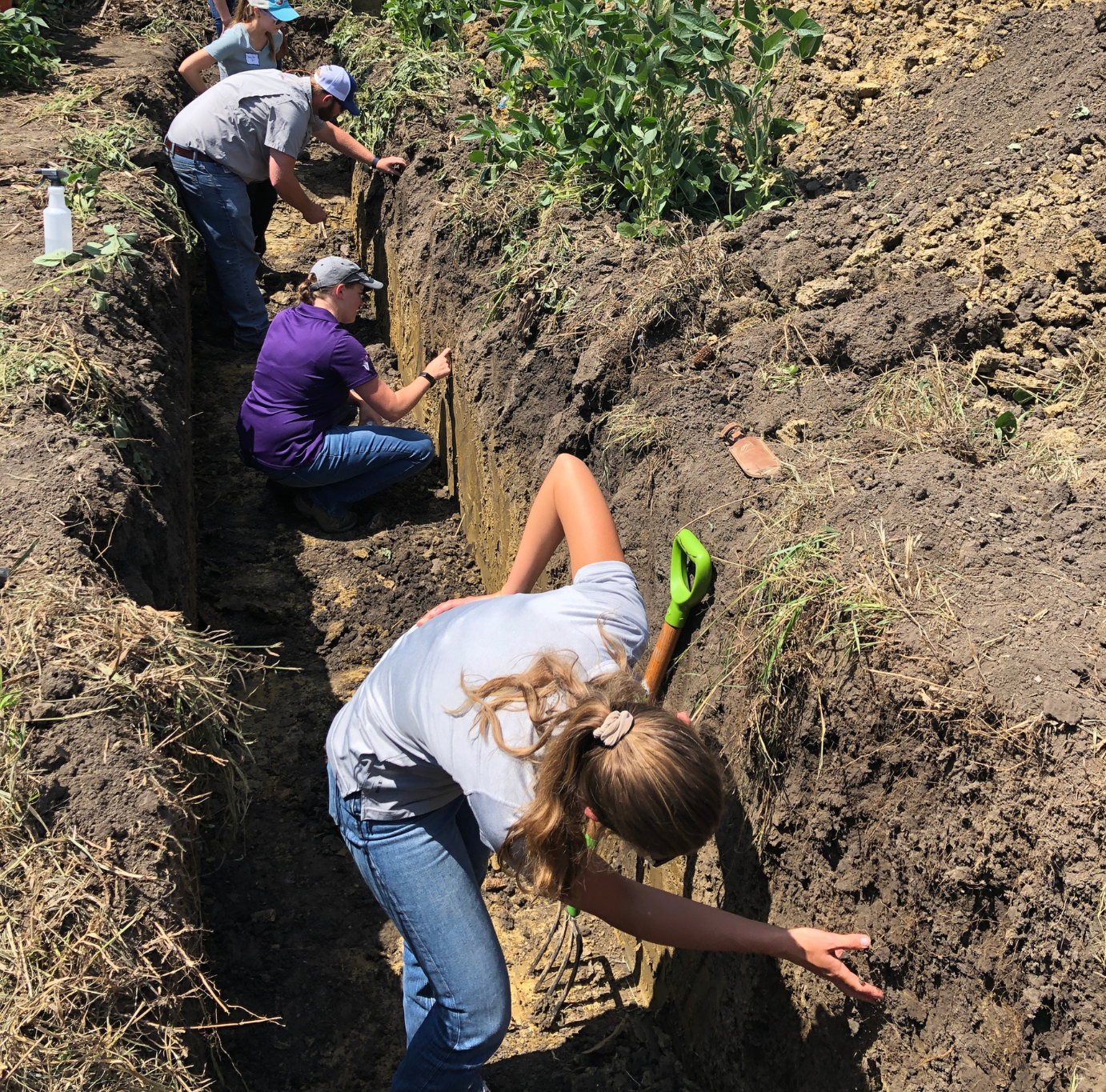
Rather than emphasizing abstract scientific topics, SHLP educators emphasize a hands-on approach to learning the ropes of good soil health.
“The most recent cohort and the current cohort will follow the same training program, visiting geographically and agronomically diverse locations across the state including Tazewell, Piatt, Marion, McDonough, Jo Daviess, and McLean counties,” VanBeck explains.
The first session features table-top soil demonstrations including the slake test, the slump test and a rainfall simulator. Participants also conduct an in-field soil health assessment created by USDA’s Natural Resources Conservation Service (NRCS). Other farm visits include soil pits, cover-crop plots, equipment demonstrations and often research strips or trials.
“ISAP’s Soil Health Specialist, Jim Isermann, who leads the SHLP facilitation, never walks out into a field without a shovel,” VanBeck says. “He is always digging up the soil to show participants what’s going on under their feet.”
After the education wraps up, there’s always plenty of time for Q-and-A discussions. Each training session includes dinner at a local restaurant for more casual networking. Past graduates are invited to these meals to help build connections across cohorts of the program.
“The diversity of operations, farmers and research that is featured throughout the six two-day sessions encourages the idea that there is some troubleshooting involved and that conservation is going to look different county to county and farm to farm, but that’s not a reason not to try it,” VanBeck says. “Having the farmer hosts talk about their own conservation journeys is always really impactful for the participants, as well.”
A community of go-to soil health stewards
Ultimately, organizers are hopeful that SHLP graduates can become resources to Illinois farmers in their local area who might have questions about soil health principles and practices.
“While we don’t expect our graduates to know the answer to every question they might receive from a farmer, the intent of the program is also to provide them with professional relationships and connections across the state through fellow graduates, educational institutions, or other farmer leaders,” VanBeck concludes.
Learn more about the Soil Health Leadership Program
For more information about the Soil Health Leadership Program and to stay tuned for details about registering to participate in future cohorts, sign up for the Illinois Sustainable Ag Partnership’s email newsletter, The Aggregate, at ilsustainableag.org.
PHOTOS
Soil Pit
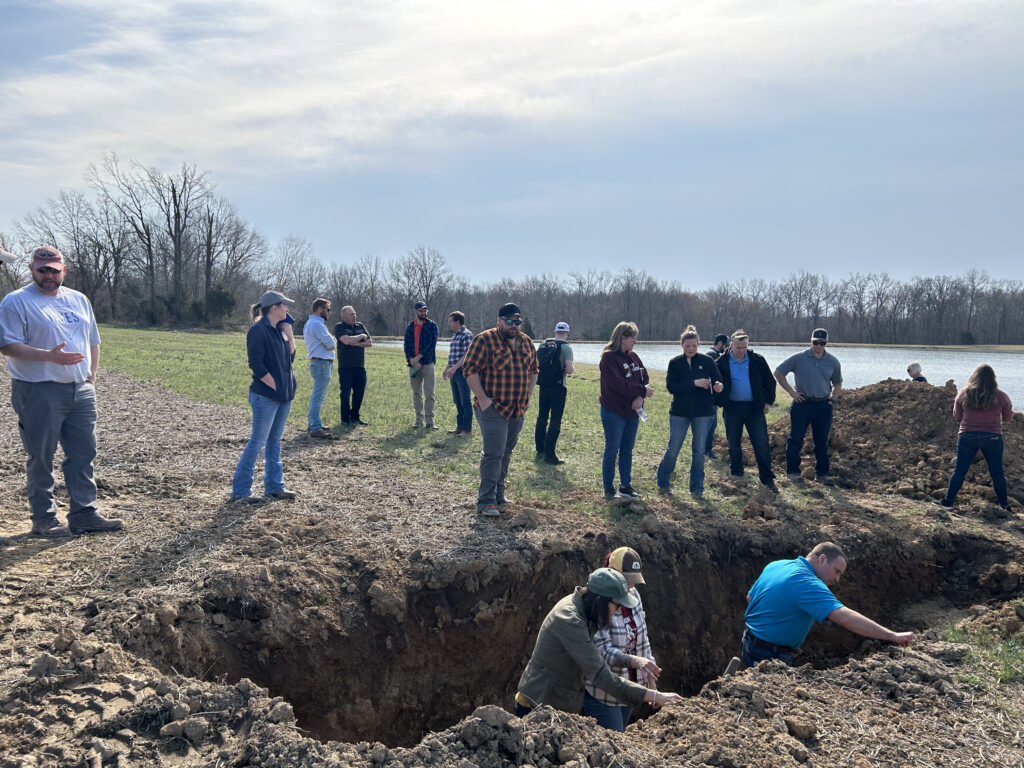
Soil pits such as this one on a corn-and-soybean farm near Marion are used as demonstration tools by Jim Isermann, Soil Health Specialist with Illinois Sustainable Ag Partnership. They allow for close-up observation of many soil properties including horizon depths, colors, texture, structure and root depth. Credit: Illinois Sustainable Ag Partnership
Joel Gruver
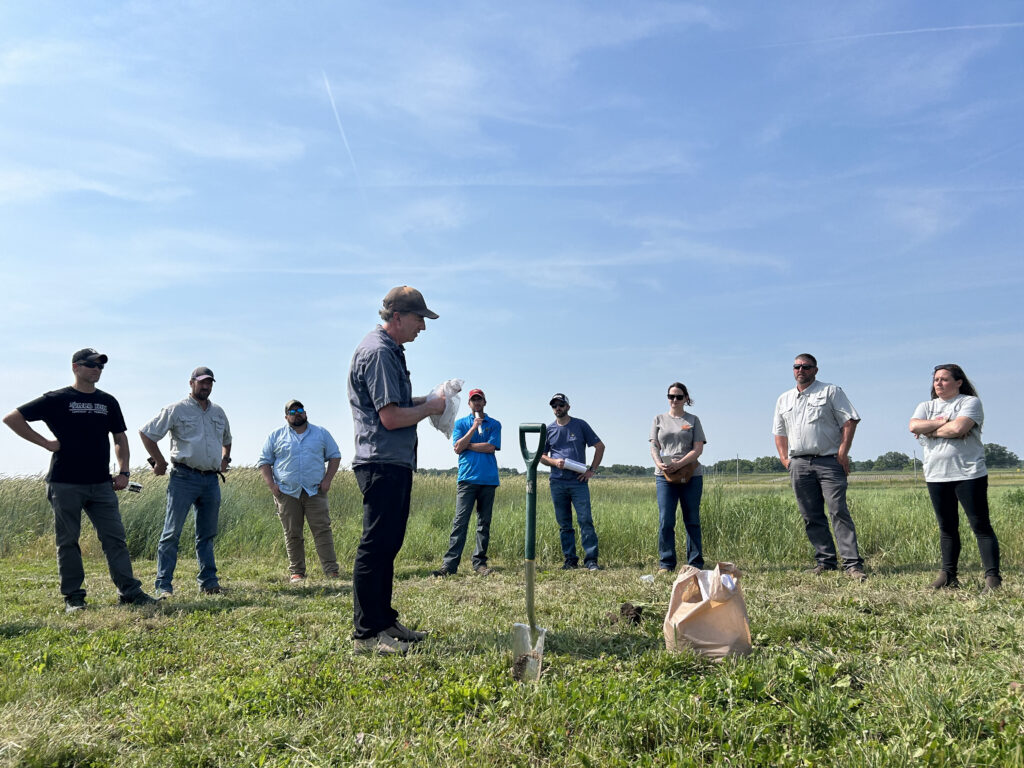
Soil health leaders-in-training visit Allison Organic Farm on a tour led by Dr. Joel Gruver, Professor of Soil Science and Sustainable Ag at Western Illinois University. Scientists at the 80-acre research farm analyze soil health practices in organic systems. The Soil Health Leadership Program highlights soil health considerations across many types of row-crop operations throughout the state. Credit: Illinois Sustainable Ag Partnership
Soil Pit 2
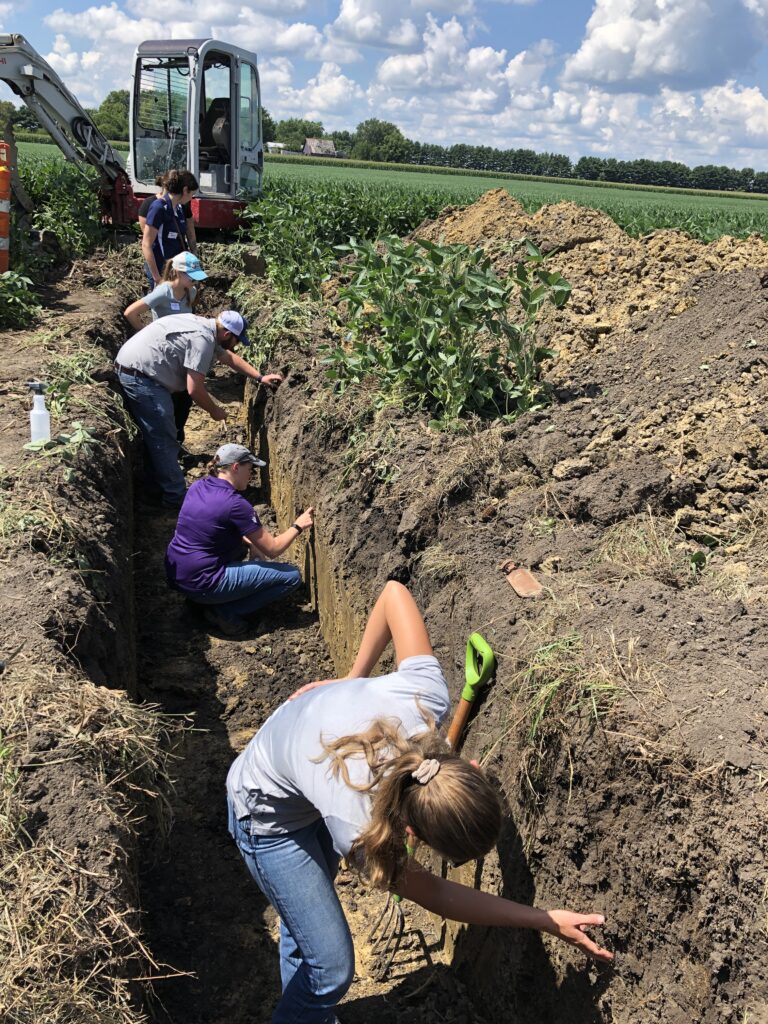
Trainees enrolled in the Soil Health Leadership Program investigate soil structure of a long-term no-till system in Champaign County on the first day of the 18-month Advanced Soil Health course. Credit: Illinois Sustainable Ag Partnership
Recent Articles
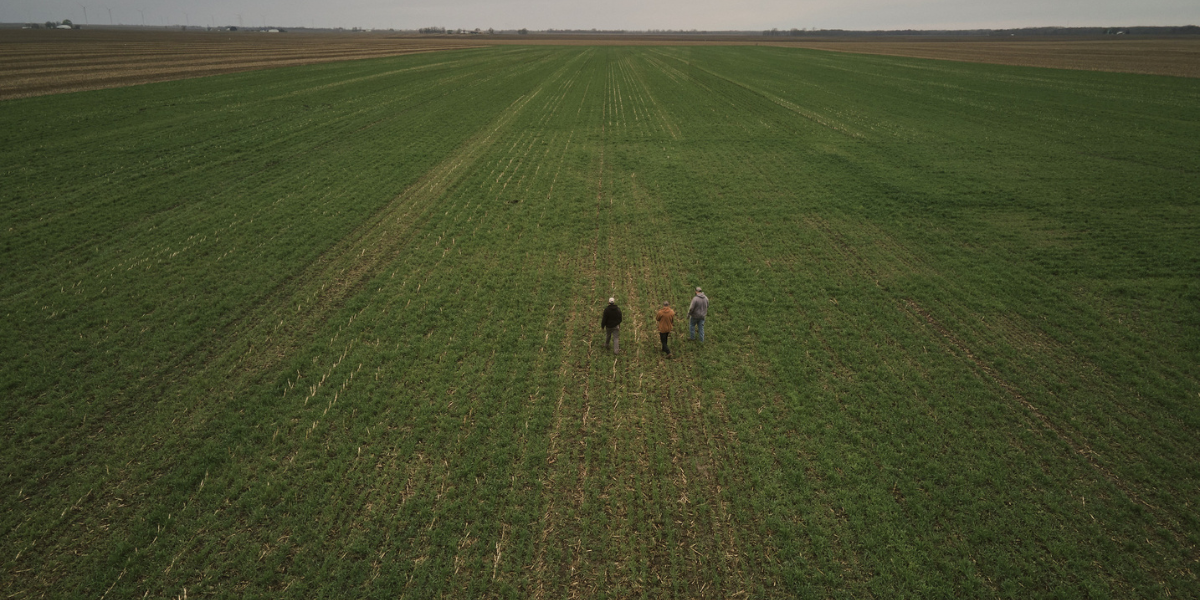
The 2026 National Cover Crop Survey shows farmers are finding value in cover crops, but economics, time and management remain real considerations.
By IL Field & Bean Team