
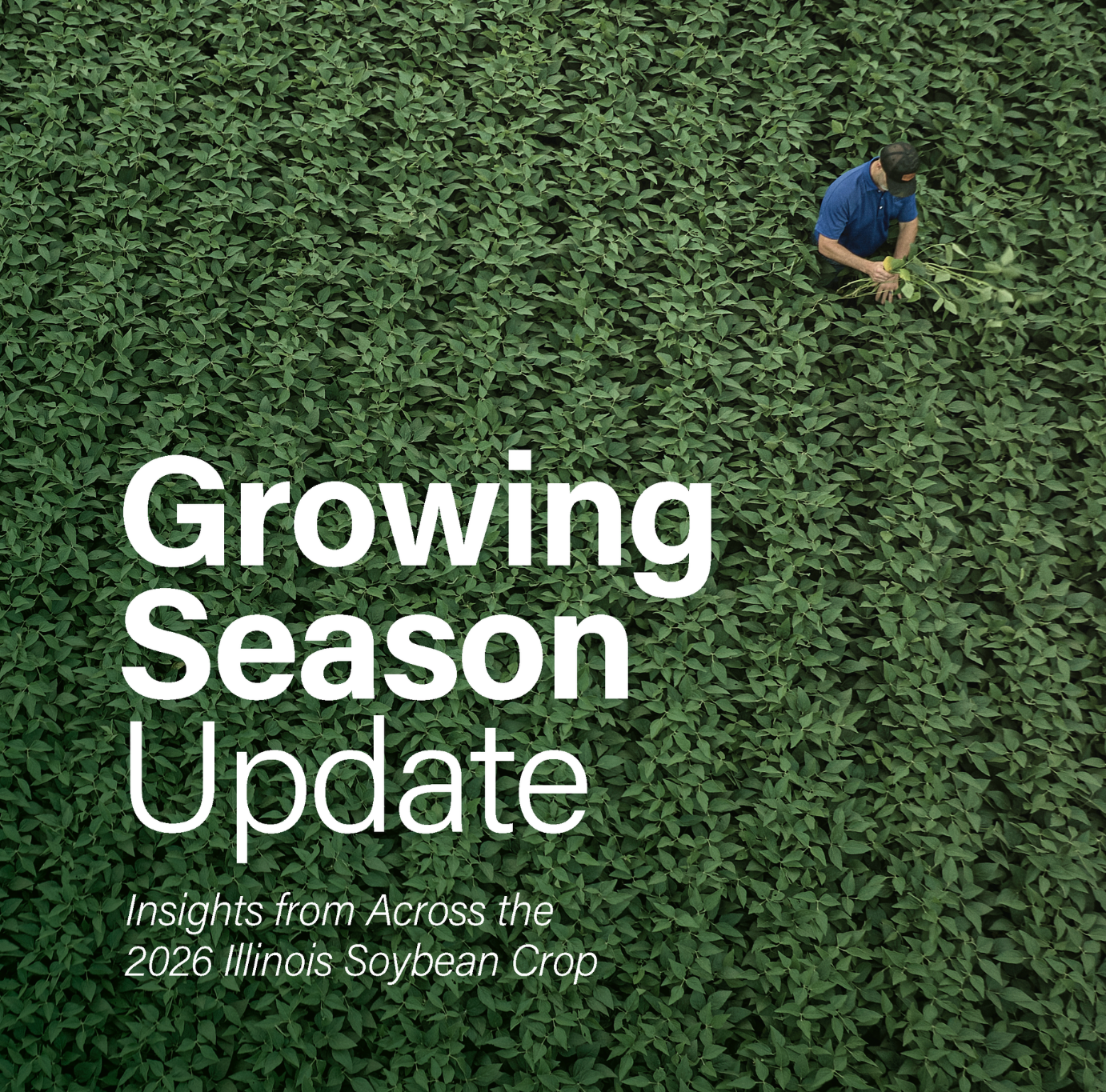
When people ask how the Illinois soybean crop is progressing, there is rarely a simple answer.
Illinois spans more than 390 miles from north to south, with substantial differences in soil types, weather patterns, cropping systems, drainage and management approaches. Although one region might be battling excess moisture, another could be experiencing dry conditions. A field planted in early April could look entirely different than one planted weeks later after repeated rainfall delays.
That variability is exactly why crop reports matter.
At Illinois Soybean Association (ISA), our goal is to provide soybean farmers with practical, timely information that helps them make informed decisions throughout the growing season. One of the most valuable tools available to farmers, agronomists, researchers and industry professionals is the Field Advisor Crop Report tool available at fieldadvisor.org.
The Crop Report tool provides regular updates from trusted agronomic experts across Illinois who are actively scouting fields, monitoring crop development, identifying disease and pest issues, and documenting environmental conditions. These reports create a statewide snapshot of crop conditions while helping farmers understand what is happening beyond their own fencerow.
In a year such as 2026, those insights became especially important.
Why Crop Reports Matter
Crop reports do much more than describe current field conditions.
They help farmers anticipate challenges before they reach their operations. Reports from neighboring regions can provide early warnings about disease development, insect pressure or weather-related concerns that might emerge later in another area.
Crop reports also encourage growers to take a closer look at their own fields.
A report highlighting sudden death syndrome, waterhemp escapes, spider mites or emergence issues might prompt additional scouting and earlier intervention. In many cases, awareness created through crop reports can help farmers make management decisions that protect yield potential.
Beyond field-level decision-making, crop reports serve another important purpose: They identify broader trends that might warrant additional research.
As ISA invests soybean checkoff dollars into research and outreach programs, observations captured in crop reports often help identify emerging agronomic questions. When contributors repeatedly report similar challenges across multiple regions, it can help direct future ISA-funded research, on-farm trials, educational programming and farmer outreach initiatives.
Perhaps most importantly, crop reports create a shared learning network.
The Crop Report tool brings together university specialists, Extension educators, crop consultants, Certified Crop Advisers (CCAs), ag retailers, researchers, students and farmers. They document the growing season in real time and create a valuable historical record that helps us recognize patterns, track year-to-year differences and better understand the factors influencing soybean production across Illinois.
Behind the Reports
Illinois soybean farmers benefit from a strong network of contributors through the Illinois Soy Envoy program and Illinois Extension.
The Illinois Soy Envoy program provides agricultural professionals with opportunities to share regional agronomic observations and insights with farmers across the state. It is an initiative of Field Advisor funded by the Illinois Soybean Checkoff.
Illinois Extension complements these efforts through its statewide network of educators and specialists. The expertise of local educators, combined with the resources and research-based knowledge of the Illinois Extension system, provides a powerful source of information, insight and practical recommendations for farmers across Illinois.
These reports are particularly insightful and actionable because they come directly from firsthand observations in the field, not from behind a desk.
Contributors spend their days walking fields, evaluating crop conditions, talking with growers, identifying production challenges and monitoring crop progress. They draw from both on-farm experiences and university-based expertise, so their observations are based on practical, real-world knowledge from across Illinois that helps farmers connect local conditions to broader agronomic trends and research findings.
Spring Challenges: Too Much Water in North Central Illinois
The value of these reports was especially evident throughout the 2026 season.
Early in the season, excessive rainfall quickly became a dominant concern in portions of Illinois.
For example, multiple severe storm systems left their mark in LaSalle County, according to a June report from Emily Hansen, Commercial Agriculture Educator with Illinois Extension serving Bureau, LaSalle, Marshall and Putnam counties.
Hansen noted a wide range of field conditions.
Well-drained fields appeared healthy and vigorous, while poorly drained areas experienced significant standing water that persisted for more than a week.
Ponded areas resulted in substantial crop losses, while other portions of fields exhibited severe stunting. Soybeans showed greater stress than corn in many affected areas, highlighting the crop’s sensitivity to prolonged saturated soil conditions during early development.
Storm damage added another layer of complexity: Strong winds damaged crops throughout the region, and fields near Streator suffered significant impacts following an EF3 tornado.
For farmers outside the area, this report offered valuable insight into the potential consequences of excessive moisture and severe weather. It also served as an early reminder of how rapidly growing conditions can change and how much influence drainage and field variability can have on crop performance.
Mid-Season Progress: Managing Through Variability
By late July, growing conditions looked considerably different in east-central Illinois.
Crops generally developed favorably in northern Vermilion County despite lingering effects from the wet spring, according to a report from Talon Becker, Commercial Agronomy Specialist with Illinois Extension.
Full-season soybeans had entered important reproductive growth stages, primarily ranging from R3 to R4. Corn development ranged from silking through milk stage, and overall crop progress remained encouraging.
The effects of earlier flooding were still evident in low-lying areas, where uneven crop growth and canopy development persisted. However, drier weather during midsummer helped create favorable growing conditions, allowing many fields to continue progressing with limited stress.
One particularly important observation Becker made: Disease and insect pressure levels remained relatively low across much of the region.
Although aphids and isolated disease symptoms could be found occasionally, healthy fields showed remarkably clean canopies. In contrast, weed management challenges remained visible in some locations, reminding farmers that agronomic concerns rarely occur in isolation.
This report demonstrated how crop conditions can evolve over the season. Fields that experienced challenges earlier in the year were still capable of producing strong yield potential when favorable weather returned.
August Observations: Strong Yield Potential Across Western Illinois
As the soybean crop moved toward maturity this summer, reports from western Illinois reflected another important chapter in the 2026 story.
Brandon Hall, Location Operations Manager for West Central FS and a Soy Envoy contributor in Region 2, documented positive conditions following significant August rainfall.
Over a two-week period, the area received more than 9 inches of rain. Although excessive moisture limited field activity and kept soils saturated, the soybean crop appeared to benefit from the additional moisture during key reproductive growth stages.
Most soybean fields had reached the R5 growth stage and were actively filling seed. Corn fields were progressing through dough and dent stages as growers began evaluating yield potential ahead of harvest.
Interestingly, despite the wet conditions, disease pressure remained relatively low. Hall reported only isolated instances of gray leaf spot and northern corn leaf blight. Weed pressure remained present in some areas, while northern corn rootworm beetles became increasingly noticeable.
The August report highlighted an important lesson from crop production: Weather events often create both challenges and opportunities. Excessive rainfall complicated field operations, but it also supplied critical moisture during a period when soybean plants were actively building yield.
Weaving Together A Statewide Story
Individually, crop reports provide valuable snapshots of local conditions. Taken together, they tell the story of Illinois soybean production at any given time.
The 2026 growing season demonstrated just how diverse those stories can be. Northern regions battled severe storm damage and prolonged flooding. Central Illinois navigated uneven development caused by early-season moisture. Western Illinois benefited from late-season rainfall that supported crop development during critical reproductive stages.
No single report tells the entire story of Illinois agriculture.
However, when dozens of agronomic professionals contribute observations throughout the year, a clearer picture emerges. Farmers gain insight into statewide conditions while researchers, educators, and industry professionals gain a better understanding of emerging challenges and opportunities.
Looking Ahead
As of this writing, harvest is approaching and the season’s final outcomes are still being written. Yield monitors, grain-quality data and harvest observations will add another chapter to the story.
Yet the lessons learned throughout the growing season already demonstrate the value of remaining connected to a network of agronomic observers.
The Crop Report tool allows Illinois soybean farmers to stay informed, learn from challenges occurring outside their immediate area and better prepare for future management decisions. It also serves as a bridge connecting farmers with the agronomic experts, researchers and industry professionals working every day to improve soybean production across the state. To check out the latest Crop Report updates, visit fieldadvisor.org/crop-report.
At ISA, we believe informed farmers make stronger decisions. Crop reports are one way we can transform individual field observations into shared knowledge that benefits soybean farmers statewide.
Whether you’re looking for disease alerts, pest observations, field conditions or simply seeking a broader view of what’s happening across Illinois, the Crop Report tool offers an opportunity to stay connected to the pulse of the Illinois soybean crop and the people dedicated to helping it succeed.
Recent Articles
What makes Illinois soy stand out on the national and global stage? From our unmatched transportation network to innovative infrastructure projects, Illinois moves soy efficiently and effectively.
By
Where Illinois soy stands today - and where it's headed.
By IL Field & Bean Team