
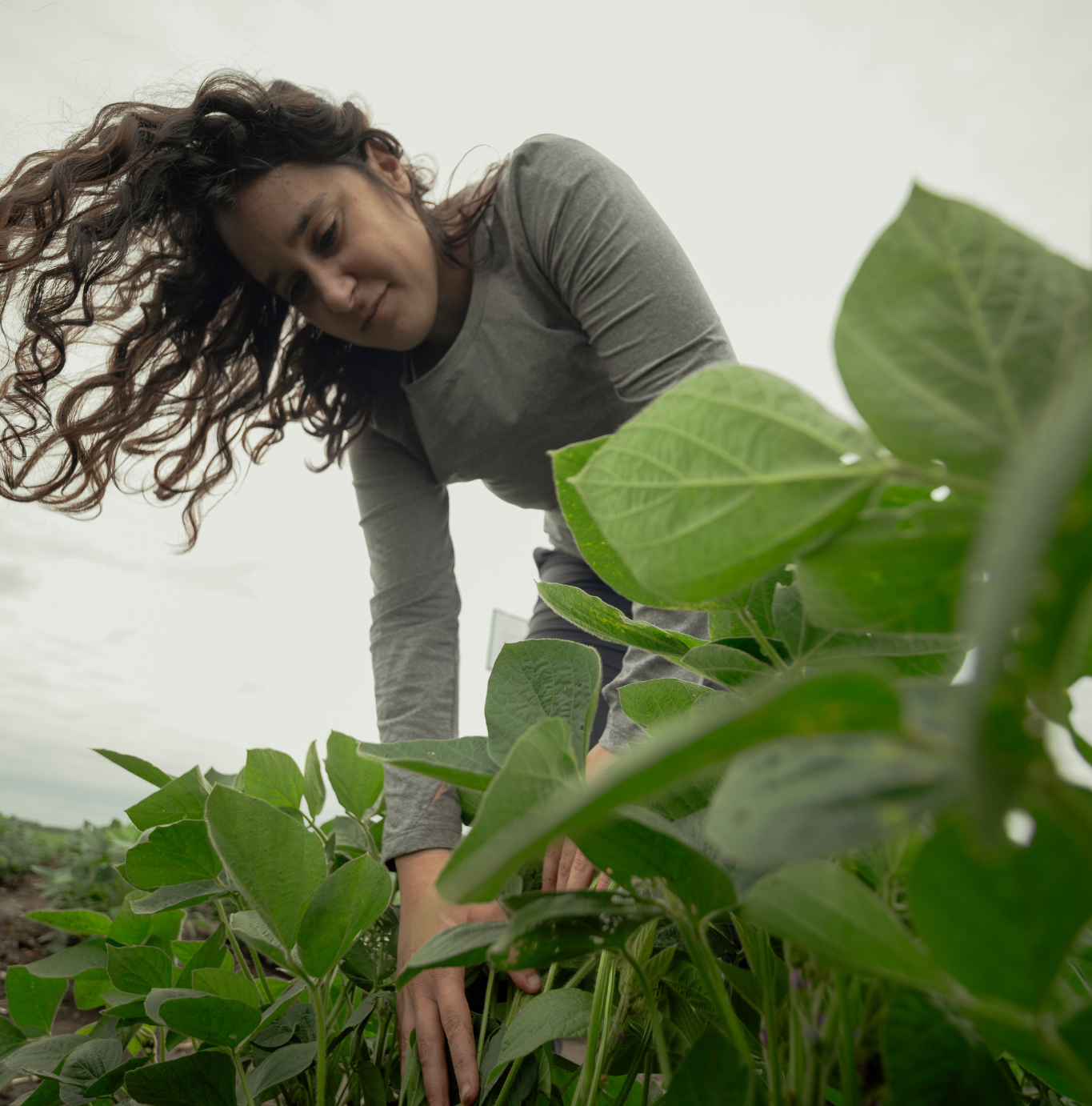
Researcher sees big market potential for health-conscious soy varieties
For decades, Illinois soybean farmers have chased yield. But today, yield alone isn’t enough. Market access, seed quality and oil composition are fast becoming just as critical, especially as premiums grow for traits that deliver more value per acre. Enter SOYLEIC and other high oleic soybeans.
“I’d like to see these traits widely adopted and be a part of the standard toolbox for Illinois growers, as these varieties not only perform just as well in the field but also open doors to stable, value-added markets,” says Dr. Eliana Monteverde, Assistant Professor and soybean breeder at the University of Illinois Urbana-Champaign. “I also hope our research has helped by making these traits easier to use and more accessible.”
Funded in part by Illinois soybean checkoff dollars, Monteverde’s research is uncovering how these new oilseed profiles can deliver both agronomic confidence and economic upside, especially in the fast-growing dairy sector. The question isn’t whether Illinois soybeans can meet new markets. It’s how fast farmers and the researchers supporting them can seize the opportunity.
HEALTH PROFILE SETS HIGH OLEIC VARIETIES APART
Researchers at the University of Missouri developed the non-GMO high oleic trait now known as SOYLEIC. The Missouri Soybean Merchandising Council holds the patents and has partnered with several academic institutions including the University of Illinois, where Monteverde works, and with private companies to expand trait to new maturity groups. What sets SOYLEIC soybeans apart is their modified fatty acid profile that increases soybean oil quality. They are high in oleic acid and low in linolenic acid compared to regular soybean oil.
“Oleic acid is an unsaturated fatty acid, which is healthier than saturated fats, while linolenic acid makes oil turn rancid,” Monteverde explains. “Regular soybean oil contains relatively higher linolenic acid levels compared to high oleic oils. Historically, the way to go around this was to hydrogenate it to create a more stable oil for food products. This process creates trans fats that have very negative health consequences. The FDA declared partially hydrogenated oils unsafe in 2015, and with this, the demand for soybean oil in cooking products declined.”
High oleic soybeans have opened new doors of opportunity with their beneficial profile for human-grade food products and animal feed.
“By being high in oleic and low in linolenic acid, SOYLEIC oil is both healthier and more stable than regular soybean oil,” Monteverde says. “SOYLEIC is a non-transgenic trait and it is not regulated as a GMO in the U.S., which allows it to be stacked with By IL Field & Bean Team GMO traits without the need to go under the regulation process.”
FROM LAB PROMISE TO FIELD SUCCESS
Laboratory research and field trials have taken SOYLEIC and other high oleic soybean varieties from an intriguing possibility to a marketplace reality.
“SOYLEIC varieties carry two genetic mutations that alter the biosynthesis pathway of fatty acids, promoting the accumulation of oleic acid and inhibiting the synthesis of linolenic acid,” Monteverde says. “This is achieved by genetic mutations that redirect oil biosynthesis toward higher oleic acid and reduced linolenic acid. These mutations were identified from natural variation (accessions from the U.S. Department of Agriculture’s soybean germplasm bank were the donors) and mutagenesis populations and then combined through conventional breeding.”
Essentially, scientists have grown lots of soybean plants with seeds that have undergone natural genetic mutations. They’ve also treated some of those seeds with a chemical reagent, producing additional random mutations. Then, they’ve selected plants that carry desirable high oleic traits for further propagation.
“Thanks to years of breeding, current SOYLEIC varieties developed by our program in Illinois perform as good as any other conventional soybeans,” says Monteverde. “In trials compared along with Plenish and other Corteva varieties, Illinois SOYLEIC lines have comparable yields to commercial soybeans under conventional management. These varieties have the same management and harvest requirements as any conventional soybean variety.”
As of this writing, Monteverde says, a number of companies today sell soybean lines from relative maturity (RM) 1.2 to 4.1 including Beck’s Hybrids, Confluence Genetics, GROWMARK, Kings Agri Seed, Martin Seed, Mid-Atlantic Seed, Seedway and Zeakal. Additional licensees and new soybean varieties are expected in the near future.
DAIRY DEMAND DRIVES HIGH OLEIC MARKET
The biggest factor expanding high oleic markets is U.S.-based dairy demand. Research indicates that rations including high oleic soybeans can boost milk fat yield in dairy cows, add high-quality fat and protein to animal diets, and potentially strengthen dairy farm profits, reduce feed costs or both.
“International use is dependent upon availability because the domestic demand is superseding the amount of excess SOYLEIC beans we have,” Monteverde says. “The next three years will be U.S. dairy demand and use/ consumption.”
That’s just a preview of what could follow.
“With our demand increasing and our licensees growing their seed stock, we can see SOYLEIC grow, too,” she says. “USB states that in 2034, there could be upward of 9 million high oleic acres (SOYLEIC and Plenish) grown to feed the dairy herds. We are not sure this will be the case, but we hope to just see annual increases.”
HOW TO PREPARE TO PLANT HIGH OLEIC VARIETIES
As interest in high oleic beans grows among buyers, it’s a prime time for Illinois soybean farmers to understand the research landscape and to prepare for future plantings themselves.
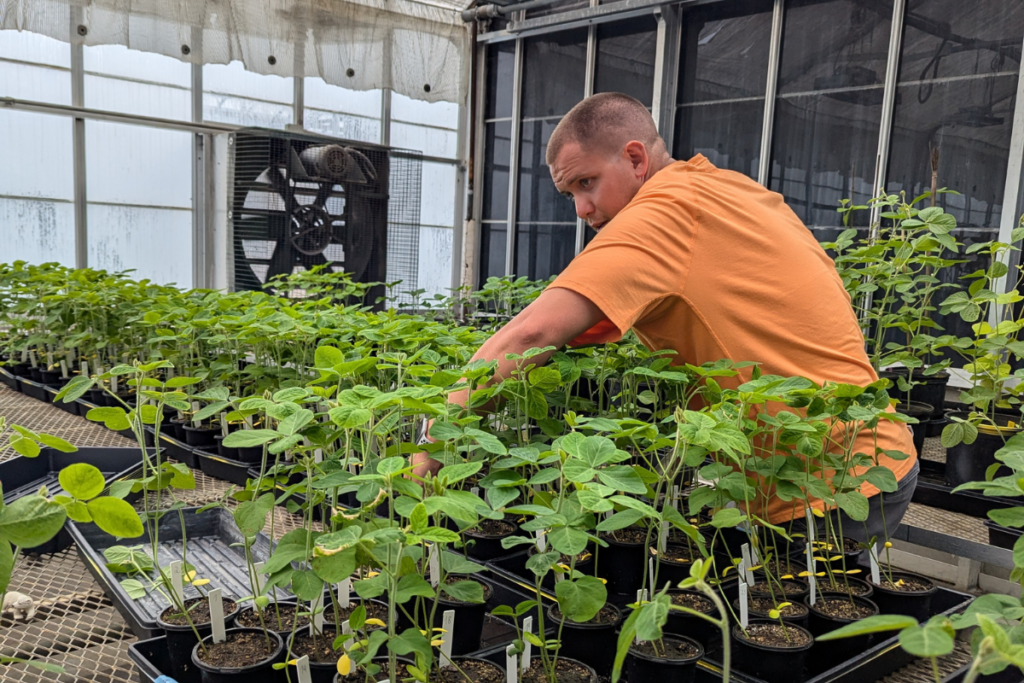
“The first university and private-sector beans hit large yield trials in 2017 with only one seed company growing 300 acres to test,” Monteverde explains. “From 2017, we have grown and have about 40 SOYLEIC varieties that are viable for production, with 17 of those being from the University of Illinois soybean breeding program.”
That means more Illinois farmers are likely to plant high oleic varieties in the future than do today in the hope of earning premium prices. Economic benefits of those investments will be dictated by local demand trends and other regional factors.
“It always depends on the delivery location and margins when moving the harvested high oleic beans,” Monteverde cautions.
Few changes to existing planting protocols are necessary.
“One misconception may be that high oleic or modified oil soybeans require special management or come with a yield penalty, while in reality these traits are bred into high-yielding varieties, and they can be grown using the same agronomic practices farmers already use,” Monteverde says. “Some people may think that oil-quality traits only benefit processors or end users. While that’s true, farmers benefit too through access to premium markets and varieties that are developed with strong agronomic performance in mind.”
CHECKOFF-FUNDED RESEARCH PAVES HIGH OLEIC’S NEXT CHAPTER
A native of Uruguay who earned her doctorate in plant breeding from Cornell University, Monteverde is pursuing two ISA soybean checkoff-funded studies this year, including one that will advance the industry’s understanding of high oleic soybeans. It is the continuation of 2025 work into high-yielding high oleic varieties.
“Regarding SOYLEIC, the [2026] project is focused on field testing of experimental lines with both high oleic and low linolenic,” Monteverde says. “In our program, we are investigating how protein content, and particularly amino-acid profiles, vary across environments, and what environmental parameters affect protein content and amino acid profiles. The objective of this area of research is to develop soybean varieties that show a stable profile across environments or fields.”
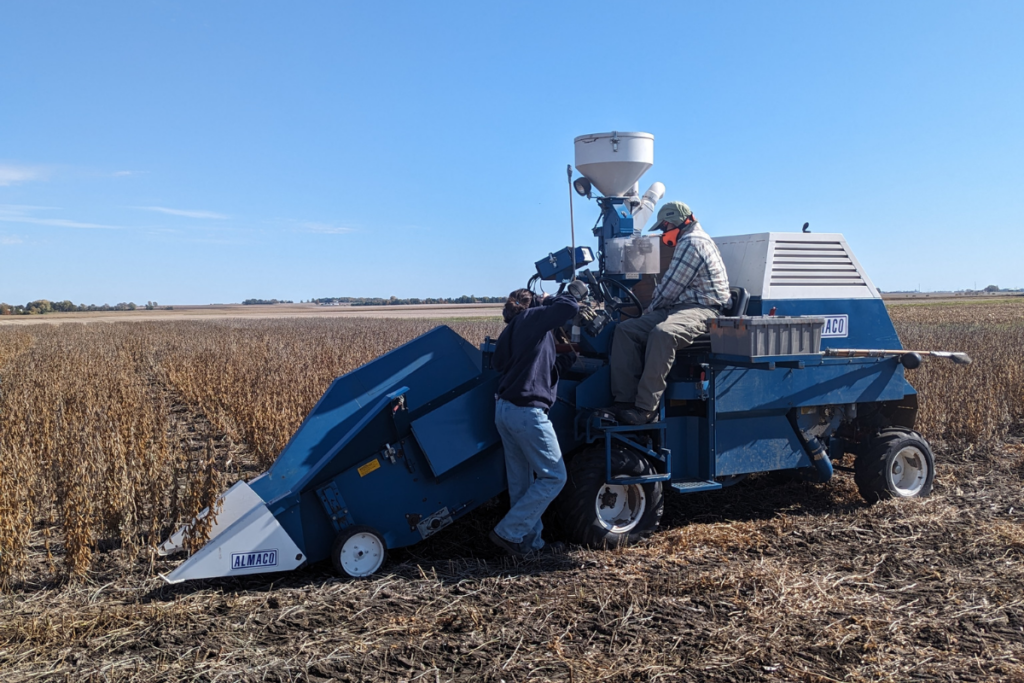
Multi-location trials are conducted across the state through the variety testing program at the University of Illinois.
“We also run some trials in other states in collaboration with breeding programs in other universities,” Monteverde adds. “In total, our trials span roughly 40 acres every year.”
For Monteverde, the research represents the convergence of many scientific disciplines she loves. And she sees how it can directly benefit Illinois soybean farmers and the future of the state’s agriculture industry.
“I was drawn to plant breeding because I always loved working at the intersection of genetics, plant biology and agriculture, and seeing the impact in the real world,” Monteverde explains. “I’ve always loved being able to take genetics theory and turn it into something practical that matters in the field and helps farmers and society.”
FROM NICHE OPTION TO STAPLE TRAIT
High oleic soybeans might not be mainstream just yet, but Monteverde thinks they’re well on their way to more prominent use in Illinois farmers’ fields.
“I’d like to see these traits widely adopted and be a part of the standard toolbox for Illinois growers,” Monteverde says. “I’d say that the market for soybeans is changing, and seed composition is becoming just as important as yield. High oleic and low linolenic varieties are about creating more opportunities for increased premiums. Our goal is to make them as reliable and competitive as any conventional variety while positioning Illinois soybeans for stronger, more stable demand.”
To learn more about high oleic and low linolenic soybean varieties, or to connect with Monteverde’s research, visit FieldAdvisor.org.
FOUR HIGH OLEIC SOYBEAN INSIGHTS FROM A RICE BREEDER
Before leading high oleic soybean research at the University of Illinois, Monteverde worked extensively in rice breeding. That experience continues to shape how she approaches soybean research and variety development today.
- Value isn’t just yield: Work in rice breeding illustrates that seed quality and composition traits often determine a crop’s value beyond the field, Monteverde says. Total bushels produced isn’t the only key factor affecting a farmer’s bottom line.
- Breeding must meet real-world conditions: Successful crop varieties must fit into actual farming systems. They need to perform consistently under real management practices and across different environments.
- Cross-crop insights matter: Rice and soybeans share similar breeding approaches, Monteverde points out. This has enabled her to borrow techniques and lessons learned in rice to inform genetic improvement in soybeans.
- A global mindset strengthens local impact: Working across crops and regions builds perspective, helping breeders develop solutions that serve Illinois farmers while keeping specific markets and end uses in mind.
Recent Articles
Strategic partnerships are expanding opportunities for Illinois soy. From cutting-edge university research to global market development, these collaborators are boosting demand and driving value.
By
Learn how good transportation makes for good economics.
By Todd Main, Director of Market Development, Illinois Soybean Association